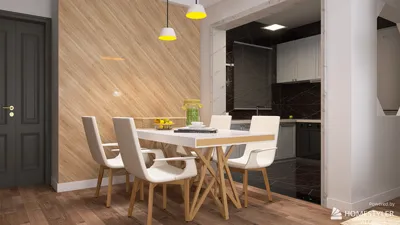


I once helped a homeowner install a ceiling fan in their small galley kitchen, convinced it would make cooking feel "more cinematic". To my surprise, the fan blades nearly grazed the hanging pot rack on the first try. This experience instilled a crucial lesson that I share with every client: while small spaces can encourage immense creativity, precise measurements are essential. Today, I'm excited to present five innovative ceiling fan ideas for small kitchens that I've perfected through years of practical experience.
1. Low-profile flush mount ceiling fan
Flush mount ceiling fans are designed to sit close to the ceiling, making them a practical choice for compact kitchens. I featured one in a six-foot wide galley kitchen, where it effectively circulated air without making the area feel constricted. Although they might deliver slightly less airflow compared to larger fans, the modern efficiency of these units diminishes that concern.
save pin
2. Integrated light and fan combo
Integrating lighting with a ceiling fan conserves valuable ceiling space, making it perfect for a cozy breakfast nook or prep area. I have installed LED-integrated fans that provide bright task lighting along with steady airflow; the only hurdle is choosing the right color temperature to ensure the food appears appetizing during meal prep.
save pin
3. Retractable blade fan
Retractable or folding-blade ceiling fans maintain a clean look when not in use and expand airflow as needed. I often recommend these to clients who wish to avoid visual clutter; they address aesthetic concerns but tend to come at a higher price point and require slightly more maintenance on the retraction mechanism.
save pin
4. Remote control and variable speed options
In smaller kitchens, the ability to control airflow is crucial — gentle breezes while slicing ingredients or a stronger gust when something might be burning. I always advise opting for fans that come with multiple speed settings and remote controls for added convenience. The tiny downside is the need to replace batteries or sync remotes, but the ease it brings, especially in tighter spaces, makes it worthwhile.
save pin
5. Fan placement for optimal air circulation
Fan placement plays a crucial role in effective air circulation. Placing it over the sink or near the cooktop can efficiently eliminate steam and odors. I once relocated a fan 18 inches and immediately noticed a significant improvement in air clarity. The challenge is to coordinate the fan's position with lighting and cabinets, so it does not interfere with other fixtures.
save pin
Tips 1:
When planning a small kitchen layout, I frequently utilize an online room planner to verify dimensions and clearances early in the design phase. Midway through the project, I create a quick floor plan to ensure the fan blades have ample clearance from cabinetry and pendant lights. For final approvals, I often produce a 3D view using tools like Homestyler, allowing clients to visualize the scale before installation.
save pin
FAQ
Q1: What size ceiling fan is best for a small kitchen?
A1: For kitchens smaller than 75 square feet, a ceiling fan ranging from 29 to 36 inches is generally suitable; always measure the distance from the blades to the walls and cabinets to maintain a clearance of at least 12 to 18 inches.
Q2: Is it safe to install a ceiling fan near my cooktop?
A2: Yes, as long as it is positioned to avoid direct exposure to rising grease, and there is a safe clearance; always prioritize using a ventilation hood for smoke removal.
Q3: Are flush mount fans noisy?
A3: Well-made low-profile fans are engineered for quiet operation; opting for models with DC motors can ensure quieter functionality and improved energy efficiency.
Q4: Do retractable fans have unique maintenance requirements?
A4: They do require periodic cleaning and a review of the retraction system; adhere to the manufacturer's instructions for any necessary lubrication.
Q5: Is hiring a professional electrician necessary for installation?
A5: I strongly recommend hiring a licensed electrician to guarantee safe wiring, correct mounting, and compliance with local building codes, particularly in wet areas near sinks.
Q6: How can I select the appropriate light temperature for an integrated fan light?
A6: A range of 2700 to 3000K provides warm, food-friendly lighting, whereas 3000 to 3500K offers a neutral tone suitable for task-oriented areas. If possible, test samples before purchasing.
Q7: Can a ceiling fan efficiently reduce kitchen odors?
A7: Ceiling fans aid in air circulation but should not replace specialized range ventilation. For persistent cooking odors, a good exhaust hood remains the most efficient solution.
Q8: Where can I view examples of fan layouts in compact kitchens?
A8: For visual inspiration and case studies of effective layouts, design tools and reputable case galleries offer valuable project examples. Official product pages and planner galleries provide accurate renderings and layouts. Additionally, for detailed measurement guidance, refer to building codes or specifications from organizations like the National Kitchen & Bath Association (NKBA) at https://nkba.org.
save pin
Homestyler is your go-to platform for all things home design! With its user-friendly online design tool, stunning 3D renderings, and a treasure trove of design projects and video tutorials, you can effortlessly create and visualize your dream spaces. Transform your home today!
지금 무료로 디자인하세요
































