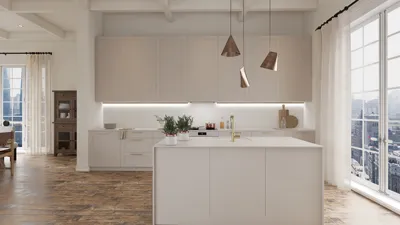


I once had a client insist that their cabinetry should appear "perfect from the side" since their visitors would pass by the kitchen island every evening — this is a true story. I quickly sketched a mockup and even provided a few cabinet end treatments to help them envision the end result before any construction began. This experience highlighted how minor enhancements can lead to significant design transformations.
1. Vibrant and Textured Ends
Incorporating bold colors or simple geometric patterns on the cabinet ends is a rapid way to alter the ambiance of the kitchen without undertaking a full renovation. This approach is budget-friendly, easy to modify, and ideal for renters wanting to infuse some character into their space.
Benefits: instant aesthetic appeal, cost-effective. Challenge: selecting a finish that withstands wear; a matte enamel or clear protective coating can make a significant difference.
save pin
2. Transform Ends into Open Shelving
Convert unused space into staggered shelves for cookbooks, plants, or decorative items. This strategy enlivens the side of the cabinet and adds visual depth to a narrow kitchen. For virtual mockup creations and spatial evaluations, I frequently test this concept as an open shelving end using a basic room render before final decisions.
Advantages: easy access for display, additional storage; Disadvantages: requires careful styling to avoid clutter. Tip: keep displayed items grouped and use a limited color palette of up to three colors.
save pin
3. Built-in Spice or Wine Niches
Thin vertical recesses at the cabinet ends serve as an essential tool for chefs — storing spices, oils, or a compact wine rack keeps essentials within reach yet discreet. I implemented this in a recent condominium project, and the client claimed it doubled the sense of organization in the area.
Pros: extremely functional and tailored to fit; Challenge: requires precise measurements and sometimes entails a small carpentry investment. Consider adjustable shelves for flexibility over time.
save pin
4. Decorative Corbels, Trim, and Toe-Kick Enhancements
Incorporating trim or small corbels can transform a plain cabinet end into an aesthetically pleasing element akin to high-end furniture. This classic technique elevates even the simplest shaker-style cabinetry.
Benefits: enhances perceived value and style unity; Drawback: the design should complement the rest of the kitchen to avoid a mismatched look. Financially it can vary based on materials.
save pin
5. Hidden Pull-out Storage Solutions
If discretion and order are your priorities, a narrow concealed pull-out compartment at the cabinet end is ideal for storing baking sheets, cutting boards, or a rolling tray. It’s compact, functional, and particularly suitable for small kitchens where space use is critical — think of it as a compact backstage area for your culinary activities.
Pros: maximizes underutilized space and maintains clean countertops. Minor drawback: hardware expenses and the need for precise installation. For accurate planning, I often simulate proportions and door movements before finalizing hardware choices, occasionally prototyping using a basic slim pull-out diagram.
save pin
Frequently Asked Questions
Q1: What exactly is a cabinet end and why is it significant?
A: A cabinet end refers to the exposed side panel of a kitchen cabinet. Its importance lies in its visibility and potential for use in storage, display, or as a key design feature.
Q2: Are painted cabinet ends durable enough?
A: Yes, especially when painted with durable enamel or protected with a clear finish. Semi-gloss or satin finishes are recommended for easier cleaning in high-traffic areas.
Q3: What width is suitable for an open shelving end?
A: Shallow display shelves can function with widths of around 6–12 inches; for plates and smaller bowls, 12–18 inches provides more room. Consider your intended storage when determining width.
Q4: Can I retroactively add a pull-out storage solution to an existing cabinet end?
A: In many cases yes, as long as the end has sufficient depth and the toe-kick area allows for it. A carpenter can retrofit many cabinets, but it's essential to verify clearances for hinges and side panels beforehand.
Q5: Do decorative corbels give a kitchen a dated appearance?
A: Not if they are chosen to harmonize with the kitchen’s overall theme. Slim, minimalist corbels or modern bracket designs convey a contemporary feel, while ornate types tend to lean towards traditional.
Q6: What budget should I set for a built-in spice nook?
A: A basic niche can be cost-effective when done during initial cabinet installation; however, retrofitting tends to be more expensive due to cutting and finishing processes. Expect cost variations based on materials and labor rates.
Q7: Are there standard dimensions for cabinet ends I should adhere to?
A: Cabinet designs generally follow standard depths (24" for base cabinets, 12" for upper cabinets), but end details can differ. For reliable layout guidelines, refer to the National Kitchen & Bath Association (NKBA) recommendations: https://nkba.org.
Q8: What’s the simplest modification suitable for a renter?
A: Painting the cabinet end or installing stick-on trim and removable shelves are renter-friendly, low-cost options that can create a significant visual impact without making permanent changes.
save pin
Homestyler is your go-to online home design platform, perfect for creating stunning interiors. With its user-friendly design tool, impressive 3D rendering, and a wealth of DIY video tutorials, transforming your space has never been easier! Dive in and unleash your creativity today!
Progetta ora GRATIS
































