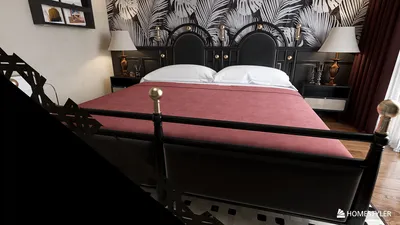


As we face the future, the existing challenges such as disjointed layouts, insufficient storage, and poorly lit spaces remind us that a 30 ft by 60 ft design must operate as a unified system. Industry insights underscore this transformation: AIA’s Home Design Trends Survey indicates a continuous demand for versatile multi-functional areas, highlighting the need for clarity in a 4 BHK layout. Within this 30x60 first floor design, the central focus is the 4 BHK arrangement. I can already envision the next five years unfolding within this inspiring space, aided by the Homestyler tool to maximize functionality.
Front Courtyard Axis + Divided Public Spaces
Design Logic: The front courtyard serves as a noise buffer from the street, leading to a divided public core: one side for living, the other for dining and kitchen. Future households desire adaptable public areas that provide both social interaction and ambient privacy.
Flow: The pathway flows from entry to vestibule, leading into the living area, dining space, kitchen, and utility room; the guest suite branches from the foyer for added privacy and autonomy.
Sightlines: The transparency from door to courtyard creates a layered experience akin to user interface breadcrumbs—offering views of greenery, social zones, and designated task areas.
Storage: Features include a deep wall pantry, under-stair storage, and a shoe bench integrated into the design; predictable retrieval systems minimize cognitive overload.
Furniture Fit: Allowing for a living space span of 9 to 10 ft for modular sofas; an 8-seater dining table fits comfortably in a 10x12 space, while island dimensions adhere to 36-42 inch guidelines.
Verdict: This front core stabilizes the flow of activities, seamlessly blending hospitality with daily living without interruptions.
save pin
Dual-Aspect Main Suite + Dedicated Work Space
Design Logic: The primary bedroom is positioned to capture corner light, featuring an attached study—designed to accommodate future remote working and caregiving arrangements.
Flow: The layout includes a hallway leading to a pocket lobby, bedroom, walk-in wardrobe, and bathroom; the study is nested off the lobby for improved focus.
Sightlines: Views to the side garden and sky are layered to create a hierarchy of calm foreground, private mid-section, and ritualistic rear space.
Storage: With 12-16 ft linear wardrobes, vertical lockers for seasonal items, and a document safe integrated within cabinetry, the storage solutions are ample and functional.
Furniture Fit: A king bed positioned with 30-36 inch clearances; a desk measuring 60x24 inches; and a lounge chair located within a 7 ft reading distance.
Verdict: This suite functions as a stable nucleus—encompassing rest, work, and dressing without contention in use.
save pin
Rear Family Core with Two Children's Rooms
Design Logic: The back half of the home acts as a family core: housing two children's rooms alongside a shared bathroom with easy garden access—facilitating future mobility and play.
Flow: The progression moves from the corridor to the children's rooms, followed by the shared bathroom and ending at the rear patio; laundry is conveniently located off this spine for efficiency.
Sightlines: Low windows capture outdoor play like status indicators; the glazing facing the patio serves as a daylight progress indicator.
Storage: Dual wardrobes, under-bed storage, and hallway linens with labeled bins act as memory aids for toys and equipment.
Furniture Fit: Rooms measuring 10x11 are suitable for twin beds or bunks; desks of 48x20 inches; adaptable shelving accommodates growth.
Verdict: The rear core maintains family dynamics predictably, allowing individual curiosity to flourish within designated spaces without friction.
save pin
## Final Thoughts
The 30 ft by 60 ft first-floor layout for a 4 BHK is more than just a blueprint; it is a dynamic behavioral interface. With a strong public core, a dual-aspect primary suite, and a rear family spine, this 4-bedroom design effectively supports hybrid work, multi-generational living, and evolving daily routines. I believe the most intelligent homes of the future won’t necessarily be larger, but rather more purpose-driven, and tools like Homestyler help transform small spatial decisions into significant lifestyle enhancements.
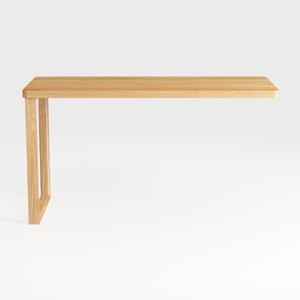
ZQQLVOO Writing Computer Desk,Home Office Desk,Hom
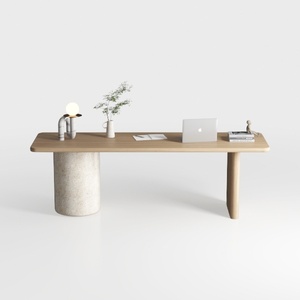
Minimalist Japandi Solid Wood Concrete Office Desk 3D Model

Unlock your creativity with Homestyler! This intuitive online design platform offers a powerful design tool, stunning 3D renderings, and a wealth of inspiring projects and video tutorials. Perfect for both beginners and seasoned designers, it makes transforming your home a breeze!
Design Now for FREE
































