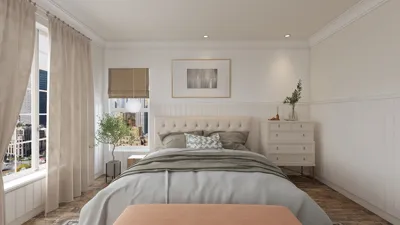


In one particular project, I encountered a client who wanted a massive office desk positioned right next to their bed, staring directly at the TV. Unsurprisingly, productivity took a hit. This experience reinforced a crucial lesson: when designing a home office within a master bedroom, layout and ambiance are far more significant than merely fitting in a work desk. Small spaces can ignite great creativity, and in this article, I’ll share 10 strategies I've successfully implemented to craft a productive, private, and inviting workspace without cluttering the bedroom. From sleek corner setups to ingenious foldaway desks, it’s all about striking the perfect balance — along with a touch of style, of course, aided by tools like Homestyler.
1. Transform the Window Nook
I adore redesigning seldom-used window areas into vibrant workspaces. The influx of natural light keeps you energized, allowing you to relish the morning views while tackling emails. Just don’t forget to install blinds to manage glare on your screen. For a couple I worked with, we utilized this space and brought their vision to life using a room planner to ensure the proportions were just right.
2. Use a Bookshelf as a Partition
A tall, open bookshelf can effectively divide your working area from your sleeping zone without making you feel closed off. These bookshelves provide additional storage for both office supplies and bedtime reading. Styling both sides creates a harmonious look throughout the room.
3. A Floating Desk Along the Wall
Installing a slender floating desk can save valuable floor space while providing ample room for your laptop and essentials. Pair it with a chic chair that complements your bedroom’s aesthetic for a cohesive appearance. Don't overlook the importance of proper cable management here!
4. Built-In Wardrobe Desk Creation
If you're open to customizing your built-in wardrobe, consider converting one section into a fold-down desk. By day, it serves as a workstation, and by night, it’s seamlessly tucked away behind closed doors. This method minimizes visual clutter, which is always a benefit.
5. Embrace a Compact Corner
Never underestimate the potential of an awkward little corner. I’ve managed to fit a complete workspace in a mere 90cm with custom shelving above. Utilizing online tools like a free floor planner can help visualize the fit before making any permanent changes.
6. Coordinated Furniture Style
When your desk and storage options harmonize with your bedroom decor, the overall space feels curated rather than random. This cohesion is particularly vital in master bedrooms, where both style and functionality are key.
7. Create an Accent Wall
Give your workspace its own unique character by painting or wallpapering the wall behind it. This subtle shift indicates a change in purpose without resorting to physical partitions. Additionally, well-placed lighting can elevate the professionalism of video calls.
8. Foldaway Wall Desk for Minimalists
Ideal for those with minimalist tastes or for bedrooms that serve double duty as guest rooms, this desk can fold down for working hours and flip back up, instantly freeing up space. In a recent project, we crafted a foldaway configuration paired with discreet storage, entirely planned using a kitchen layout planner repurposed for workspace design — creativity knows no boundaries!
9. Utilize Layered Lighting
I always recommend integrating at least three types of lighting: ambient, task, and accent. Since master bedrooms inherently promote relaxation, choosable work lights that can switch from productivity mode to a restful ambiance is crucial.
10. Install Curtains or Sliding Panels
For maximum flexibility, consider ceiling-mounted curtains or sliding panels that can conceal your office area when it’s not in use. This method provides visual separation and helps you mentally distinguish work from rest, all without erecting a full wall.
FAQ
1. How can I separate my home office from my bedroom?
You can create visual boundaries using room dividers, bookshelves, or curtains. Changing the wall color can also help delineate the workspace.
2. Will having a desk in my bedroom impact my sleep?
Yes, especially if your work area is cluttered or clearly visible from the bed. Keep everything tidy and conceal it when working hours end, if possible.
3. What’s the minimum space required for a bedroom office setup?
A width of about 90cm should suffice for a compact desk setup, and you can go even smaller if you choose a wall-mounted or foldaway desk.
4. Should my workspace match the bedroom decor?
Absolutely — consistent finishes and colors create a cohesive and serene environment.
5. Can lighting enhance productivity in a bedroom office?
Indeed, adjustable task lighting reduces eye strain and facilitates the transition between focus and relaxation.
6. How can I conceal cables in a small bedroom office?
Utilize cable trays, clips, or run cords through desk legs to maintain an organized appearance.
7. Is it advisable to face the bed while working?
It’s more effective to face a wall or window to limit distractions and foster a mental divide between work and rest.
8. Where can I find tools to plan my bedroom office layout?
Platforms like Homestyler provide easy drag-and-drop tools to visualize furniture arrangements before making any purchases.
Discover your creative potential with Homestyler, the ultimate online home design platform. Featuring a user-friendly design tool, stunning 3D renderings, and a wealth of DIY video tutorials, Homestyler makes it easy for anyone to craft their dream space effortlessly. Start designing today!
Zaprojektuj teraz za darmo
































