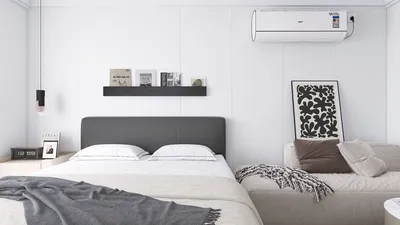


As we step into the future, today's households are faced with the challenge of balancing privacy, hybrid working conditions, and storage needs—yet, this scenario can be transformed. Recent survey insights from the NAHB reveal that homebuyers are increasingly valuing adaptable rooms more than just abundant square footage, which is where a 3-bedroom floor plan from Godrej Elements acts as a living operating system. I perceive the walls as the syntax that shapes our spaces, while doors offer permissions—creating environments that streamline our daily activities. Utilize tools like Homestyler to visualize and optimize these spaces for better functionality.
Dual-Core Living + Quiet Wing
Design Logic: The layout separates the lively social core—comprising the living, dining, and balcony—from a serene bedroom wing, accommodating the need for multitasking without interference.
Flow: Entry leads into a powder room, flowing into a vibrant living hub, followed by a dining area and a charming balcony; branching towards a corridor leading to the bedrooms and the primary suite; ensuring a work nook that is safe from disturbances.
Sightlines: The front-to-back design focuses on balcony illumination as the key interface, while the bedrooms remain slightly off-axis to enhance privacy levels.
Storage: A wall-length console, built-in elements in the corridor, and a balcony bench with hidden bins—this layout keeps essential items close to where they're needed.
Furniture Fit: Sofas should ideally measure between 900–950 mm in depth, while dining tables should be 1800 x 900mm, and queen/king beds require a clear space of 750 mm on either side; these specifications ensure smooth traffic flow.
Verdict: This design feels like a well-tested model: it offers high social communication potential while effectively containing noise, making it suitable for hybrid work and long-term living.
Tri-Zone Day/Night + Flex Room
Design Logic: The design ensures that the day zone is open, while the night zone is more reserved, including a flexible third area that can function as a study or guest space, adapting easily through different life stages without requiring structural changes.
Flow: The layout guides from a kitchen peninsula to the dining area, then to the living space and balcony; the nighttime area extends to two secondary bedrooms and a bathroom, with the flex room near the entrance serving as a versatile feature.
Sightlines: The peninsula provides supervision over the living area; diagonal views from the living space towards the balcony create an illusion of depth, with doors arranged to prevent visual overlap.
Storage: A full-height pantry, drawers beneath the beds, and a linen tower in the hallway ensure that vital storage is efficiently utilized, decreasing the time spent searching for essentials.
Furniture Fit: The peninsula dimensions should range between 1000–1050 mm in width; distances between the sofa and TV should be 2600–3000 mm, with a study desk measuring 1200 x 600mm equipped with a task light for efficiency; maintaining these tolerances ensures free movement.
Verdict: This adaptable configuration allows a single room to transition from a zoom workspace to a guest suite, effectively future-proofing what is essentially a 3-bedroom unit against unpredictable changes.
Primary Suite as Command Center
Design Logic: The primary bedroom serves as a micro command center, encompassing sleeping, wardrobe, and dedicated work spaces, ensuring that parents can focus on deep tasks without frequent interruptions from shared areas.
Flow: From the suite's entrance, it leads to a wardrobe wall, followed by a designated desk area and then onto the bath; coordinating kids' rooms enhances daily routines; the living area serves a communal function.
Sightlines: The desk area is cleverly positioned to avoid direct sight lines to the bed, allowing natural light to brighten the wardrobe, thus promoting a clean viewing experience over distractions.
Storage: His and hers wardrobes, overhead storage systems, and a bath tower are strategically placed to optimize accessibility—daily items are stored within easy reach at a height of 0.8–1.6m, while less frequently used items are placed higher.
Furniture Fit: The king-sized bed should measure 1900 x 2000mm, with bedside tables at 450mm, and a desk measuring 1400 x 700mm; maintaining a clearance between 800–900mm allows for smooth movement during bustling mornings.
Verdict: The primary suite operates like a localized server: it handles personal tasks efficiently while the home's social interactions unfold outside—providing balanced functionality over the next five years.
Final Takeaway
When viewed through the lens of a living interface, a 3-bedroom floor plan from Godrej Elements can accommodate hybrid lifestyles, maintain layered privacy, and enhance storage practices without excessively increasing the living area. Variations, such as different 3-bedroom layouts and modern apartment designs, reveal a similar inclination: prioritizing functionality over mere size, focusing on routines rather than raw space. The home office setups and balcony-centric designs thus find their place when the layout flows like code. In my perspective, the most innovative homes of the future won’t just be larger—they will be more strategically designed.

LITTLE TREE 70.9 Inch Tall Narrow Bookcase, Corner

Modern Marble Top Solid Wood Console Table With Decorative Accents 3D Model

Better Homes and Gardens Versatile Multiple
Homestyler is your go-to online platform for effortless home design. With its user-friendly design tool, stunning 3D renderings, and comprehensive video tutorials, you can easily create, visualize, and transform your space. Dive into a world of creativity and bring your design dreams to life!
Diseño ahora GRATIS
































