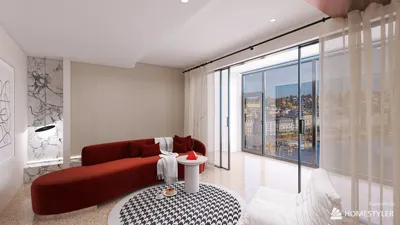


Direct Answer
One of the most efficient ways to zone an open dining kitchen and living room is by integrating furniture arrangement, lighting design, flooring transitions, and visual anchors such as islands or area rugs. These components establish functional boundaries while preserving the openness of the space. Rather than erecting walls, designers employ subtle spatial cues that guide movement and activity within each zone. Utilizing tools like Homestyler can greatly assist in visualizing and experimenting with these layouts before implementation.
Quick Takeaways
Introduction
Having completed numerous open-concept renovations, I can confidently say that the main challenge isn’t just wall removal—it’s how to organize the resulting space effectively.
Homeowners frequently inquire about zoning an open dining kitchen and living room without making the design feel cluttered or disorganized. With multiple functions such as cooking, dining, relaxing, and entertaining sharing the same large area, intentional zoning is crucial to maintain clarity.
In many projects, we begin by defining functional zones before selecting furniture. Platforms like Homestyler offer interactive room planning tools enabling homeowners to visualize and test layout options, making the design process more intuitive.
This guide outlines zoning strategies that I regularly employ in real homes. Common practices include using rugs and targeted lighting, while subtler techniques like managing sightlines and balancing visual weight are often overlooked but significantly enhance functionality.
Above all, these approaches preserve the open feel since adding physical barriers contradicts the purpose of an open floor plan.
Why Zoning Matters in Open Concept Spaces
Key Insight: Zoning provides an open area with structure, making every activity purposeful rather than chaotic.
A common misconception is that open layouts should be entirely fluid. In fact, effective open-plan designs segment space into distinct functions.
Failing to zone properly can lead to various issues:
Research from architectural institutions highlights that open-plan homes function best when designers create "activity zones" aligned with natural movement patterns.
Typically, I divide open areas into three main zones: cooking, dining, and living.
Other design elements such as lighting, furniture, rugs, and décor support these primary zones.
Utilizing Furniture Arrangement for Zoning
Key Insight: Furniture placement and orientation create the most effective invisible boundaries in open layouts.
Instead of placing furniture strictly against walls, using "floating" arrangements helps define zones organically.
For instance, positioning a sofa to act as a divider between the living and dining spaces is a classic method.
A common technique I apply is:
This works because the back of a sofa intuitively signals the edge of a space to the human eye.
Additional furniture zoning tactics include:
Professional staging experts often rely on these principles to create spatial clarity without resorting to physical partitions.
Kitchen Islands and Dining Tables as Spatial Anchors
Key Insight: Prominent elements like kitchen islands and dining tables naturally delineate zones.
In many open designs, the kitchen island serves as a central transition point linking cooking and living areas.
However, it’s important to note that the island shouldn’t be precisely centered between zones.
Instead, it should clearly belong to the kitchen space but orient visually toward dining or living areas.
An ideal zoning flow typically follows: cook → serve → dine → relax.
Using a kitchen layout planning tool on Homestyler can help test island positioning to avoid spacing conflicts early in the design phase.
Common spacing guidelines include:
These dimensions ensure smooth traffic flow between zones.
Area Rugs and Flooring Transitions as Visual Boundaries
Key Insight: Changes in flooring subtly but effectively emphasize different zones.
In open-floor homes, large area rugs in the living zone help to visually "contain" the seating area and mark its boundaries.
Mistakes often seen in rug placement include:
A useful guideline is:
Alternatively, transitioning flooring materials between zones can softly indicate spatial changes without cluttering the visual field.
Lighting Techniques for Dividing Functional Areas
Key Insight: Lighting can define activity zones even within an entirely open floor plan.
Lighting remains one of the most underutilized zoning tools in home design.
Instead of a single overhead fixture, layering lights such as pendants, chandeliers, and floor lamps creates distinct "light pools" that correspond to different zones.
According to the Illuminating Engineering Society, layered lighting improves how occupants perceive and navigate multifunctional spaces.
In my experience, lighting often finalizes the zoning by reinforcing visual boundaries and functionality.
Decor and Color Strategies for Zoning Cohesion
Key Insight: Effective zoning separates functions without disrupting visual harmony throughout the space.
A common error in open plans is over-segmenting, where each zone feels like an isolated room.
Strong designs maintain stylistic consistency across zones.
Tactics include:
Repeating colors, materials, and styles help the eye connect individual zones despite their distinct uses.
Answer Box
The best open-plan zoning approach combines furniture arrangement, anchor elements like kitchen islands, visual boundaries such as rugs, and layered lighting. Together, these methods separate functions while maintaining the openness that characterizes contemporary layouts.
Final Summary
For those starting layout plans anew, experimenting with 3D room planning tools like Homestyler can help test and refine zoning concepts before moving furniture or beginning renovations.
FAQ
How do you zone an open concept living room and kitchen?
Define activity areas using furniture, rugs, layered lighting, and prominent elements like kitchen islands, ensuring the space remains open and fluid.
What is the easiest way to divide a kitchen and living room without walls?
Position a sofa or console table facing the living space; the backside naturally creates a spatial boundary.
Should the dining table be between the kitchen and living room?
Yes. Generally, the dining area works best as a transitional zone linking cooking and relaxing spaces.
Do rugs help define open floor plan spaces?
Absolutely. Appropriately sized rugs anchor seating zones visually and clarify where living areas start and end.
How big should a rug be in an open living room?
Ideally, the front legs of sofas and chairs rest on the rug to unify the seating arrangement.
Can lighting separate spaces in an open layout?
Yes. Using pendant lights, chandeliers, and floor lamps establishes distinct lighting zones that reinforce each area’s function.
What are common mistakes when zoning open spaces?
Common errors include using rugs that are too small, overcrowding with furniture, and mixing too many styles across zones.
What furniture works best for open concept zoning?
Sofas, kitchen islands, dining tables, console tables, and open shelving units are among the most effective for delineating zones.
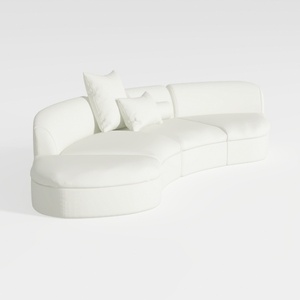
Minimalist White Fabric Curved Sectional Sofa 3D Model
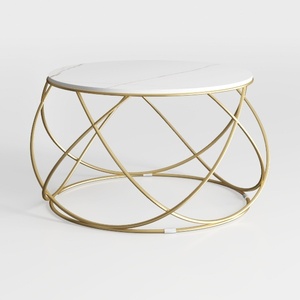
LITTLE TREE Modern White Dining Table for 4, 47-In
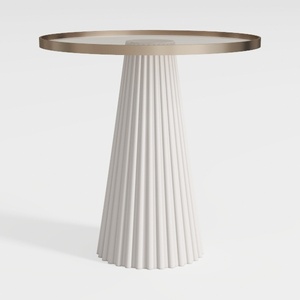
Modern Minimalist Fluted Base Glass Top Side Table 3D Model
Homestyler offers an easy-to-use online design tool with stunning 3D renderings, inspiring interior projects, and helpful DIY video tutorials. It’s perfect for anyone wanting to create and visualize beautiful home designs effortlessly.
Design jetzt kostenlos
































