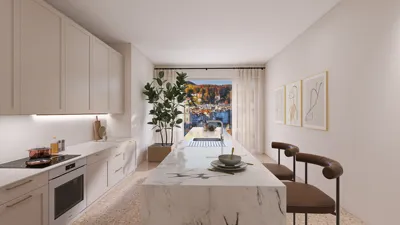


I will always remember a particular client who envisioned their studio resembling a ship’s cabin, complete with midnight blue walls, brass accents, and a single porthole mirror. Initially, I hesitated, but that confined space transformed into one of my most cherished makeovers, illustrating that dark blue can evoke a cozy atmosphere rather than feeling cramped. In fact, I referred to an AI-driven interior design example to swiftly visualize the different finishes when experimenting with color options.
1. Dramatic Accent Wall: Deep Navy Behind the Bed
I frequently suggest painting just the wall behind the bed in a rich navy hue to serve as a striking focal point without overwhelming the rest of the room. This technique adds drama with minimal paint — the key challenge is ensuring the lighting complements the navy to prevent it from appearing flat; I like to pair it with warm bedside lamps and soft linen textures.
save pin
2. Coastal Slate: Soft Blue-Grey for Open Spaces
In open-plan areas, a muted blue-grey color maintains an airy feel while also providing a moody depth. It works well with various furniture finishes and is adept at concealing scuffs better than lighter shades; however, be cautious as the undertone may appear greenish under specific lighting, making it essential to test full-size samples.
save pin
3. Velvet Navy for Compact Kitchens
Yes, dark blue can look stunning in small kitchens; when applied to cabinets or a feature wall, it imparts a sophisticated vibe and effectively conceals grease stains. The benefits are twofold: style and function, but visibility is a consideration. Opt for satin or semi-gloss finishes on cabinets for easier cleaning and to enhance light reflection.
save pin
4. Regal Powder Room: Sapphire with Metallic Touches
Powder rooms are excellent venues for bold color experimentation: a sapphire wall paired with brass fixtures conveys luxury and intentionality. Since these spaces are small, the stakes are lower, but be prepared for the need for bright artificial lighting and a slightly higher budget for standout hardware.
save pin
5. Layering Blues: Ombre Effects or Trim Contrasts
By layering hues — such as deep blue on the lower half and a lighter blue above, or contrasting the trims with indigo — you can achieve depth without a complete repaint. This method can visually elevate small rooms, though it requires extra time and masking, so plan for additional labor during your DIY project. When I sought to visualize this, I referred to 3D render examples using Homestyler to ensure the colors worked harmoniously together.
I always implement practical techniques during my projects: test the paint at various times of day, experiment with different sheens (matte conceals flaws while eggshell offers versatility), and select lighter furnishings to avoid creating a sunk feeling in the room. If layout modifications are being considered, utilizing a quick model can be helpful; I sometimes preview the plan as a 3D floor visualization with tools like Homestyler before settling on color choices.
save pin
FAQ
1. Are dark blue walls appropriate for small areas?
I often incorporate dark blue in small spaces to instill coziness; the trick is to limit it to one accent wall or pair it with lighter furnishings to maintain an open feel.
2. What paint finish do you suggest for dark blues?
Typically, I recommend using eggshell for walls as it strikes a balance between reflectivity and durability, while satin or semi-gloss finishes work well for trim and cabinets to facilitate cleaning.
3. How can I prevent a dark blue from appearing black?
Examine the undertone (warm versus cool) and check the color in natural light; incorporating warm metallics or wood tones can help the blue maintain its true appearance rather than looking black.
4. What colors complement dark blue?
Soft neutrals, warm timber, brass or gold accents, alongside crisp white shades, all pair beautifully with dark blue, ensuring it doesn’t feel oppressive.
5. Is it permissible to use dark blue in a kitchen?
Absolutely! Dark blue can be applied to cabinets or as an accent wall. Just use wipeable finishes like satin for cabinets and ensure sufficient task lighting for functionality.
6. How many paint coats are generally needed for dark blue?
Dark shades typically require two to three coats for complete coverage, particularly when covering lighter colors; using a quality primer can decrease the number of necessary coats.
7. Is there a dependable source for advice on paint light reflectance and color?
Certainly! Paint manufacturers such as Sherwin-Williams offer technical data and color guidance; check out their resources for Light Reflectance Values and professional recommendations at https://www.sherwin-williams.com.
8. How can I test a dark blue paint color before making a commitment?
Apply large paint swatches on multiple walls and observe them during different times of the day, or use realistic 3D mockups to assess how lighting and furniture affect the color, possibly utilizing tools like Homestyler for accurate visualization.
save pin
Homestyler is the ultimate online home design platform for anyone looking to transform their space effortlessly. With its user-friendly design tool, stunning 3D renderings, and a wealth of DIY video tutorials, you can turn your creative vision into reality—no prior experience needed!
تصميم الآن مجانا
































