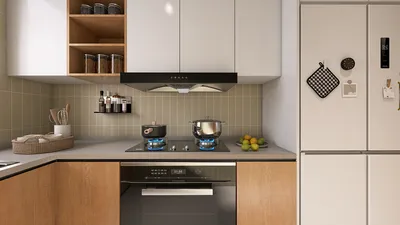


A previous client once envisioned their kitchen as resembling a misty forest at dawn — all shades of grey, punctuated by a vibrant leaf-green island. While it sounded artistically appealing, the initial lighting setup made the island appear garish. This incident highlighted how essential it is to balance the grey-and-green combination effectively, as improper materials and lighting can lead to a visual catastrophe. In small kitchens, especially, you must make daring yet judicious decisions; even a minor modification can turn a cramped space into a spacious and sophisticated area.
1. Subdued Sage Cabinets with Warm Grey Countertops
When you pair sage green cabinets with warm mid-tone grey countertops, the result is a serene, lived-in aesthetic that is forgiving of everyday marks. I implemented this design in a compact 45 sqm apartment — the sage hue softened the coolness of the grey, while brass hardware contributed a touch of warmth. The key is ensuring that the grey has warm undertones; otherwise, the entire palette can feel overly chilly. As a budget-friendly revision, consider painting existing cabinets sage and only updating the countertops when possible. Additionally, tools like Homestyler can help visualize these changes.
save pin
2. Charcoal Grey Appliances with an Emerald Accent Wall
To achieve a striking modern effect, anchor your kitchen with charcoal-grey appliances and introduce an emerald green accent wall or backsplash. This bold contrast exudes luxury and a contemporary vibe, but maintaining a balance of reflective surfaces is crucial to prevent a gloomy atmosphere. I suggest matte finishes for cabinets combined with glossy tiles for the green accents to create a sense of depth without overwhelming sensory experiences.
save pin
3. Two-Tone Style: Light Grey Upper Cabinets with Olive Lower Cabinets
Adopting a two-tone cabinetry design can effectively segment vertical space and create the illusion of higher ceilings. I've implemented this concept several times: light grey upper cabinets maintain an airy feel, while olive lower cabinets conceal scuff marks. This design is practical for active households, though precise installation is necessary for aligning grout lines and handles across the two finishes. If you're considering a DIY approach, I recommend creating full-size mockups to see how the colors interact in your unique lighting before finalizing your choices.
save pin
4. Green Tiles Harmonized with Concrete Grey Flooring
Incorporating patterned green tiles as a backsplash along with concrete-grey floors generates a chic, artisanal appeal. In a past rental remodel, I combined hex green tiles with polished grey cement flooring — tenants admired the character, and the durability pleased landlords. However, a caveat is that intricate tile patterns may go out of style faster than simpler designs; thus, opting for classic shapes and muted tones ensures longevity.
save pin
5. Mint Green Open Shelves Against Soft Grey Walls
Utilizing open shelving painted mint green on soft grey walls brightens smaller kitchens by bringing in color without adding visual bulk. I frequently suggest that clients pair open shelves with enclosed storage options nearby to reduce visual clutter. While dust and arrangement can be minor nuisances, using strategically placed baskets and select ceramics can effectively minimize upkeep issues. Additionally, platforms like Homestyler allow you to explore various configurations effortlessly.
Are you in search of tools to quickly draft these kitchen layouts? I often start with a straightforward room planner to experiment with color distributions and proportions before purchasing materials.
save pin
FAQ
Q: Which shades of grey work best with green? A: Warm greys with beige or taupe undertones complement olive and sage greens beautifully, while cooler greys pair well with mint and emerald hues. Always test large color swatches in your kitchen's lighting prior to making a decision.
Q: Is the grey and green combination appropriate for small kitchens? A: Absolutely — light greys and soft greens can create a more expansive feeling in smaller kitchens. Incorporate reflective surfaces and vertical storage to amplify this effect.
Q: How can I avoid the color combo from appearing too cold? A: Adding warm metals (like brass and copper) or wooden accents introduces warmth and texture to the overall design.
Q: Are green tiles a wise choice for longevity? A: Opting for classic shapes and muted colors ensures durability; avoid trendy patterns. For lasting quality, select glazed porcelain or ceramic tiles suitable for kitchen use.
Q: Is it safe to mix finishes such as matte and glossy? A: Yes, blending matte cabinetry with glossy backsplashes or appliances enhances depth, just ensure that the color temperatures remain consistent to prevent clashes.
Q: What are some quick budget-friendly updates for a grey-green kitchen? A: Consider repainting cabinets or open shelves, changing hardware, or adding a green rug or curtains — these small alterations can yield significant visual impact.
Q: What should I consider when selecting lighting for a grey and green palette? A: Aim for warm LED lighting (2700–3000K) to avoid letting the grey appear overly cold; layering task and ambient lighting sources can provide flexibility.
Q: Where can I find reliable resources for color pairing guidance? A: The Pantone Color Institute and resources such as the AIA’s materials on color in architecture offer authoritative insights (check Pantone: https://www.pantone.com).
save pin
Discover the joy of home design with Homestyler! This user-friendly platform offers a powerful online design tool, stunning 3D renderings, and a wealth of design projects and DIY video tutorials. Transform your ideas into reality effortlessly and inspire your creativity today!
Дизайн сейчас бесплатно
































