

Direct Answer
To resolve awkward layout challenges in a 15 x 15 living room, it's best to disrupt the room's symmetry. Shift furniture off-center, establish a clear walkway, and anchor your seating area with a rug that guides the eye. When everything is centered or pushed against the walls, square rooms often feel uncomfortable.
Quick Takeaways
Introduction
While a 15 x 15 living room seems balanced theoretically, in reality, it often presents vexing layout dilemmas. Throughout my experience designing numerous square living rooms over the years, a common problem emerges: despite furniture fitting, the space feels slightly off.
This happens because square rooms lack inherent directional cues. Unlike rectangular rooms that naturally guide furniture placement, a square layout requires deliberate structuring by the homeowner.
Many people attempt to fix this by centering furniture or pushing pieces against each wall, but paradoxically, this accentuates the awkwardness. A square room thrives on purposeful imbalance.
When testing different arrangements, visualizing floor plans beforehand can save a lot of trial and error time. I often recommend using an intuitive room design platform like Homestyler to experiment with furniture layouts and evaluate walking paths before moving bulky pieces around.
In this article, I'll analyze frequent layout errors in 15 x 15 living rooms and share solutions that truly work.
Why Square Living Rooms Can Feel Awkward
Key Insight: Square living rooms tend to feel uneasy because they lack a natural visual focus, causing furniture items to compete with one another instead of organizing the space harmoniously.
Many believe size is the culprit, but that's not the case. A 225-square-foot living room is quite functional; the core issue lies in the spatial hierarchy.
In rectangular areas, furniture placement aligns with the longer dimension naturally. In contrast, in a square room, all walls are equal, which challenges decision-making.
Popular layout mistakes I've observed include:
Professional designers usually solve this by establishing an artificial "visual axis"—selecting a dominant direction and configuring the seating around it.
Research from reputable interior design organizations consistently highlights the importance of clear circulation paths for comfort. A blocked walkway often makes the room feel off, despite furniture fitting technically.
Fixing Furniture That Blocks Natural Walkways
Key Insight: The main layout problem in 15 x 15 living rooms is furniture obstructing natural pedestrian flow between entrances.
Before rearranging, identify the invisible traffic line used to cross the room; this pathway should remain unobstructed.
Standard clearance guidelines for walkways include:
When redesigning square living rooms, I frequently offset the sofa slightly instead of centering it; moving pieces 12–18 inches often reestablishes natural flow.
An effective alternative is creating an L-shaped seating configuration instead of parallel arrangements, keeping one side visually open and enhancing circulation.
How to Solve TV Placement Problems in a 15 x 15 Room
Key Insight: In square living rooms, the television should align with the seating layout rather than being positioned at the wall's center.
A common misstep is mounting the TV dead center on the wall purely for symmetry, which typically leads to uncomfortable viewing angles.
Improved TV placement tactics include:
Utilizing digital layout tools, such as Homestyler's 3D floor planning features, helps preview seating distances and sightlines before finalizing TV mounting positions.
For context, professional designers follow these distance recommendations:
Typically, this means the sofa sits slightly off-center rather than flush against a wall.
Balancing Furniture in a Perfectly Square Space
Key Insight: Absolute symmetry rarely works well in square rooms; instead, controlled asymmetry promotes visual harmony.
Many homeowners try to mirror furniture arrangements for balance, but in a square setting, this often exaggerates the room's boxy sensation.
Designers prefer balancing visual weight rather than strict symmetry.
An example strategy is:
Staggered furniture placement introduces movement and prevents a static feeling in the room.
Another technique involves layering furniture with varying depths, like pairing a deep sofa with a narrow console table behind it to elongate one room axis visually.
Rug and Coffee Table Placement Mistakes
Key Insight: Choosing a rug that exactly matches the square shape of the room can make the layout feel too rigid.
Many select square rugs for square rooms, which unfortunately reinforce awkward geometry rather than soften it.
Better rug options for a 15 x 15 living area include:
Coffee table placement impacts room flow as well.
Common errors include:
In many square layouts, opting for a round or oval coffee table helps soften angles and improve traffic circulation.
Quick Layout Adjustments That Instantly Improve the Room
Key Insight: Small orientation shifts often fix layout issues faster than purchasing new furniture.
When a 15 x 15 living space feels awkward, I typically start with adjustments like:
Another invaluable method is sketching several layout options in advance. Many homeowners find better configurations by using free floor plan layout creators, such as Homestyler, for hands-on experimentation before physically moving items.
From experience, the largest gains come when breaking away from the notion that everything must align perfectly with the walls.
Answer Box
The quickest fix for an awkward 15 x 15 living room is forming a directional seating area. Offset your sofa, keep walkways open, and use a rectangular rug to visually transform the square space.
Final Summary
FAQ
How should I arrange a 15x15 living room?
Begin by creating a central seating zone anchored by a rectangular rug. Position the sofa facing the main focus and maintain at least one clear path across the space.
Why does my square living room feel uncomfortable?
Square rooms lack a dominant visual direction, causing furniture to vie visually. Establishing a seating axis and offsetting furniture tends to resolve this issue.
Where is the best place for a TV in a square living room?
The TV should correspond with the main seating arrangement rather than the wall center. Visual comfort and viewing angles outweigh symmetrical placement.
What rug size suits a 15 x 15 living room best?
An 8x10 rug is ideal for most setups, helping elongate the seating area and preventing the room's square proportions from dominating.
Can a sectional fit well in a 15x15 living room?
Yes; choose a compact L-shaped sectional and align its longer side with the TV to preserve balanced traffic flow.
What common furniture layout mistakes occur in square rooms?
Typical errors include centering furniture, obstructing walkways, and using rugs that echo the room's square shape, reinforcing its awkwardness.
How can I make a small square living room feel more spacious?
Opt for fewer large furniture pieces instead of many small items, keep pathways clear, and employ lighting or rugs to direct visual flow.
Should furniture always be placed against walls in a square room?
Not necessarily; pulling seating slightly away from walls often improves balance and gives the room a more deliberate layout feel.
References


Modern Marble Top Fluted White Gold Accent Round Coffee Table 3D Model
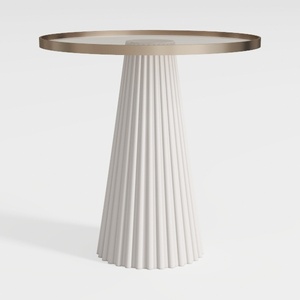
Modern Minimalist Fluted Base Glass Top Side Table 3D Model
Homestyler is an easy-to-use online home design platform offering powerful 3D rendering, a vast collection of interior design projects, and helpful DIY video tutorials. It’s perfect for creating and visualizing your dream space with confidence and creativity.
تصميم الآن مجانا
































