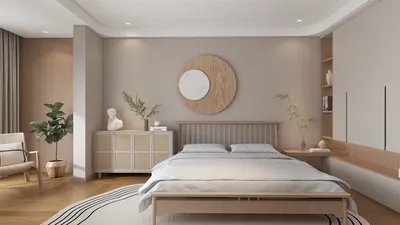


There was a time I impulsively decided to paint a client's bedroom just the night before a housewarming, a classic blunder that served as a stark reminder about drying times and Murphy's Law. What I learned from this experience is that even compact spaces can disrupt your carefully laid plans if necessary preparations are overlooked. However, working with smaller areas can ignite immense creativity, and in this guide, I'll outline practical timelines alongside five design-inspired strategies to expedite and enhance your painting project, all while incorporating Homestyler for effective planning.
1. Professional Preparation: 1–3 Hours
When tackling a standard 10x12 bedroom, tasks like moving furniture, placing drop cloths, repairing minor holes, and taping edges typically require 1–3 hours, depending on your thoroughness. Effective preparation minimizes future time expenditures; ensuring that your walls are well-prepared leads to fewer touch-ups later. Although this preparation phase may feel slow initially, it prevents the hassle of needing to repaint a messy second coat.
save pin
2. Priming When Necessary: 1–2 Hours Plus Drying
In cases where walls are stained or when transitioning from dark to light shades, applying primer becomes essential. This process may take 1–2 hours for the entire room, followed by a drying period of 1–4 hours (or longer for heavy primers, sometimes requiring an overnight wait). While adding primer extends the overall time needed, it notably decreases the amount of final coats necessary. For those in a rush, quick-dry primers can be effective, albeit at a slightly higher price point.
save pin
3. First Coat: 1–2 Hours
Applying the first coat in a typical bedroom usually takes about 1–2 hours for a seasoned painter. Cutting in around edges and corners demands additional focused time. A common challenge is avoiding lap marks, especially in warm or breezy conditions, so maintaining a wet edge and working methodically is crucial.
save pin
4. Drying Time Between Coats: 2–6 Hours
Water-based (latex) paints generally require 2–4 hours before they can be recoated, although certain premium fast-dry formulas may allow recoating in as little as 1–2 hours. Oil-based paints, on the other hand, often necessitate a drying period of 6–8 hours. If you plan to complete the painting in a single day, opting for quick-dry paint and managing ventilation is key. I once attempted a same-day second coat that bubbled due to high humidity, underscoring the importance of proper airflow.
save pin
5. Second Coat and Final Touches: 1–3 Hours
The second and final coat typically mirrors the first, requiring about 1–2 hours for rolling and cutting in, with potential additional time for touch-ups and trim work. After this, allow adequate curing time before repositioning furniture; usually around 24–48 hours for light use and up to a week for full curing. The balance between being patient and rushing to place furniture back can greatly impact the fresh paint's integrity.
For an insightful visual plan when estimating room layouts or aligning furniture, I often utilize Homestyler as a room layout tool, which helps avoid unexpected challenges.
save pin
Frequently Asked Questions
Q: What is the typical time required to paint a small bedroom from start to finish?
A: Expect around 6–12 hours of active work for a 10x12 room with two coats (latex), spread over a single day, alongside at least 4–6 hours for drying; allow 24–48 hours before moving items back into the space.
Q: Is it possible to paint a bedroom within one day?
A: Yes, using quick-dry latex paint, minimizing prep time, and ensuring good ventilation can allow for two coats in a single day, although heavy use should be avoided until the paint is fully cured.
Q: How soon can I sleep in the painted room?
A: Generally, light use (such as sleeping) can resume after 24 hours if the paint has dried and ventilation is managed to reduce fumes. Those with sensitivities may want to wait longer or sleep elsewhere the first night.
Q: Is primer always necessary?
A: Not in all cases. If the existing paint is in good condition and similar in color, you might bypass primer. However, for stains, significant color changes, or porous surfaces, primer is advisable.
Q: Which paint type has the fastest drying time?
A: Water-based (latex) paints are the quickest to dry; certain fast-dry formulations allow recoating in just 1–2 hours, while oil-based options will take significantly longer.
Q: What impact does humidity have on drying times?
A: High humidity can considerably delay drying and elevate the likelihood of tackiness and defects; employing dehumidifiers or air conditioning can help accelerate drying in such conditions.
Q: Are low-VOC paints suitable for bedroom use?
A: Absolutely! Low-VOC or zero-VOC paints greatly minimize fumes and are especially recommended for bedrooms, making them a safe choice for children and sensitive individuals.
Q: Where can I obtain tools that assist in scheduling paint and furniture timing?
A: Utilizing professional room visualization and planning tools can help coordinate painting tasks and furniture arrangements. Personally, I rely on Homestyler to effectively map out timing and layout for room designs.
save pin
Looking to transform your space? Homestyler is your go-to online home design platform! With its user-friendly design tool, stunning 3D renderings, and a wealth of inspiring design projects and video tutorials, you can effortlessly bring your creative vision to life. Start designing today!
지금 무료로 디자인하세요
































