

Direct Answer
The primary challenges when fitting bunk beds into compact spaces usually involve insufficient ceiling clearance, obstructed ladders, doors hitting the bed frame, uneven flooring, and inadequate safety distances. Most of these concerns can be addressed by reorienting the layout, opting for lower-profile bunk designs, or rearranging adjacent furniture before assembly.
From my experience working on numerous small bedroom designs, it's clear that bunk bed problems often arise not due to the room's limited size, but because the layout wasn’t tested prior to installation.
Quick Takeaways
Introduction
Setting up bunk beds in tight bedrooms might seem simple until the frame is in place and the upper mattress is uncomfortably close to the ceiling or the ladder blocks the only pathway.
Over more than ten years of residential interior design, I've helped families overcome bunk bed layout issues in small rooms. While bunk beds maximize space, their tall and rigid structure requires careful spatial planning.
Before installation, I highly recommend using digital tools like Homestyler to visualize furniture placement. Previewing circulation space virtually can prevent hassles before moving physical furniture.
This article explores the common bunk bed fitting challenges in tight quarters and practical, effective solutions.
save pin
Measuring Ceiling Height Before Installing a Bunk Bed
Key Insight: Ceiling height is the most commonly overlooked factor when installing bunk beds; mattress thickness often determines whether the setup is usable and safe.
Many people measure only the bed frame height, forgetting to include mattress thickness. Typical bunk bed frames stand between 60 and 68 inches, while mattresses can add 6 to 12 inches.
Safety recommendations generally advise maintaining at least 30 to 36 inches between the top mattress and ceiling to allow a child to sit upright comfortably.
How to compute safe bunk height:
Example:
This explains why selecting low-profile bunk beds or thinner mattresses often immediately resolves clearance problems.
Fixing Clearance Problems Between Top Bunk and Ceiling
Key Insight: The safest remedy when the top bunk is too close to the ceiling is usually to reduce mattress height rather than alter the bed frame.
Some attempt risky modifications like removing guardrails or cutting the frame, which increase safety hazards.
Better alternatives include:
Guidelines indicate the top guardrail should extend at least five inches above the mattress surface. Using thick mattresses can compromise this safety buffer.
save pin
Solving Ladder Access Issues in Narrow Rooms
Key Insight: Ladder access troubles generally stem from blocked circulation paths rather than ladder design flaws.
In cramped rooms, ladders often conflict with desks, dressers, or doorways, resulting in awkward climbing angles or blocked access entirely.
Typical ladder-related issues include:
Effective solutions for small spaces include:
Before permanent installation, it’s wise to experiment with multiple configurations using a 3D room planner like Homestyler to test bunk bed positions. Even minor orientation adjustments can improve ladder accessibility.
Dealing With Door or Window Obstructions
Key Insight: Doors and windows are common impediments to bunk bed placement in tight rooms.
Unlike standard beds, bunk beds’ height often clashes with window trims, curtain rods, or door swing paths.
Frequent conflicts I observe in projects include:
Designers typically resolve these by:
save pin
Stabilizing Bunk Beds on Uneven Floors
Key Insight: Even slight floor unevenness can cause a sturdy bunk bed to wobble.
This situation often arises in older homes where floors have settled. A tilt of just a few millimeters can make the bed unstable.
Simple fixes to stabilize include:
Anchoring the bed to the wall is vital, especially for taller bunk beds. Manufacturers often recommend securing the frame when the top bunk will be used by children.
Answer Box
Most problems with bunk bed installation in small spaces occur due to layout conflicts rather than bed size. Planning ladder placement, door clearance, and ceiling headroom ahead of time prevents the majority of issues.
Improving Safety in Tight Layouts
Key Insight: Safety becomes increasingly crucial as room size decreases because there’s less buffer space around the bunk bed.
In extremely compact rooms, layouts should prioritize safe movement around the beds rather than maximizing the number of furniture pieces.
Important safety upgrades to consider include:
If unsure whether a layout feels too cramped, using AI-powered interior visualization tools like Homestyler to preview full-room arrangements can reveal circulation issues before installing furniture.
save pin
Final Summary
FAQ
What ceiling height is necessary for bunk beds?
Typically, ceilings should be at least 8 feet high to maintain safe headroom above the upper mattress.
What if my bunk bed is too close to the ceiling?
Switching to a thinner mattress or a low-profile bunk frame can safely increase head clearance.
How much clearance should be maintained above the top bunk?
Ideally, allow 30 to 36 inches between the mattress surface and the ceiling for safe sitting room.
Are bunk beds suitable for very small bedrooms?
Yes, but successful installation depends on carefully planning ladder space and door clearance.
Why does my bunk bed wobble after setup?
Uneven flooring is a frequent cause; installing furniture levelers or wall anchors usually resolves instability.
Are bunk beds safe near windows?
They can be, but it’s best to avoid positioning the top bunk right against window frames or curtain hardware.
How much space should be available around a bunk bed ladder?
At least 24 inches of clear floor space is recommended for safe ladder use.
What is the greatest error when fitting bunk beds in small bedrooms?
The most common mistake is assembling the bunk bed before verifying the room layout and circulation space.
References
U.S. Consumer Product Safety Commission – Bunk Bed Safety Guidelines
American Academy of Pediatrics – Child Bedroom Safety Considerations
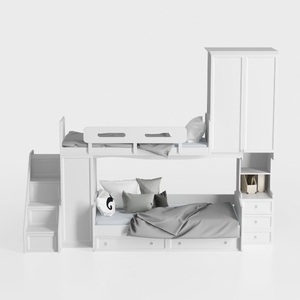
Minimalist White Solid Wood Bunk Bed with Wardrobe and Storage Drawers 3D Model

Minimalist White Fabric Curved Headboard King Bed 3D Model

Modern Cute Bunny Ear Upholstered Bed Kids Bedroom Furniture 3D Model
Homestyler offers an easy-to-use online design tool with stunning 3D renderings, inspiring design projects, and helpful DIY video tutorials. It’s perfect for anyone looking to creatively and confidently design their home from start to finish.
Design Now for FREE
































