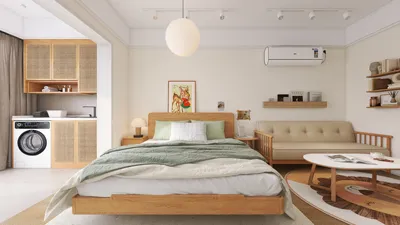


I once worked with a client who was determined to fit a king-size bed into a cramped 10' x 10' space – and even wanted it to be centered with two nightstands and a cozy reading corner. I nearly burst out laughing, but instead sketched out several seemingly impossible solutions and ultimately discovered an optimal layout that satisfied everyone. Designing for small areas encourages creativity; it’s akin to solving a design puzzle. Fortunately, tools like Homestyler can assist in visualizing these layouts before making any decisions.
1. Tilt the Bed — disrupt the normal layout
Positioning a king bed at a slight angle can enhance the flow within the space, making tight corners feel more purposeful rather than cramped. I implemented this strategy in a studio apartment where the door swing and window arrangement made a straight configuration feel clunky; angling the bed resulted in a natural pathway and a snug focal point. Utilizing design tools such as Homestyler enabled me to visualize and plan this layout effectively.
This method is cost-effective and visually striking, although it can consume some usable floor space on one side and complicate furniture choices. I always prefer to test it out on paper first to ensure the visual benefits outweigh the minor sacrifice of space.
save pin
2. Go Vertical — utilize platform beds with storage
Platform beds that come with built-in drawers or a raised loft design transform the bed into valuable storage, which is incredibly beneficial for compact rooms. I often specify shallow drawers for linens and integrated lighting niches, allowing for a neat appearance and eliminating the need for bulky dressers. Through the Homestyler platform, these designs can be easily visualized before any physical work begins.
While they can be on the pricier side and custom carpentry requires exact measurements, the outcome is a refined, multifunctional piece that addresses two needs simultaneously.
save pin
3. Opt for Slim Designs and Floating Features
I prefer slim dressers, floating nightstands, and wall-mounted lighting to maintain floor space. Before finalizing any decisions, I usually create an accurate floor plan to ensure that a narrow wardrobe still allows for enough movement around the king mattress. Tools like Homestyler are essential for this type of planning.
The benefit is a lighter visual aesthetic and increased clearance; however, the downside is reduced surface area and storage capacity, which means decluttering becomes essential.
save pin
4. Use Bright Colors, Mirrors, and Smart Sightlines
Light hues, strategically placed mirrors, and unobstructed sightlines can create an illusion of a larger bedroom. On one occasion, I removed an oversized headboard and replaced it with a narrow ledge paired with a mirror above — instantly, the room felt twice its original size, and the king bed no longer dominated the space. By incorporating designs from Homestyler, I was able to visualize this transformation in advance.
This is an economical strategy, but it requires balanced lighting and careful placement; using an inappropriate mirror or heavy curtains may counteract the intended effect and make the room appear cluttered.
save pin
5. Create Zones with a Multifunctional Headboard
A headboard serving as shelving, a desk area, or a privacy divider can establish distinct zones in a small bedroom, preventing the bed from overpowering the room. I enjoy designs featuring recessed lighting and open shelves — these add a custom touch while keeping essentials easily accessible. Visual aids using Homestyler often help clients see how the headboard can anchor the layout effectively.
Although implementing this often involves some carpentry, I typically present the idea with a quick 3D visualization to help clients grasp the space's functionality. The trade-offs are cost and permanence, but for many, the increase in livability justifies these considerations.
save pin
FAQ
1. Can a king bed fit in a small bedroom?
I often respond with a yes — but it largely depends on the arrangement of the room, door swing paths, and desired clearance. With angled placements, built-in storage, or narrower furniture choices, a king bed can indeed be accommodated in smaller spaces.
2. What is the minimum room size for a king bed?
Realistically, a minimum of 10' x 10' is needed to fit a king bed while allowing for some circulation, although 11' x 11' or larger would certainly be more comfortable. Remember to account for door swing movements and closet access when measuring.
3. What are the standard dimensions for a king mattress?
As per the National Sleep Foundation, a standard U.S. king mattress measures 76 × 80 inches (193 × 203 cm), so plan your furniture and space accordingly around these dimensions (sleepfoundation.org).
4. Are platform beds more suitable for small rooms?
Platform beds featuring storage capabilities optimize the under-bed area and can reduce the need for dressers, which is a key advantage in smaller settings. The only downside is that built-in storage might limit airflow and complicate mattress changes slightly.
5. Should I consider a California king instead?
California kings are longer and narrower (typically 72 × 84 inches), which can be beneficial in elongated rooms but may exacerbate width issues. Always measure your space and doorways prior to making a selection.
6. How can I prevent a small room from feeling tight with a king bed?
Employ low-profile furnishings, ensure clear pathways, use mirrors, and maintain a consistent color scheme. Floating furniture and vertical storage make a significant difference in visual perception.
7. Is it essential to have professional planning?
Not always, but creating a quick floor plan or mock-up can help avoid mistakes. I often draft multiple layouts and run tests to prevent costly alterations after purchase.
8. Any budget-friendly advice?
Focus on storage-first solutions (under-bed drawers or shelving) and consider upgrades in paint or lighting — these are cost-effective and transformative. Invest in one custom feature, such as a headboard with storage, while keeping other pieces straightforward.
Homestyler is your go-to online home design platform! With its user-friendly design tool, stunning 3D renderings, and a wealth of design projects and DIY video tutorials, you can effortlessly transform your space into something extraordinary. Start designing your dream home today!
Zaprojektuj teraz za darmo
































