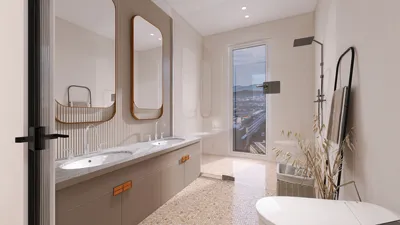


As our daily lives become increasingly complex, the trend towards smaller living spaces continues to thrive—more devices, diverse roles, and evolving routines. Insights from AIA renovation briefs and NAHB trend notes reinforce this idea: adaptability is more advantageous than merely having larger spaces, and it seems micro-units are on our immediate horizon. In this context, a 350 sq ft studio apartment blueprint does not represent a limitation; instead, it functions as an operational system. Using a spatial reasoning toolkit, like Homestyler, I realize how these designs reflect future living patterns.
Core with Flexible Perimeter
Design Concept: Utilities are aggregated along the entry wall featuring a kitchenette, combined laundry, and bathroom, which allows the window side to breathe life into the interior. Future activities are designed to stack vertically; thus, the core transforms into a server hub while the perimeter represents the user interface layer.
Movement: The flow follows this path: entry → drop zone → galley → living/desk → sleeping area adjacent to glass. Tasks are processed in a linear fashion, reducing backtracking and delays in interaction.
Visual Lines: From the entrance, the eye flows unobstructed towards natural light, with kitchen elements remaining below shoulder height to maintain the living area's visual prominence.
Storage Solutions: Tall pantry or wardrobe units measuring 48–60 linear inches adjacent to the core serve as a cache, ensuring easy access to daily essentials.
Furniture Configuration: A sofa sized between 72–78 inches, desks at 24 inches deep, and options for a 54-inch queen murphy bed or a 48-inch sofa-sleeper fit comfortably within a 9-foot living bay, ensuring clearances remain predictable.
Conclusion: This design is tailored for the next five years of hybrid working styles, quick cooking sessions, and weekend revamps; the core remains stable while peripheral elements adapt over time.
save pinOpen in 3D Planner Processing...
Diagonal Sightline with Off-Center Bed Niche
Design Concept: By positioning the living area towards the far corner, we enhance the perceived depth; conversely, an off-center sleep niche operates subtly in the background, always available yet unobtrusive.
Movement: The pathway flows as follows: entry → angled living cluster → small dining area → bed niche → balcony or window. The diagonal approach minimizes steps while enhancing the experience.
Visual Lines: With a 45° orientation for the sofa, there’s a primary focus on the glass and a secondary on art or television; the bed remains discreetly placed out of immediate view, easing cognitive load.
Storage Solutions: Incorporating under-bed drawers (16–18 inches high), overhead cabinets, and a 24-inch deep wardrobe forms a well-organized storage hierarchy.
Furniture Configuration: Features include a round table measuring 30–32 inches, two stacking chairs, and a 6-foot low-height media console; a 60-inch bed fits in a 5'6" niche decorated with integrated sconces, ensuring tight tolerances.
Conclusion: For clients seeking a tranquil environment, this layout ensures seamless living; the spacious appearance stems from effectively concealing non-essential operations within the design.
save pinOpen in 3D Planner Processing...
Rail Studio with Movable Partition
Design Concept: A linear layout that connects the kitchen, living space, and sleeping area mirrors a streamlined codebase; a translucent sliding wall serves as a dynamic shift between day and night functionalities.
Movement: The sequence proceeds: entry → pantry rail → movable worktable → lounge → partition → sleep; each section interfaces seamlessly with the next, maintaining logical continuum.
Visual Lines: Using translucent panels retains brightness while veiling bed textures; the layout presents a long corridor of light rather than feeling cramped.
Storage Solutions: Using ceiling tracks, shelves above the rail and a 30-inch closet near the entry, plus a pegboard grid for organizing tools and bags, creates a flexible storage system.
Furniture Configuration: A drop-leaf table that expands to 60 inches, an 18-inch-deep media shelf, and an 8-foot rail kitchen fitted with 24-inch appliances maintain a streamlined aesthetic.
Conclusion: This design is equipped to adapt to changing routines, with the partition transitioning smoothly like a soft toggle, allowing one area to serve dual purposes without issues.
save pinOpen in 3D Planner Processing...
Final Thoughts
A 350 sq ft studio apartment floor plan works most efficiently when viewed as an interface rather than just a container. Here, components communicate effectively, buffers align, and light serves as the guiding protocol. Micro-apartment designs and compact studios are not about austerity; they represent precision in living. In my experience, the most intelligent homes of the future will not rely on more space but rather on being more intentional. What I consistently observe in my projects is how even the smallest spatial decisions can profoundly change how people experience their living environments. For visualizing these innovative layouts, tools like Homestyler can be incredibly beneficial.
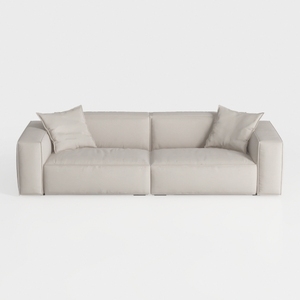
Minimalist Beige Fabric Modern Sofa with Throw Pillows 3D Model

Modern Dark Green Velvet Tufted L-shaped Sectional Sofa 3D Model
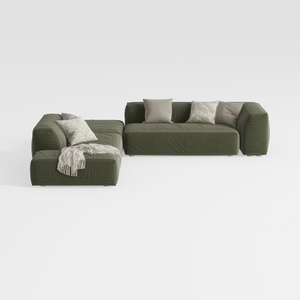
Minimalist Modern Fabric L Shaped Sectional Sofa with Throw Pillows 3D Model
Homestyler is an exceptional online home design platform that empowers you to create stunning spaces effortlessly. With its user-friendly design tool, impressive 3D renderings, and a wealth of design projects and video tutorials, bringing your home decor vision to life has never been easier!
지금 무료로 디자인하세요
































