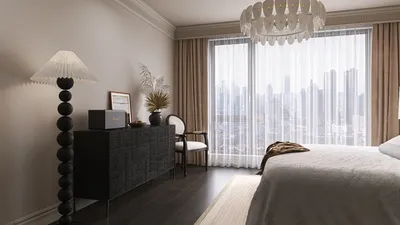


I once transformed a whole living room, thinking I chose a neutral grey, but I received a frantic call from the homeowner when it appeared blue at dawn. This experience taught me that grey can change its character easily. Now, I always test samples in various lighting conditions and frequently refer to AI home design platforms like Homestyler to understand how different undertones work before making a final decision.
1. Warm Greys for a Cozy Atmosphere
To achieve a welcoming grey rather than a cold one, opt for warm greys that feature beige or brown hues, commonly referred to as ‘greige.’ In my smaller apartment renovations, this choice creates a comforting backdrop that harmonizes beautifully with wooden floors and brass details.
Advantage: it reduces stark contrasts, making the room feel more inviting. Challenge: warm greys may appear drab under fluorescent lighting; therefore, consider using a daylight bulb or test larger swatches.
save pin
2. Cool Greys for a Sleek Minimalist Look
Cool greys that have hints of blue or green are perfect for clean, contemporary designs, pairing wonderfully with bright white trim. I used this strategy in a recent redesign, and it instantly made the area feel airy without appearing too harsh.
Advantage: it complements metal finishes and transparent glass. Trade-off: overly cool greys can seem frosty, so incorporating warm textiles or wooden elements is beneficial for balance.
save pin
3. Mid-Tone Greys as Versatile Backdrops
Mid-tone greys are my first choice when clients seek a flexible palette; they effectively conceal dirt better than stark white and allow colorful furniture to stand out. For an urban studio, I suggested a mid-tone that maintained an open feel while allowing the artwork to dominate the visual space.
Practical tip: always examine paint samples on both large and small surfaces—mid-tones can sometimes lean towards blue or brown depending on the light and fabric, which is why I frequently use tools like Homestyler to visualize the final outcome confidently.
save pin
4. Dramatic Deep Charcoal Accent Walls
Implementing a deep charcoal accent wall adds instant depth, especially behind sofas or media units. I cautioned a client that this could make the space feel tighter, but by strategically using lighting, we achieved a cinematic atmosphere.
Perk: mitigates scuffs and grounds the space; downside: it absorbs light—therefore, keep other walls lighter and incorporate reflective elements.
save pin
5. Two-Tone Grey Combinations for Enhanced Perception of Height
Painting the lower walls a darker shade of grey and the upper walls a lighter hue can create the illusion of higher ceilings and a layered feel. I applied this technique in a compact living area, achieving the effect of more space without major renovations, and it was remarkably successful.
Small note: the separation line must be carefully positioned—too high or low can disrupt the visual balance. If your kitchen merges with the living area, consider coordinating with a well-planned small-space kitchen design so that the greys integrate cohesively throughout the zone.
save pin
FAQ
Q1: What is the best grey shade for compact living rooms?
Typically, I suggest a light to mid-tone grey with warm undertones; it reflects light but still conceals wear. Testing samples on the largest wall ensures you see how it appears at various times throughout the day.
Q2: How can I determine if a grey has blue or brown undertones?
Check the color against a true white and a natural wood sample; blue undertones contrast sharply with white, while brown undertones warm up when paired with wood. Swatching in your actual space is crucial.
Q3: Can grey create a cold atmosphere in a room?
Indeed—cool greys can appear icy, particularly under cool artificial lighting. Incorporating warm materials like textiles and wood, along with layered lighting, can counteract that chill effectively.
Q4: Should the trim match the same grey or be a brighter white?
Bright white trim offers crisp contrast and accentuates architectural features, whereas a slightly lighter grey trim provides a softer, modern aesthetic. My choice depends on the style and the level of drama the homeowner desires.
Q5: Are there certain greys that are better for hiding stains?
Mid-tones and slightly warm greys are more effective in concealing everyday marks compared to very light or dark shades. Consider the function of the room; high-traffic living spaces benefit from practical mid-tones.
Q6: How does exposure to light impact grey paint?
Rooms facing north tend to render greys cooler, while those facing south will warm them up. Always assess samples in the room during both morning and evening to appreciate the full spectrum.
Q7: What paint finish is ideal for living rooms?
I recommend using an eggshell or low-sheen finish for living spaces; it merges durability with subtlety. While pure matte can hide flaws, it may be harder to clean in more active households.
Q8: How do professionals gauge how light or dark a paint will appear?
We often utilize the LRV (Light Reflectance Value) to determine how much light a paint color reflects. According to Benjamin Moore, LRV is a dependable metric for predicting how a color will behave within a specific space.
save pin
Discover the ease of home design with Homestyler! This user-friendly platform offers a powerful online design tool, stunning 3D renderings, and a wealth of inspiring design projects and video tutorials. Transform your ideas into reality effortlessly—perfect for both beginners and seasoned designers!
Design Now for FREE
































