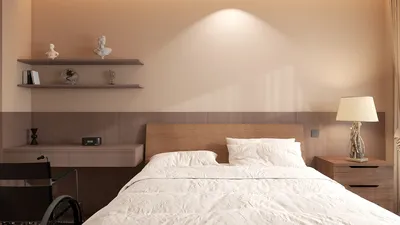


During a project, I once arrived with the wrong color sample for a client’s 12x12 bedroom. Surprisingly, she adored it, and we nearly decided to keep that color. However, that mishap was a valuable lesson on the importance of measuring and visualizing before committing to paint. To avoid such situations, I often utilize a quick 3D mockup, like those offered by Homestyler, to visualize the room.
Let’s get straight to business: a typical 12x12 room with 8-foot ceilings has straightforward wall and ceiling measurements that simplify calculations. I'll guide you through the math while providing practical recommendations to prevent ending up with excess paint or making an unnecessary trip to the store.
Here’s how I calculate paint coverage (easy math you can apply)
First, determine the room area: 12 ft x 12 ft equals 144 sq ft. The perimeter is calculated as (12+12+12+12), giving you 48 ft. To find the wall area, multiply the perimeter by the height: 48 ft x 8 ft equals 384 sq ft. Most interior paints offer coverage of about 350–400 sq ft per gallon per coat.
For applying two coats on the walls, the calculation becomes 384 x 2 which equals 768 sq ft. The ceiling, requiring a single coat, accounts for 144 sq ft. Therefore, the total coverage required is 912 sq ft. Based on a coverage of 350 sq ft per gallon, you would need around 2.6 gallons. I suggest purchasing 3 gallons for the two wall coats as well as one for the ceiling and potential touch-ups. If you plan for two ceiling coats or darker shades, aim for 4 gallons, including one quart for trim and doors.
save pin
1. Create an accent wall to save paint and inject character
If your aim is to make an impact without overspending, consider painting a single wall (12 ft) in a dramatic color rather than the entire room. This approach can decrease paint needs by about 25% while still adding distinctiveness. Be mindful of color matching and finishes to ensure the room remains cohesive. I typically sample adjacent colors before making a final choice.
save pin
2. Choose sheen carefully—less can be more in compact spaces
Opting for flat or eggshell finishes can conceal wall imperfections while needing less preparation; satin or semi-gloss finishes on trim provide a sharp appearance but demand more paint for doors and moldings. My go-to is using eggshell on walls and satin on trim, meaning you should budget for a quart specifically for trim if you desire that refined finish.
save pin
3. Preparation and primer: when an extra can is worthwhile
When covering a dark hue, stains, or fresh drywall, using a primer can minimize finish paint needs and enhance bond quality. A gallon of primer provides coverage close to that of paint, and it can reduce the number of finish coats needed—for this reason, consider budgeting an extra gallon if your walls demand it.
For precise room dimensions without breaking the bank, I sometimes invite clients to sketch a quick floor plan. This allows us to design lighting and choose color schemes around the furniture effectively—keeping paint selections practical and goal-oriented.
save pin
4. Ceiling preferences: white or color?
In a 12x12 room, ceilings measure 144 sq ft. Generally, a white ceiling will require one gallon for a consistent finish. Alternatively, painting the ceiling the same shade as an accent wall can look fabulous, but be prepared for a potential second coat—so plan for an additional quart or gallon depending on the coverage required.
save pin
5. Don’t overlook trim, doors, and touch-ups
In a standard 12x12 room, trim and doors usually need around a quart to a gallon, contingent upon the amount of moldings present. I habitually purchase an extra quart of the finish color for touch-ups later on; this is a low-cost way to guard against scrapes and nicks during moving day. If you're also planning modifications in the kitchen or other connected areas, seeking inspiration for effective kitchen layouts can guide you in choosing colors that unify your home.
save pin
FAQ
Q1: How many gallons are necessary for two coats in a 12x12 room with 8ft ceilings?
A: To cover the walls with two coats and the ceiling with one coat, expect to need about 3 gallons. If you intend to apply two coats on all surfaces (walls + ceiling) and trims, round up to 4 gallons.
Q2: Does coverage differ according to the paint brand?
A: Yes, coverage is variable—most manufacturers specify coverage between 350–400 sq ft per gallon. For instance, Sherwin-Williams notes many interior paints generally fall within this coverage range based on the surface's porosity.
Q3: Should I exclude windows and doors from my total measurement?
A: Yes, subtracting the area of significant windows and doors is advisable for a more accurate estimate. A standard door occupies around 20 sq ft while a medium window could take up 15–20 sq ft.
Q4: How much primer is advisable for a 12x12 room?
A: Typically, one gallon of primer suffices for one coat in a 12x12 room. If you’re sealing stains or starting from bare drywall, anticipate needing a complete gallon of primer.
Q5: Is it acceptable to use leftover paint from another area?
A: Yes, it is permissible. However, be cautious, as colors may appear differently under varying lighting conditions and next to different decor. It's wise to test a sample patch prior to fully committing the entire room.
Q6: What about matching ceiling paint with wall colors?
A: Using the same color for both the ceiling and walls adds sophistication and can create a cozier atmosphere. However, darker ceilings may make a low room feel even lower—consider the paint finish and lighting before making a decision.
Q7: Any suggestions for avoiding excess paint purchases?
A: Ensure precise measurements, deduct openings, verify coverage on the paint can, and buy one extra quart—not an additional gallon—for touch-ups. Small sample pots are excellent for preliminary testing.
Q8: Where can I quickly generate a layout mockup to plan my color selections?
A: Utilize an online 3D design tool or floor planning application like Homestyler to visualize color choices in context; this approach can save you time and help avoid costly errors.
save pin
Homestyler is your go-to online home design platform! With its user-friendly design tool, stunning 3D renderings, and a wealth of design projects and DIY video tutorials, you can effortlessly create and visualize your dream spaces. Transform your home with ease and creativity!
Design Now for FREE
































