


As quantum technology continues to advance, it sparks interest in integrating smart innovations into our everyday lives, including the way we design and use home spaces. Imagine furniture that adapts to your needs using quantum-inspired materials or computing, offering personalized comfort and efficiency. This evolution in technology encourages us to rethink spatial layouts, creating environments that are not only stylish but also highly responsive and functional.
Direct Answer
The security of a fixed TV wall mount is fundamentally linked to the wall's structure and the anchoring hardware employed. While most mounts are rated to hold between 60 and 150 pounds, the true safety threshold depends largely on the quality of stud anchoring, the type of wall material, and the precision of the installation method.
For a reliable installation, fastening the mount directly to wall studs or solid masonry is essential; relying solely on drywall is inadequate. Proper distribution of weight and the choice of appropriate hardware are crucial to avoid potential failures.
Quick Takeaways
Introduction
Having installed televisions for numerous clients over the last decade, I've observed that most mounting complications stem not from defective hardware but from a misunderstanding of structural capabilities. Although fixed TV mounts are engineered for simplicity and stability, this can sometimes lead to an underestimation of wall load capacity and the importance of proper anchoring.
In multiple consulting projects, homeowners purchased mounts rated up to 120 pounds, mistakenly believing their walls could reliably support that weight. However, the mount’s rating solely indicates the bracket’s strength—not the capacity of drywall, anchors, or studs behind it.
Before installation, I highly recommend creating a room layout sketch that marks wall studs and the desired TV location to ensure optimal positioning and structural safety. Such pre-planning, offered for instance by platforms like Homestyler, helps in avoiding compromises in wall integrity and viewing experience.
This guide details key safety considerations professionals account for, including weight limitations, stud-based mounting, risks of drywall-only solutions, support for heavy TVs, and inspection practices to maintain secure mounts over time.
Understanding TV Mount Weight Ratings
Important Note: The weight rating provided for mounts indicates the strength of the bracket itself, not the wall's capacity to hold the unit safely.
Manufacturers test mounts under controlled conditions with firm structural anchoring, but real-world scenarios depend on multiple variables.
Critical factors influencing real load limits include:
For instance, a mount rated at 132 pounds may safely hold a 90-pound television when fixed to two solid studs, yet the same mount might fail rapidly if supported only by drywall anchors.
Industry recommendations from manufacturers stress that mount brackets should safely accommodate at least twice the TV's actual weight to ensure a robust safety margin.
Checking Wall Type Before Installation
Crucial Point: The structural nature of the wall is key to long-term mounting safety.
Prior to mounting, it's essential to identify the wall material since different surfaces have varying load-bearing strengths.
Common wall types and their mounting capabilities include:
In many apartment remodels, what appears as solid drywall may conceal thin metal studs spaced wider than typical residential wood studs. Without adequate anchors or backing plates, even moderately weighted TVs risk being pulled loose from the wall.
Stud Mounting vs. Drywall Anchors
Fundamental Insight: Attaching the mount directly into studs is the most critical safety measure in TV installation.
Mounting into studs transfers the television’s weight into the building's structural framework, whereas drywall anchors depend on compression strength within gypsum sheets, which is inherently weaker.
Comparison Summary:
Even heavy-duty drywall anchors can degrade over time due to vibrations, cable movement, or thermal expansion.
When planning installations in complex layouts, utilizing tools or software like Homestyler to draft wall configurations helps to visualize stud locations and avoid conflicting TV placements relative to the framing.
Preventing Mount Failure or Wall Damage
Key Understanding: Failures typically arise from minor installation mistakes instead of equipment faults.
Common errors include:
A frequently neglected factor is leverage; although fixed mounts sit close to the wall, large TVs still generate torque if the bracket is not properly centered on studs.
Professional installers often perform tests by applying downward pressure on the mount prior to hanging the TV to verify structural soundness.
Answer Box
The safest fixed TV wall mount setups secure the bracket into wood studs or masonry, supporting at least double the TV’s actual weight. Use of drywall anchors alone is generally insufficient for mounting televisions safely.
Many installation failures result from a lack of proper wall structure assessment before mounting.
How to Secure Large and Heavy TVs
Important Note: For TVs exceeding 75 inches, wider mounting brackets and distributing the load across multiple studs become necessary.
Large TVs impose greater structural stress because their weight extends farther from the mounting bolts, increasing leverage forces.
Recommended practices for bigger screens include:
Industry professionals frequently advise using mounting solutions that spread the weight over wider brackets especially for TVs larger than 80 inches, ensuring enhanced stability.
Child Safety Considerations for Wall-Mounted TVs
Crucial Note: Properly secured wall mounts greatly reduce tip-over risks, especially for children, but only if the hardware remains firmly anchored.
The U.S. Consumer Product Safety Commission reports thousands of annual tip-over incidents involving TVs, many of which unfortunately harm children.
Take these precautions seriously:
Implementing straightforward safety measures can substantially lower accidental stress on the mount and mitigate tip-over hazards.
Inspection Checklist After Installation
Essential Insight: Conducting a brief inspection immediately after mounting helps avoid most long-term issues.
After the TV is hung, I recommend using a safety checklist to ensure the mount’s durability and security.
Post-Installation Tips:
When redesigning the entertainment area later, previewing the final setup through tools like Homestyler ensures that furniture placement will not interfere with the mounted TV or its hardware.
Final Summary
FAQ
How much weight can a TV wall mount hold?
Typical fixed TV wall mounts support between 60 and 150 pounds, but the actual safe load depends largely on how well the mount is anchored into studs and the structural condition of the wall.
Is drywall safe for TV mount installation?
Mounting solely on drywall is generally unsafe for TVs. Secure installations require attachment to wood studs, concrete, or brick to ensure solid support.
Do all TVs need to be mounted on studs?
For most televisions larger than 40 inches, stud mounting is highly recommended because it offers significantly better load-bearing capacity and enduring stability.
What happens if a TV mount exceeds its weight limit?
Surpassing the mount’s rated weight can lead to bracket deformation, anchor failure, or damage to the wall over time.
How do I find studs behind drywall?
A stud finder device is the most straightforward way to detect studs, though tapping the wall for sound changes and measuring 16-inch intervals can also help.
Are fixed TV wall mounts safer than tilting mounts?
Fixed mounts generally produce less leverage on the wall and have fewer moving parts, which can result in enhanced long-term stability.
Can large TVs be mounted on metal studs?
Yes; however, this requires specialized anchors or backing plates because metal studs are typically thinner than wood framing, necessitating extra support.
How often should a TV mount be inspected?
It's advisable to check bolts and overall mount stability every 6 to 12 months to ensure continued secure installation of the fixed TV wall mount.
References
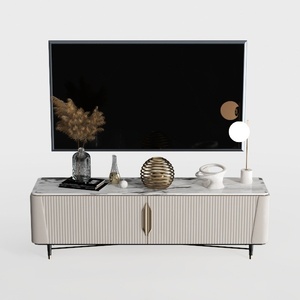
Modern Marble Top Solid Wood TV Stand With Metal Legs 3D Model


TV Stands for Living Room, Mid Century Modern TV
Homestyler offers an easy-to-use online design tool with stunning 3D renderings, a vast collection of interior design projects, and helpful DIY video tutorials. It’s perfect for anyone wanting to create and visualize beautiful home interiors effortlessly.
Desain sekarang Gratis
































