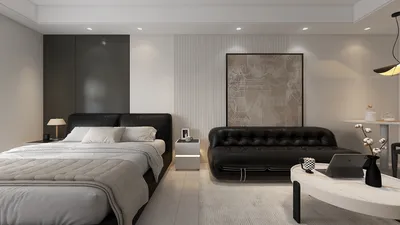


When I design game environments, I apply the same meticulous approach as I would for real homes, focusing on effective circulation, harmonious proportions, and functional room layouts that cater to everyday activities. In Bloxburg, the effectiveness of a floor plan influences how natural light is directed, how players navigate during roleplay, and the arrangement of furniture to avoid visual disarray. A thoughtfully zoned configuration can enhance perceived spaciousness by up to 15% by minimizing conflicts between furnishings and refining traffic patterns. Research from Steelcase indicates that organized environments boost concentration and lower cognitive friction, applying these principles can lead to smoother gameplay and better staging in virtual homes. Additionally, studies by Herman Miller correlate the clarity of space with increased comfort and task efficiency—valuable practices to integrate into the design of living, cooking, and sleeping areas using tools like Homestyler.
Effective lighting and ergonomic considerations play a crucial role even in gaming scenarios. The Illuminating Engineering Society suggests maintaining a light intensity of 300–500 lux in task-oriented areas of residential spaces, which can be interpreted as strategically placing lamps and windows in zones where interaction takes place, such as the kitchen, workspace, and bedside areas. The WELL v2 guidelines emphasize the importance of glare management and optimal light placement for circadian health, advocating for a layered approach combining ambient and task lighting to mitigate bright spots created by screens and reflective surfaces. When spaces like bedrooms, studies, and lounges are illuminated properly, players tend to stay engaged longer and perceive the environments as more authentic. For a deeper understanding of how workspace layouts and lighting affect behavior, Gensler’s research insights and WELL v2 recommendations can be excellent resources: refer to gensler.com/research and wellcertified.com.
Planning the Core: Circulation, Proportions, and Sightlines
My design process begins with establishing a layout that covers three to four distinct zones: public (entry, living, dining), semi-public (kitchen, restroom), private (bedrooms, bathrooms), and service areas (laundry, storage, garage). It’s crucial to maintain main circulation pathways that are 1.2 to 1.5 blocks wide in Bloxburg units, ensuring that two avatars can navigate comfortably without collisions. Targeting spatial proportions that offer a sense of balance is important; living rooms should ideally maintain a ratio of 1:1.3 to 1:1.6, which feels inviting and comfortable, while kitchen designs, whether L-shaped or galley, should facilitate ease of movement through reduced turning distances. Aligning primary sightlines from the entrance to a focal wall or window establishes a welcoming atmosphere and prevents the sensation of overcrowding.
Compact Lot Design (Starter to Mid-Size)
For smaller lots, I favor a front-entry design that provides immediate visual relief: a narrow foyer leading to a combined living and dining space, with the kitchen situated adjacent for convenience. It's beneficial to locate the living area close to natural sunlight. Implementing a split bedroom arrangement—positioning the main bedroom at the rear for tranquility, while the secondary bedroom is towards the front but separated by a bathroom or closet—works well. If roleplaying is common, including a small office nook off the living space is advantageous. Ensure door swings are unobtrusive by maintaining a clear arc of approximately 0.8 to 1.0 blocks.
Family-Friendly Medium Plot Design
In a medium-sized plot, I designate distinct areas for various activities: a spacious living room with two seating groups (for conversation and media), dining positioned conveniently near the kitchen for service efficiency, and a hallway that connects to the bedrooms. Adding a mudroom or utility space near the garage enhances realism upon entering the home. Bathrooms should be stacked or placed back-to-back to streamline plumbing. To manage noise, positioning closets between bedrooms can provide valuable acoustic separation.
Large Lot Layout for Entertaining and Roleplaying
For larger properties, I focus on axial symmetry, creating a central hallway or an expansive dual-height living area featuring a fireplace or a striking wall as a visual anchor, flanked by dedicated kitchen-dining spaces and a quieter library or office area. This design allows guests to travel directly from the entrance to the living area, while family members can easily access the kitchen and bedrooms without crossing the primary entertainment space. Considering the integration of a service area (pantry, laundry, storage) behind the kitchen helps to maintain clean aesthetic lines and minimize visual disruptions. For multi-level homes, aligning staircases directly above each other and ensuring landings receive natural light can enhance functionality. When experimenting with designs, utilizing a room layout tool like Homestyler to visualize furniture arrangements and movement patterns is quite beneficial.
Kitchen Design: Triangle versus Work Zones
The traditional kitchen triangle (sink, cooktop, fridge) still proves effective for smaller kitchens. However, in medium to larger designs, I prioritize work zones: positioning the prep area by the sink, the cooking range centrally, and ensuring a dedicated space for baking with ample counter landing available for convenience. Maintaining a clearance of 1.2 blocks behind seating at islands helps to prevent collisions as people pass by. For homes with two cooks, I recommend configuring counters in parallel to reduce congestion, steering clear of tight corners that could lead to avatar bumps.
Living Room Design: Scale, Layers, and Visual Rhythm
Establish a primary seating arrangement anchored by a appropriately sized rug beneath the front legs of sofas and chairs, then incorporate a secondary reading chair beside a window for additional comfort. To minimize glare from screens, position televisions perpendicular to the main light source. Establishing visual rhythm can be achieved by utilizing consistent materials and color palettes: echoing wood tones from shelves in coffee tables or repeating a matte black finish in hardware. Understanding color psychology may also enhance a room’s atmosphere: as noted by Verywell Mind, blue hues can impart calmness while greens promote restoration—ideal in bedrooms or study areas; energizing tones such as warm yellows or coral are more suitable for kitchens and play spaces.
Bedroom Design: Privacy and Sound Control
To maintain privacy, position beds away from direct sightlines of doors; when this is unavoidable, employ partial screens or tall headboards to create visual barriers. Ensure bedside task lighting features a warm white color temperature to create a tranquil atmosphere. A small study desk placed under a window can be effective, provided that glare is managed through sheer curtains or angled blinds. Utilizing closets on shared walls between bedrooms will serve as acoustic buffers; adding a bookshelf on the hallway side can further enhance sound insulation.
Bathroom Design: Stacking, Ventilation, and Clean Lines
In multi-level homes, vertically stacking bathrooms simplifies plumbing logistics. Place vanities on shared walls while isolating showers from main circulation routes to maintain an organized flow. Ensuring a clearance of 0.9 to 1.0 blocks in front of toilets and vanities enhances accessibility. Using matte tile finishes can mitigate glare and enhance realistic light absorption.
Entrances, Mudrooms, and Storage Considerations
Creating a believable arrival sequence enhances the roleplaying experience: a sheltered entry leads to a designated drop-off zone for keys, a bench for shoes, followed by a pathway to the kitchen. Efficient storage solutions should be proximity-oriented—pantry situated near the kitchen, linens by the bathrooms, and a coat closet close to the entryway. Tall cabinetry in kitchens can visually balance expanse of base cabinets while establishing a coherent rhythm.
Proportions and Visual Harmony
I envision spaces using principles of thirds and halves. An elongated console table paired with artwork achieves visual harmony if the artwork occupies two-thirds of the table’s width. Large spaces appear more tranquil when substantial pieces, like sofas and media units, are proportionate to each other. Avoid over-furnishing; maintaining negative space around focal points is crucial to preserving clear visual hierarchy.
Light Layers and Glare Management
An effective lighting strategy incorporates ambient sources for general illumination, task lighting for specific functions, and accent lighting to introduce depth. Positioning sconces or floor lamps in reading areas, installing pendants over islands, and ensuring reflective surfaces are shielded from direct sunlight will mitigate glare. Referencing IES guidelines of 300–500 lux for task areas can serve as a practical standard: it’s vital that illumination is situated where activities occur. The glare control principle outlined by WELL v2 also plays a significant role—avoid a single dominant bright source within a room.
Behavior-Focused Room Grouping
Consider the daily movement patterns: morning routines connecting the kitchen, bathroom, and closet shifting to the evening paths linking living, dining, and outdoor spaces. Group rooms relevant to common activities in close proximity. In family-oriented builds, it’s important to segregate loud activities from quieter ones by positioning playrooms near living areas, away from bedrooms. In homes meant for entertaining, ensuring powder rooms are easily accessible from public areas is key.
Materials and Sustainability Consciousness
Even in a gaming context, employing realistic materials elevates the overall scene. Combining matte and semi-gloss finishes helps manage highlights effectively. Wood grains and textured fabrics contribute warmth to a space. By emulating sustainable logic in design, prioritize long-lasting and timeless materials while steering clear of visual clutter—favor coherent designs over a multitude of statement pieces. Material Connexion serves as a resource for understanding the practical performance of materials in real-world applications.
Designing Outdoor and Transitional Spaces
Ensure that porches, patios, and decks align with internal social spaces, facilitating smooth transitions from kitchen to outdoor dining. Clearly defined pathways and appropriate lighting can minimize dark areas near entrances. Strategic planting can frame views and soften the overall architecture.
Testing Layouts Before Construction
Begin by sketching the floor plan and positioning essential furniture blocks, then conduct a movement test: can two avatars navigate from the entryway to the kitchen without encountering sharp angles or bottlenecks? For rapid iterations, tools like an interior layout planner can prove invaluable in visualizing circulation and spatial arrangements, and it works seamlessly with Homestyler.
Frequently Asked Questions
I strive for circulation paths between 1.2 and 1.5 blocks wide to facilitate comfortable two-way traffic and minimize shoulder bumping during roleplay.
An efficient kitchen layout would consist of an L-shape with the fridge positioned on the shorter leg while the sink and range occupy the longer leg. Maintaining a clearance of 1.2 blocks behind seating at islands is essential.
To reduce glare, locate the television perpendicular to the primary source of daylight and implement a combination of ambient and task lighting instead of relying solely on one bright source.
To avoid having beds directly aligned with doors, if such positioning is essential, use furnishings to block the view: tall headboards, bookshelves, or partial dividers can be effective.
Streamline circulation by creating clean lines, employing light wall colors, and ensuring furniture legs remain visible to provide a sense of uplift. Maintain clear angles within the layout.
Stacking bathrooms vertically and placing them back-to-back with other wet areas will help keep the layout efficient and practical.
Soft blue and green tones foster a calming environment and enhanced concentration; reserve saturated warm tones for social areas such as kitchens and dining spaces.
In family builds, place noisy spaces (living and playrooms) away from bedrooms. Utilize closets and bookshelves to serve as sound buffers on shared walls.
Ensure there is approximately 1.0 to 1.2 blocks of space from the edge of tables to walls or other furniture for sufficient clearance when pulling out chairs and ensuring circulation.
Establish two or three different seating clusters: one for primary seating, a reading nook, and a console/art display area. Consistently repeat materials throughout the space to foster a cohesive rhythm.
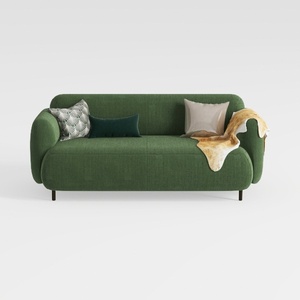

Minimalist Dark Green Fabric Loveseat Sofa with Decorative Pillows 3D Model

Fluted Storage Cabinet, 31.5“ Wooden Sideboards

Minimalist Concrete Large Planter Pot with Greenery 3D Model
Discover your ideal home design with Homestyler! This user-friendly platform offers an intuitive online design tool, stunning 3D renderings, and a wealth of inspiring design projects along with helpful video tutorials. Transform your space effortlessly and unleash your creativity today!
Concevez maintenant gratuitement
































