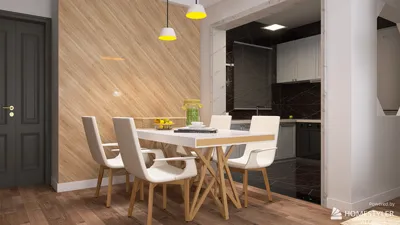


As we look toward the future, today's hosts are increasingly challenged to balance privacy, noise management, and rising utility costs. Recent surveys from AIA and NAHB indicate a growing trend towards small-footprint additions, fueled by multi-generational living and remote work scenarios. I've come across guest house floor plans of approximately 600 sq ft, representing a new wave of compact hospitality that seamlessly integrates into daily routines. The future is on the horizon, and I can already envision its silhouette.
spatial reasoning toolkit
Linear Suite with Pocket Core
Design Concept: This design features a single-loaded bar layout that smartly organizes areas for sleeping, lounging, and a kitchenette, which is also ideally designed for aging visitors and short weekend stays.
Flow: The layout flows from entry to kitchenette, living area, bedroom, and bathroom, creating a simple sequence that minimizes cross-traffic and enhances ease of movement.
Sightlines: A long axial perspective stretches from the entrance to the garden, with service elements creatively recessed like lower UI layers, allowing light to serve as the main source of information.
Storage: A continuous 18-inch deep wall cache provides ample storage, while overhead spaces near the kitchenette allow for quick access to essential items.
Furniture Arrangement: Accommodating a sofa at 72 inches and a queen platform measuring 60x80, alongside nesting tables, ensures that dimensions align well with the limits set by a 600 sq ft space.
Verdict: This strip appears to function as a stable protocol—flexible in design, easy to understand, and prepared for diverse guest needs over the next five years.
save pin
Courtyard Pinwheel
Design Concept: Rooms in this design revolve around a micro-court, enhancing privacy while allowing the compact area to breathe.
Flow: The design progresses from the entry node to the courtyard, then to the living/kitchen area, sleep zone, and bath, with loops that alleviate potential bottlenecks.
Sightlines: Diagonal views provide a glimpse of greenery, while opaque cores cleverly hide utilities from the central line of sight.
Storage: A bench adjacent to the courtyard includes deep drawers, complemented by a vertical pantry that serves as a persistent storage solution near the cooking area.
Furniture Arrangement: Armless lounge chairs with a 28-inch footprint and a fold-down dining table at 30x48 inches fit easily within the tight spaces, similar to how smart APIs negotiate tight confines.
Verdict: The pinwheel design functions like a robust micro-network, allowing privacy to be maintained while ensuring social interactions remain fluid.
save pin
Studio Hybrid with Sliding Partitions
Design Concept: Future accommodations will merge work, rest, and socializing; sliding partitions enable dynamic spatial arrangements without needing to reconfigure the entire layout.
Flow: The flow moves from the entry to a versatile studio space, then through partitioned sleeping areas to the bathroom, allowing flexible reorganization according to how the space is used.
Sightlines: With translucent panels creating visual layers—distinct public, soft-focus mid, and private back areas—UI clarity remains intact throughout the experience.
Storage: Ceiling-mounted wardrobes and toe-kick drawers act as layered storage solutions, with overflow storage tucked conveniently above the bathroom enclosure.
Furniture Arrangement: Featuring a Murphy bed that measures 60x80 inches, a desk occupying 24x48 inches, and a modular sofa at 70 inches, each piece can dock seamlessly to designated rails and stops.
Verdict: This hybrid model functions like adaptable software, able to be updated without extensive renovations, thereby maintaining suitability for a variety of guest profiles.
save pin
Final Thoughts
Guest house floor plans around 600 sq ft are not mere compromises; they serve as precise interfaces that balance hosting with personal autonomy. The trends of micro-dwellings, accessory units, and multi-generational living highlight compact hospitality as a sustainable operating system. From my observations, the most effective small homes are not necessarily larger but more intentionally designed. I firmly believe that the next five years will recognize the benefits of this clarity, and tools like Homestyler will play a pivotal role in shaping these innovative spaces.

Minimalist Walnut Fabric Loveseat Sofa 3D Model
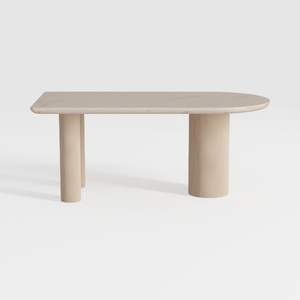

Minimalist Solid Wood Fluted Legs Asymmetrical Coffee Table 3D Model
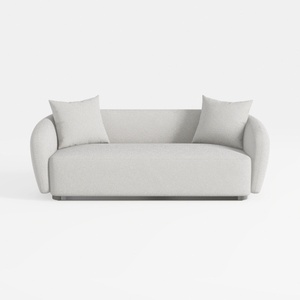
Minimalist Boucle Fabric Living Room Sofa 3D Model
Transform your home with Homestyler, the ultimate online design platform! Enjoy user-friendly design tools, stunning 3D renderings, and an array of inspiring design projects. Plus, access DIY video tutorials to guide you through your home makeover. Create your dream space with ease!
立即免费设计
































