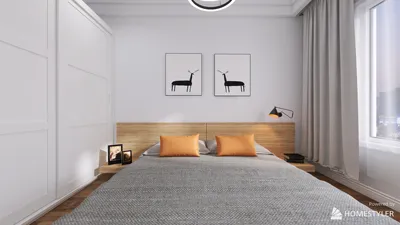


The housing landscape is continuously evolving, as my clients navigate challenges like privacy, noise, and inadequate natural light in lower-level spaces. Statistics highlight the importance of clear layouts in enhancing interest—Zillow reports that renters are more inclined to quickly assess plans that are easy to understand—and a rental basement's design must feel like a seamless interface. The future is already visible in these concise diagrams: a single level designed for tranquil independence and adaptable lifestyles. This is where Homestyler comes into play, offering innovative solutions for maximizing space.
Garden-Edge Studio Spine
Design Principle: A linear spine layout connects the entry, kitchenette, living area, sleeping nook, and bathroom, catering to the desires of future renters for smooth transitions while ensuring daylight access at key points.
Flow: The sequence goes from Door to drop zone, leading into the galley, lounge, sleeping alcove, and finally the bathroom; it’s a straightforward pathway requiring minimal context changes.
Sightlines: The long axis offers a view to the egress window, while secondary nodes provide visibility to kitchen areas without creating visual clutter.
Storage: Utilizing full-height wall closets as storage solutions, accompanied by shallow pantry and under-stair compartments for quick access without overwhelming the space.
Furniture Arrangement: A sofa measuring 72–78 inches, 24-inch stools, and a queen-width alcove that allows for a 22-inch nightstand clearance—these parameters ensure an unencumbered experience.
Conclusion: This studio spine concept anticipates five years of flexible living arrangements, accommodating the blend of remote work and entertaining without delay.
save pin
Split-Zone 1-Bed with Quiet Core
Design Principle: The bedroom is strategically located in the quiet core, surrounded by living and kitchen areas that benefit from perimeter lighting; in this future landscape, noise management is a key asset.
Flow: The path begins at the entry which leads to a coat storage area, then to the kitchen node, dining area, living space, corridor, bedroom, and finally the bathroom; these modular transitions are cohesive and intuitive.
Sightlines: Carefully controlled views: seated diners can see the egress, but the bedroom offers privacy; the living area focuses on a singular wall to minimize mental clutter.
Storage: Wardrobes in the corridor, drawers beneath the bed, and a 30-inch utility closet; organizational strategies tiered by usage frequency.
Furniture Arrangement: A 30x60 inch dining table, a compact sectional at 84 inches, and 30 inches clearance around the bed; careful tolerances maintain an uncluttered interface.
Conclusion: This one-bedroom design fosters psychological tranquility and predictable living patterns, which will be crucial as urban density increases.
save pin
Flex Suite with Pocket Office
Design Principle: A versatile lounge serves as the plan’s heart; sliding partitions create either a small guest room or a focused workspace, embodying the concept of multi-dimensional living.
Flow: The pathway traces from entry to a mudroom, then the kitchen work area, flex lounge, pocket office, and bath; these branches significantly reduce potential traffic conflicts.
Sightlines: Layered elements: the work pod hides the living space, while the kitchen is oriented towards the brightest window to boost morale.
Storage: A built-in media wall, retractable pantry, and overhead desk storage; organization is akin to a clean operating system, arranging tasks logically.
Furniture Arrangement: A 60-inch desk, a 90-inch sleeper sofa, and nesting coffee tables; these components adjust smoothly between weekday productivity and weekend relaxation.
Conclusion: This flexible suite anticipates working from home and hosting friends, preserving adaptability without sacrificing clarity over time.
save pin
Final Insights
A basement rental’s design not only caters to privacy, flow, and natural light but also makes these elements feel essential rather than an afterthought. Be it a studio spine or a split-zone one-bedroom, the layout operates like an interface, where storage functions as a cache and furniture maintains the overall structure. My observations suggest that the most successful rentals of the future will not necessarily be larger but will be more thoughtfully designed. Using tools like Homestyler, these single-level basements are redefining daily living patterns.
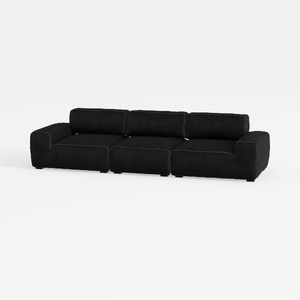

Minimalist Black Fabric Modular Sofa 3D Model

Modern Olive Green Velvet Loveseat Sofa with Metal Legs 3D Model

Minimalist Two Tone Fabric Sofa with Throw Pillows and Blanket 3D Model
Homestyler is your go-to online platform for home design. With its user-friendly design tool, stunning 3D renderings, and a wealth of inspiring design projects and video tutorials, you can transform your living space effortlessly. It's perfect for bringing your creative vision to life!
Desain sekarang Gratis
































