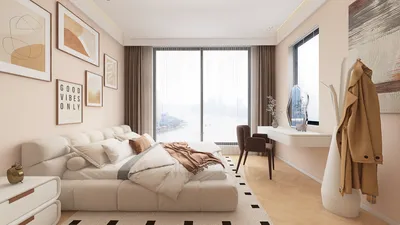


The vision for future living emphasizes a modular intimacy that avoids feelings of isolation, especially as renters today navigate through fixed layouts and disruptive noise. The National Association of Home Builders (NAHB) reports that the demand for open-plan designs in multi-family homes has grown significantly over the last decade. I interpret this shift as an opportunity to enhance circulation and privacy within a spatial design framework. For an apartment design plan on a 40×60 plot, featuring two bedrooms in each unit and two units on every floor, it is essential to think of the layout as software that operates smoothly with minimal friction. Incorporating tools like Homestyler can facilitate this process effectively.
Unit A: Front-facing 2-bedroom, mirrored efficiency
Design Logic: This front unit positions the living space at the façade while ensuring that the bedrooms are set back for better acoustics. Future residents will benefit from prioritized development of sound insulation and natural light.
Flow: The sequence includes an entryway leading to a coat cache, followed by the living area bathed in north/south light, transitioning into the kitchen spine, bedroom nodes, and finally the bath area; this layout ensures that guests never intrude on private spaces.
Sightlines: Upon entering, there's a controlled perspective into the living room; the kitchen is strategically tucked away but still offers peripheral visibility, while the bedrooms are situated to provide long sightlines that enhance privacy.
Storage: A pantry deep enough, linen slots, and under-bench storage ensure about 1.8–2.2 cubic meters of storage per person, facilitating streamlined daily operations.
Furniture Fit: The design accommodates a maximum sofa length of 84–92 inches, a dining table measuring 72×36 inches, and queen beds that leave a 30-inch clearance on both sides, ensuring a clean visual presentation and user experience.
Verdict: This front stack expertly balances natural light and noise control, fostering a stable environment suitable for hybrid work setups and lifestyle enhancements over the next five years.
save pin
Unit B: Rear garden 2-bedroom, courtyard calm
Design Logic: The rear unit promotes tranquility, as the living area opens to the garden while the bedrooms are strategically positioned around a compact circulation core. This setup provides the restoration needed for future living habits.
Flow: The layout comprises an entryway leading to a drop zone, shifting into a kitchen pivot, then to a living area that opens via sliders to the garden, before continuing toward the bedrooms and the bath; the outdoor area serves as an asynchronous extension of the living space.
Sightlines: The primary design axis directs views toward greenery; cross-views are limited to minimize cognitive overload, with the kitchen maintaining visibility without dominating the layout.
Storage: Benches with lift-up storage, vertical broom niches, and wardrobe grids are included, promoting order through well-organized storage packets rather than bulky containers.
Furniture Fit: The sectional is limited to 96 inches, with a round multi-use table measuring 48 inches in diameter; platform beds allow for efficient under-storage, complemented by desks at 48 inches, suitable for remote working environments.
Verdict: The proximity to the garden serves as a wellness-centered feature, facilitating smooth transitions through schedules while reinforcing a strong home environment amid evolving work-life demands.
save pin
Shared Core: Two apartments per floor, stacked services
Design Logic: A central staircase and service stack simplify the design; future utilities require a vertical alignment that promotes efficiency and resilience.
Flow: The lobby transitions into a controlled stairway with split entries; shared utilities such as garbage collection, risers, and mechanical systems operate like a vertical bus, keeping the apartments orderly and efficient.
Sightlines: The shared hallway offers short visual perspectives; unit doors are offset to prevent direct sightlines into living spaces, preserving privacy.
Storage: A floor-level shared space caters to bikes and strollers with locked units; within each apartment, compact wall-depth storage systems keep chaos at bay.
Furniture Fit: Hall widths are designed between 48–54 inches; door swings simulate endpoint gestures, with the internal layout respecting 900 mm paths to ensure fluid movement.
Verdict: The stacked services enhance maintenance efficiency while promoting peace, rendering the building comprehensible and effective, akin to elegantly written code—minimal bugs and maximum uptime.
save pin
Final Takeaway
This 40×60 plot apartment design concept—featuring two bedrooms per unit across two units—approaches the layout as a living interface. With mirrored units and a well-organized shared core, the design anticipates the future of multi-family living: quieter, more intentional, and adaptable. My experience shows that even minor design choices regarding risers, door placements, and sightlines can significantly influence how clients experience their living spaces, making tools like Homestyler invaluable in this process.
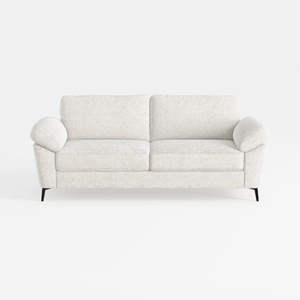
Minimalist Fabric Loveseat Sofa with Black Metal Legs 3D Model

Modern Velvet Tufted Solid Wood Floating Bed with Ambient Light 3D Model

Modern Velvet Upholstered King Size Bed 3D Model
Discover Homestyler, the ultimate online home design platform that empowers you to visualize your dream space. With its user-friendly design tool, stunning 3D renderings, and a wealth of DIY video tutorials, creating and transforming your home has never been so enjoyable and inspiring!
지금 무료로 디자인하세요
































