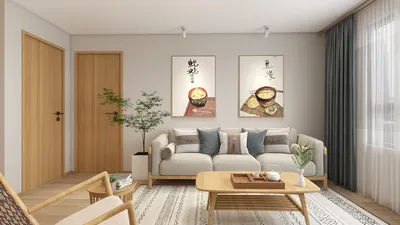


As we move towards the future, our lifestyles are increasingly focused on simplifying complexity into streamlined interfaces, yet our existing residences often face challenges like clutter, excessive glare, and inefficient spatial arrangements. Reports from the AIA indicate a continuous demand for flexible, multifunctional spaces even as the size of living areas stabilizes—highlighting that functionality, rather than mere square footage, is key to modern living. When I observe a floor plan from phase 3 of the Canton Fair, it resembles a macro-apartment structure: with circulation as a guiding principle, distinct zones as functional modules, and the entire apartment acting as a cohesive lifestyle application. The future is upon us, and its presence is undeniable.
spatial reasoning toolkit
Linear Gallery Spine
Design Logic: A central corridor serves as the backbone, integrating rooms seamlessly—future living requires this reliable structure for versatile gatherings at home.
Flow: A sequence that begins with entry, transitions through utility nodes, and centers around living spaces before leading to bedrooms; this streamlined approach minimizes complexity.
Sightlines: Prolonged axial views with deliberate reveals; the entrance points modify depth perception, similar to user interface layers, to prevent visual clutter.
Storage: Expansive wall-length storage hidden behind panels; easily accessible items are located near the core, while deeper archives are positioned strategically at the end.
Furniture Fit: Slim consoles with profiles between 18–22 inches; furniture placement complements the corridor's layout to ensure efficient movement.
Verdict: This linear approach ensures small apartments are future-ready: prioritizing clarity first, then allowing room modules to evolve without disrupting overall flow.
save pin
Radial Hub with Zones
Design Logic: A central pavilion distributes various functions; the hybrid lifestyle of tomorrow thrives on the effortless reconfiguration of zones.
Flow: Transitioning from the hub to various quadrants for cooking, working, resting, and entertaining; this circular movement reflects an algorithm rather than a fixed sequence.
Sightlines: A comprehensive 360° view; partial divisions prioritize visual cues, enabling occupants to grasp essential elements before discovering the layout.
Storage: Wedge-shaped compartments: daily essentials are kept at the hub's edge, while seasonal items are stored in the outer sections.
Furniture Fit: Rounded designs with modular curves; tables fit into circular arrangements, and chairs integrate with sections like APIs in a software framework.
Verdict: This radial configuration accommodates frequent changes—guests, deadlines, relaxation—without overlaps, resulting in a layout adaptable to future demands.
save pin
Layered Grid with Pocket Rooms
Design Logic: A grid reminiscent of fair layouts creates a residential micro-city where pockets are designated for specific tasks while the grid ensures overall organization.
Flow: Main pathway leads to pocket rooms and back; the processes branch out and converge again, sustaining a steady flow throughout.
Sightlines: Compact, clear frames; each pocket acts like an interactive card, becoming accessible only when needed.
Storage: A grid of shelves tailored to usage frequency: easily reachable items are close to central nodes, with long-term storage in the more distant sections.
Furniture Fit: Stackable units, measuring 24–30 inches; edges align with the grid, providing stability without waste.
Verdict: The grid sacrifices extravagance for order, and years down the line, that order becomes tranquility—a system that consistently operates smoothly.
save pin
Final Takeaway
The Canton Fair phase 3 layout serves as a blueprint for clarity in residential design: incorporating spines, hubs, and grids that foster forward-thinking apartments. Variations like exhibition-style zoning and pocket rooms illustrate how small studio layouts or one-bedroom apartments can enhance intelligence without expanding in size. The secret to future living lies in effective flow management, prioritizing sightlines, and thoughtful storage design. Based on my experience, the most advanced homes of tomorrow won’t necessarily be larger—they will simply be more purposeful. At the forefront of this evolution is technology like Homestyler, which assists in visualizing these innovative designs.


Minimalist Solid Oak Wood Dining Table 3D Model
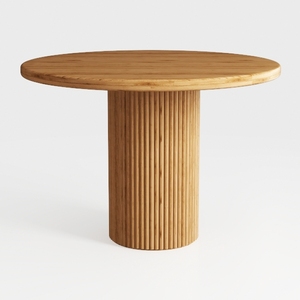
Minimalist Solid Oak Fluted Base Round Dining Table 3D Model
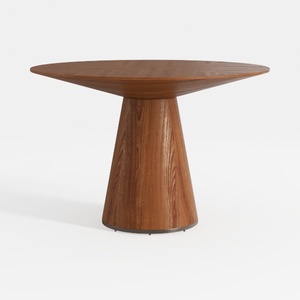
Minimalist Solid Wood Round Dining Table 3D Model
Discover Homestyler, the ultimate online home design platform! Its user-friendly design tool allows you to create stunning spaces effortlessly. With impressive 3D renderings and inspiring design projects, plus DIY video tutorials, turning your home vision into reality has never been easier.
立即免费设计
































