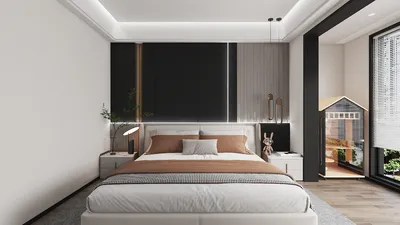


In one instance, I attempted to incorporate a king-sized bed, a study nook, and a concealed walk-in closet into a compact master bedroom measuring 10' x 12'. A client insisted they could "make it work," but it didn’t until we reimagined circulation and utilized space from an underused hallway. This near-miss underscored the lesson that minor tweaks in a floor plan can lead to significant improvements. Working with limited areas can inspire immense creativity, and I'm eager to present five functional layouts for a 3 bedroom, 2 bathroom home that truly enhance livability.
1. Open-concept living with divided bedrooms
I prefer starting with an open-concept living space where the kitchen, dining, and living areas merge into one spacious zone. This configuration allows the bedrooms to remain serene and private. It’s particularly effective for families or roommates since the two secondary bedrooms are clustered together, while the master bedroom is situated on the opposite side. The benefits include abundant natural light and smooth social interaction, but it necessitates clever storage solutions in the living area to prevent clutter. For effective space planning, I often design a centralized storage wall to keep coats, shoes, and pantry items from encroaching on the living space. You can see practical examples of this approach using a room planner, such as Homestyler, to experiment with various furniture arrangements.
save pin
2. L-shaped design with an ensuite for the master
An L-shaped layout allows you to position the master suite within the shorter leg, while the longer leg accommodates public spaces. I often utilize this design on narrow lots as it provides both privacy for the master bedroom and the benefit of an ensuite, all without enlarging the overall footprint. The positive aspect is a master space that feels akin to a hotel suite, while the downside may involve longer hallways if not planned carefully. I typically minimize hallway waste by aligning plumbing walls between the bathrooms and the kitchen.
save pin
3. Versatile third bedroom or home office
Nowadays, the third bedroom frequently serves dual purposes, often acting as a home office. I recommend situating it close to the front entrance or living area, with sliding doors for privacy when needed and openness when desired. This arrangement offers versatility—accommodating guests, serving as a nursery, or functioning as a workspace—though acoustics can pose challenges. I address this by incorporating layered soft materials and a focused design that allows for a daybed or a Murphy bed without sacrificing desk space.
save pin
4. Jack-and-Jill second bathroom
Installing a Jack-and-Jill bathroom between the two secondary bedrooms can significantly conserve space while enhancing functionality for families. This layout reduces the need for lengthy corridors and centralizes plumbing, thus lowering costs. However, privacy is a concern; I suggest installing locks and arranging sinks away from the toilet/shower using pocket doors. For verifying dimensions and plumbing configurations, utilizing a free floor plan creator, such as Homestyler, ensures you can confirm distances and door swings early on.
save pin
5. Seamless indoor-outdoor connection and utility arrangement
Having a small patio or balcony extending from the living area elevates the perceived space and enhances lifestyle value. Placing laundry and utility rooms near the kitchen or garage entrance simplifies daily chores and cuts back on vertical plumbing routes. The advantage here is an improved flow and additional functional outdoor space, while the downside necessitates meticulous attention to weatherproofing and egress. Through various projects, I have discovered that even a 6' deep balcony can dramatically alter the ambiance of a 3 bedroom, 2 bathroom home.
save pin
FAQ
Q1: What is the average square footage for comfortable 3-bedroom, 2-bathroom plans?
A1: Comfortable designs generally begin at approximately 900–1,100 sq ft for efficient layouts and 1,200–1,600+ sq ft for more spacious circulation and storage.
Q2: How can I optimize storage space in a 3-bedroom, 2-bathroom home?
A2: Implement built-in solutions, utilize under-stair or under-bed storage, and establish a centralized pantry or closet close to the living core to ensure private areas remain organized.
Q3: Is a Jack-and-Jill bathroom beneficial for families?
A3: Yes, it’s efficient in space usage and family-friendly when designed with separate handwashing areas and privacy locks.
Q4: Where is the best laundry placement for optimal workflow?
A4: Positioning it near the kitchen or garage/mudroom entrance minimizes cross-home trips and consolidates plumbing lines for budget efficiency.
Q5: Can a third bedroom function as a home office without affecting resale value?
A5: Certainly—flexible spaces enhance desirability. Use neutral designs and ensure the room includes a closet or meets code-compliant egress to maintain its bedroom status.
Q6: How can I determine if a proposed layout will be practical?
A6: Measure furniture dimensions and door swings, then test in a 2D or 3D floor planner, like Homestyler, before finalizing construction.
Q7: Are there specific building code requirements for 3-bedroom, 2-bathroom plans?
A7: Yes—requirements include egress windows in bedrooms, minimum room dimensions, and adequate ventilation. Always review local codes or consult a licensed architect.
Q8: Where can I find credible information on egress and bedroom regulations?
A8: Refer to the International Residential Code (IRC) for detailed egress and minimum room-size guidelines, as this framework is commonly adhered to in many jurisdictions (see IRC 2018/2021 editions).
save pin
Discover the ease of home design with Homestyler! This user-friendly platform offers an intuitive online design tool, stunning 3D renderings, and a wealth of design projects and video tutorials. Transform your ideas into reality and create your dream space effortlessly!
Desain sekarang Gratis
































