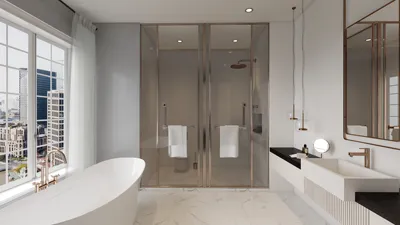


I once ordered travertine for a client and ended up delivering the incorrect finish—honed instead of filled. I spent the whole weekend convincing myself that it was a bold design choice, rather than a mistake. This experience taught me two valuable lessons: travertine has a unique personality, and small bathrooms compel you to make brave and smart design decisions quickly. To reassure my client, I even created a layout using Homestyler to showcase various options: saved 3D file.
1. Opt for large-format travertine to achieve a calm, spacious atmosphere
I enjoy utilizing large-format travertine slabs for flooring and lower walls because the reduced number of grout lines visually stretches narrow bathrooms. This approach offers a tranquil, spa-like aesthetic and simplifies cleaning; however, the upfront material cost tends to be higher, and precise substrate leveling is essential. In a studio bathroom I renovated, replacing 12x24 tiles with 24x48 honed slabs made the space feel almost double its original width—plan for a reliable tile installer.
save pin
2. Implement contrasting trim or pencil borders to define spaces
In a cramped environment, a slim pencil border made of darker travertine or metal can effectively separate areas like the vanity from the shower without adding bulk. This minor detail is an easy, DIY-friendly touch that gives a high-end look without the need to overhaul the entire color scheme. The only obstacle? Ensuring precise cuts and planning so that the borders align perfectly with fixtures and transitions.
save pin
3. Explore herringbone or chevron patterns for added visual appeal
Installing travertine in a herringbone pattern on a single accent wall or floor gives a compact bathroom a deliberate feel, avoiding a cramped appearance. I utilized this in a rental bath, adding character that renters appreciated, thereby increasing perceived value. Be mindful that pattern installations consume more material and take additional time, so factor this into labor and waste allowances; I usually draft a quick floor plan on Homestyler before ordering to prevent surprises: floor plan sketch.
save pin
4. Combine finishes: honed for floors, filled or tumbled for accents
Using honed travertine on the floor paired with filled or tumbled pieces for shower accents introduces depth and cleverly hides wear in high-traffic areas. This combination is forgiving—honed finishes resist scratches effectively, while filled edges prevent grout from settling into pits. My sole advice is to ensure that tones are harmonized; always review several tiles together and bring samples home to see them in your bathroom's lighting.
save pin
5. Incorporate a shower niche and include mosaics for functionality and style
Creating a recessed niche lined with small travertine mosaics provides a luxurious feel for storing soap and shampoo. It also breaks up large sections of stone, which can otherwise appear monotonous. I prefer to add a small waterproof shelf and use silicone sealant in corners—this solution is practical, cost-effective, and maintains elegance. For my final presentations, I often use Homestyler to produce a rendered visualization, helping clients visualize the outcome before any demolition: rendered visualization.
save pin
FAQ
Q1: Is travertine a viable option for bathroom floors?
Absolutely—travertine is a robust natural stone perfect for bathrooms when sealed correctly. Honed finishes provide decent slip resistance, but remember to select a textured finish for shower floors.
Q2: What’s the best way to maintain travertine in a bathroom?
Seal travertine upon installation and reapply every 1–2 years based on usage; use pH-neutral stone cleaners to avoid etching. Promptly addressing spills and regular gentle cleaning keeps the surface looking pristine.
Q3: Can travertine be used in shower areas?
Definitely—travertine performs well in showers, provided you grout and seal adequately while ensuring proper waterproofing behind the stone. Utilize smaller tiles or mosaics on inclined floors to enhance drainage and grip.
Q4: What should I consider regarding costs for travertine?
Travertine pricing varies from affordable to premium depending on its finish and origin. Plan for extra waste (10–20%) and skilled labor, as the installation of natural stone is more technique-driven than that of ceramic tiles.
Q5: How do different finishes impact the appearance and maintenance of travertine?
Honed travertine offers a matte, contemporary look that conceals wear, whereas polished travertine is shinier and more prone to showing water spots. Filled or honed finishes tend to be more forgiving in bathroom settings.
Q6: Are there slip-resistance issues with travertine?
Indeed—polished travertine can become slippery when wet, so it's wise to choose honed or textured finishes for floors and to employ anti-slip treatments or mats as necessary. If the bathroom experiences heavy foot traffic, prioritize safety over aesthetics.
Q7: Is travertine prone to staining?
Natural stone may stain if not properly sealed; oil-based substances and cosmetic products are frequent offenders. Timely clean-up and periodic resealing significantly diminish the risk of stains (see the Natural Stone Institute guidelines: https://www.naturalstoneinstitute.org).
Q8: Can I combine travertine with other materials?
Combining travertine with porcelain, glass mosaics, or metal accents can modernize your look while reducing costs and preserving the natural warmth of the stone. This technique is something I frequently apply in smaller bathrooms to strike a balance between budget and aesthetics.
Discover your dream space with Homestyler! This intuitive online home design platform offers a powerful design tool, stunning 3D renderings, and an array of inspiring design projects. Plus, dive into DIY video tutorials to help you create the perfect home, no experience needed!
Design Now for FREE
































