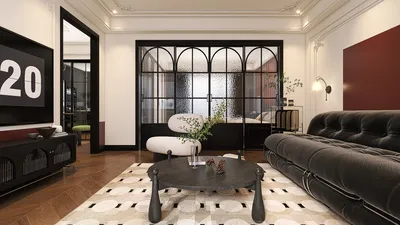


I once worked with a client who thought their vintage green sofa should dictate the entire apartment's design, and all they provided me was a tiny fabric swatch, no bigger than a postage stamp. It was quite amusing, but it taught me a lesson! Leveraging an AI-driven color mockup, I was able to visualize five color options without even opening a can of paint. When it comes to designing small spaces, big creativity often stems from the most unexpected challenges, and that postage-sized dilemma turned out to be the best brief I ever received, facilitating the use of Homestyler to explore designs.
In this article, I will share five practical design strategies I implement to effectively match wall paint with various elements, each inspired by real projects, budget-friendly hacks, and of course, a bit of luck along the way.
1. Begin with the largest fixed element
I like to start with the most significant constant feature in the room — whether it be the flooring, the sofa, or built-in storage units. The benefit of this approach is clarity; larger elements establish the mood and guide the decision-making process for undertones. The drawback, however, is the level of commitment involved; if you later dislike that focal piece, repainting can feel daunting. Therefore, I always recommend testing paint swatches on various walls before making a final decision.
save pin
2. Focus on undertones rather than names
People often opt for colors labeled "beige" or "gray," which can obscure the warmth or coolness of their undertones. I advise my clients to assess swatches next to white trim under different lighting conditions throughout the day to reveal their true undertones. It's a cost-effective and efficient technique, although a bit of patience is required since lighting changes how colors appear over time.
save pin
3. Create a tonal palette for added depth
In smaller rooms, I find it effective to use three variations of the same shade: light, medium, and dark. This method visually enlarges the space while maintaining a cohesive color scheme; the key is to ensure contrast to avoid a flat appearance. Prior to making any purchases, I often confirm my selections through a photorealistic 3D render with tools like Homestyler, which, while not perfect, alleviates stress and helps steer clear of unwise paint choices.
save pin
4. Incorporate a complementary accent, but be mindful of coverage
Adding an accent wall or a vibrant swath of color can make a bold statement in a small room without overwhelming the space. I recommend restricting bold colors to a singular wall, ceiling, or built-in niche; this approach adds drama with minimal paint. However, it's critical to consider balance — an accent that is too small may appear miscalculated, so careful planning of proportions is essential prior to painting.
save pin
5. Experiment thoroughly with samples
My guiding principle is to always purchase sample pots and paint patches measuring 12"x12" under various lighting conditions. These samples allow you to see sheen, undertone, and texture in the context of your room; they are inexpensive yet provide peace of mind. When the layout of the room is significant, I also sketch a quick small-space floor plan to comprehend where natural light hits and which walls become focal points — this small step helps avoid unpleasant surprises.
save pin
FAQ
Q1: What’s the simplest approach to match paint with fabric?
A: Place the fabric next to paint swatches under your room’s lighting at different times of day. The focus should be on matching the undertones (warm or cool) rather than seeking an exact color — aligning undertones ensures a harmonious look.
Q2: How many paint samples should I evaluate?
A: I typically test around 3–5 final candidates on the wall. Fewer than three feels restrictive, while more than five can cause confusion. Each sample should be sizable enough to view from across the room.
Q3: Is it possible to use photos on my phone for color matching?
A: While photos can be useful, be aware that phone cameras and screens can alter colors. Use images for directional inspiration, but always confirm with physical swatches in the actual room before finalizing your choice.
Q4: Does lighting significantly affect how paint appears?
A: Absolutely — both natural light and different bulb types will alter our perception of color and warmth. Always evaluate swatches in morning, afternoon, and evening light to see them at their best.
Q5: What type of paint finish is most suitable for small rooms?
A: I usually suggest eggshell or satin finishes for walls as they conceal imperfections better than flat finishes, without the high reflectivity of gloss. If durability is necessary in high-traffic areas, use satin or semi-gloss sparsely.
Q6: How can I match paint to an already painted wall?
A: Bring a small chip to a paint store for color matching, but keep in mind that matches can differ by brand and the paint’s age. Always test a sample on the wall to ensure compatibility before proceeding with larger areas.
Q7: Where can I gain more insights about undertones and professional advice?
A: Sherwin-Williams offers an excellent color guide that explains undertones and their interactions with light; it's a trustworthy resource for both homeowners and professionals (see: https://www.sherwin-williams.com).
Q8: What’s the best budget-friendly tip for making confident color decisions?
A: Spend money on sample pots and utilize them generously — paint large patches, live with them for a week, and make necessary adjustments. This approach is far more economical than a full repaint and helps you understand how color behaves in your living space.
save pin
Discover your dream home with Homestyler! This user-friendly online design platform offers an incredible design tool, stunning 3D renderings, a wealth of inspiring design projects, and helpful DIY video tutorials. Transform your space effortlessly and unleash your creativity today!
Progetta ora GRATIS
































