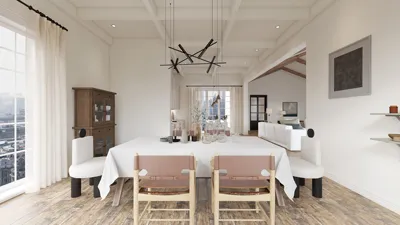


I once worked with a client who firmly believed that their compact balcony required a round table suitable for four people, despite only having 70cm of clear space around it. While this almost led to a furniture rearrangement disaster, it ultimately resulted in one of my most rewarding small-space triumphs. If you enjoy planning layouts before shifting furniture (I admit, I do), utilizing a 3D floor planner like Homestyler can prevent the disappointment of an awkward arrangement.
Small areas ignite my creativity: the constraints of limited space demand clever decisions regarding scale, lighting, and storage. In the following sections, I’ll reveal five effective decorating strategies I employ in actual projects to ensure a small round dining table appears intentional, comfortable, and stylish.
1. Select the Appropriate Size and Leg Design
My usual approach begins with identifying a table that maintains at least 60–70cm of clearance for chairs. Round tables tend to seem less cumbersome since they lack sharp edges. Pedestal bases or slender splayed legs create a sense of visual space, unlike chunky four-legged tables that can make the area feel heavy. There’s a trade-off between stability and space: pedestal tables offer more knee room but may be more expensive or less stable on uneven flooring.
save pin
2. Use a Slightly Larger Rug to Anchor the Area
A rug serves to define the dining space and protect flooring; however, it should be spacious enough for chairs to remain wholly on it when pulled out. I prefer low-pile flatweave rugs in tight spaces to facilitate easy movement and cleaning. If budget is a concern, consider layering mats or utilizing a durable indoor-outdoor rug — just be cautious to avoid patterns that might overwhelm the small area visually.
save pin
3. Combine Different Seating Styles for Versatility
Incorporating benches, stools, and a few accent chairs allows for adaptable seating arrangements for guests while saving space. I once paired a narrow bench with two chairs for a client, which created additional walking space while adding a casual vibe. If it’s coordinated with an adjacent kitchen, think about using a kitchen layout planner in Homestyler to test traffic flow; benches can tuck away neatly but may not be as comfortable for extended dining.
save pin
4. Incorporate Layered Lighting and Mirrors
A small pendant light or a cluster of mini pendants centered above the table can establish a focal point without overpowering the ceiling space. I frequently place a slim wall mirror across from a light source to enhance brightness and create depth; it's a budget-friendly trick that visually enlarges the space. The only downside is that mirrors can easily reveal clutter, so keeping tables tidy or selecting a brushed finish that masks fingerprints is wise.
save pin
5. Opt for Multifunctional Surfaces and Vertical Storage
Consider the round table to function as both a dining area and a casual workspace: select a finish that withstands marks and is easy to clean. Wall-mounted shelves, slender cabinets, or a nearby console can store napkins, placemats, and candles, maintaining a clean surface. To plan the overall room proportions, I often mock things up using a room planner like Homestyler, which helps avoid mistakes in storage and movement before any purchases are made.
save pin
Tip 1:
A quick budget tip: scout for a solid wood tabletop at a thrift store, refinish it, and then swap the base for a lighter modern pedestal. This is a simple weekend project that enhances the look without straining your budget.
save pin
FAQ
Q1: What size round table fits in a small apartment? I suggest a table with a diameter of 90–105cm for two to four individuals in most small apartments; it strikes a balance between usability and ease of movement. If you're a frequent host, consider increasing to 120cm and planning your seating arrangements carefully.
Q2: How do I choose the correct rug size for a round table? Opt for a rug that is at least 60cm wider than the table’s diameter, ensuring that chairs remain on the rug when pulled out. Materials that are low-pile and washable are practical for everyday use.
Q3: Are pedestal tables more suitable for small spaces? Yes, pedestal tables enhance legroom and help make the space feel less crowded, but check their stability and the footprint of the base — some pedestals can still appear visually heavy if they are bulky.
Q4: What height should lighting be positioned above a small round table? Suspend pendants approximately 60–75cm above the tabletop for comfortable illumination without obstructing sightlines. When scaling the fixture, a single medium pendant or 2–3 small pendants generally works well.
Q5: How can I maintain a styled table without it appearing cluttered? I keep a small tray with essentials (like salt, oil, and a candle) and swap out seasonal flowers or a sculptural bowl for added interest. This keeps the surface looking intentional and easy to clear when necessary.
Q6: Can mirrors genuinely create the illusion of a larger dining nook? Yes — a mirror placed opposite a light source reflects brightness and depth, making the space feel more expansive. This is a classic designer technique I frequently utilize in tiny areas.
Q7: Where can I find guidelines for dining clearances and space planning? Professional organizations like the American Society of Interior Designers (ASID) summarize standards and practical spacing rules — their resources are invaluable for clearances and accessibility (https://www.asid.org). I refer to such documents when I need precise specifications.
Q8: How do I balance aesthetics and durability for a frequently used round table? I look for hard-wearing finishes such as lacquered or oil-finished wood and steer clear of fragile veneers for tables subjected to heavy use. Employing protective placemats and a rotating centerpiece helps maintain the surface while ensuring your decor remains polished.
save pin
Homestyler is an exceptional online home design platform that empowers you to unleash your creativity. Its user-friendly design tool, stunning 3D renderings, and a plethora of DIY video tutorials make it easy for anyone to create beautiful spaces—perfect for both novices and seasoned designers!
Design Now for FREE
































