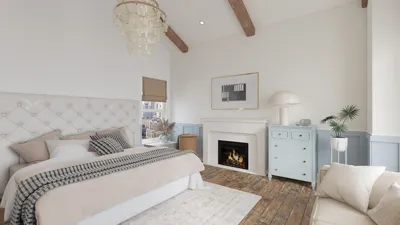


Once, I decided to paint a small kitchen ceiling the same dark blue as the cabinets, thinking it would create a dramatic effect. Instead, it resembled a submarine, leading me to realize that paint selections can either make a room feel enclosed or open up the walls. I've found that small spaces often inspire my most innovative solutions. For those looking to visualize their areas before making a commitment, using a design tool like Homestyler can save a significant amount of time.
1. Choose light, warm colors instead of flat whites
I often suggest soft, warm neutrals like gentle greiges, warm ivories, and pale blush tones. These colors reflect natural and artificial light beautifully, creating an illusion of depth without appearing sterile. They enhance brightness instantly, but it's essential to choose undertones that harmonize well with flooring and furniture.
save pin
2. Paint the ceiling a shade lighter than the walls
A subtle variation on the ceiling can trick the eye into sensing greater height. I've achieved this effectively in low-ceilinged bedrooms, and clients often say the space feels much airier. While this requires a little more painting effort and precision at the junctions, it's a small investment for significant rewards.
save pin
3. Maintain a continuous color scheme and reduce trim contrast
Keeping walls, trim, and doors in the same color family (or even identical) creates a seamless visual flow that enlarges the room. This strategy simplifies your decor and conceals awkward proportions. Some traditional homeowners may miss the sharp contrast of white trim, so I usually recommend trying out samples beforehand. For those looking to plan their furniture arrangement and experiment with color, using Homestyler can assist in visualizing layouts prior to painting.
save pin
4. Use vertical elements: elongated curtains and subtle vertical accents
By hanging curtains high and allowing them to extend to the floor, the illusion of height is amplified. Vertical stripes or sloped wall panels can create the same effect — both are stylish and modern. However, I advise against overly busy patterns in very compact rooms, so I prefer keeping stripes thin and colors muted.
save pin
5. Apply gloss with care: mirrors, semi-gloss trims, and reflective backsplashes
Glossy finishes on small trim, lacquered cabinet surfaces, or mirrored backsplashes can capture light effectively, adding depth without significantly increasing costs. This is one of my favorite quick fixes for dramatic effects, though it’s important to note that gloss highlights imperfections, emphasizing the need for proper preparation. To foresee how reflective materials can alter perceptions, exploring a 3D representation with tools like Homestyler can be helpful.
save pin
FAQ
Q1: Which paint colors make a small room appear larger?
A: Light, warm neutrals or soft pastels are typically the most effective as they reflect light well. It's best to steer clear of extremes—very cool or very dark shades can make spaces feel cramped unless carefully balanced with appropriate lighting.
Q2: Should I paint the trim the same color as the walls to enhance a room's size?
A: Absolutely. Matching the trim and doors to the walls creates a cohesive visual plane that can make a room feel larger. If you prefer contrast, consider implementing it selectively on larger architectural features.
Q3: Is the color of the ceiling significant?
A: Yes, painting the ceiling one shade lighter than the walls or a bright white can create the perception of higher ceilings. For a cozier effect that still reflects light, opt for a soft, light tone.
Q4: Are gloss finishes beneficial for small rooms?
A: Selective gloss finishes enhance reflective depth, making them ideal for trims or cabinetry. However, they can also highlight surface imperfections, so careful preparation is critical. In high-traffic areas, satin or semi-gloss is often more durable.
Q5: Can dark colors help a room look bigger?
A: In some well-lit or layered spaces, dark shades can indeed recede and add depth. However, it’s risky in compact, poorly lit environments. I recommend dark palettes only when careful attention is paid to lighting and textures.
Q6: What’s an economical method to evaluate paint options?
A: Apply small paint samples, live with them for a few days in varying lighting, or utilize free online mockups like Homestyler to preview selections- you'll ultimately save both time and resources.
Q7: How does lighting impact paint selections?
A: Lighting influences paint colors significantly; north-facing rooms often seem cooler, while south-facing areas enhance warmth. For technical insight into reflectivity and color, refer to resources by Sherwin-Williams regarding light reflectance values: https://www.sherwin-williams.com/.
Q8: Is it possible to combine painting techniques with furniture arrangement for a larger perceived space?
A: Definitely—cohesive paint choices paired with minimalist, low-profile furniture and clear sightlines create the most expansive visual effect. Consider how coloring, lighting, and layout work harmoniously together.
save pin
Looking to transform your home? Discover Homestyler! This intuitive online design platform offers a powerful design tool, stunning 3D rendering, and a wealth of inspiring design projects and video tutorials. Bring your vision to life effortlessly, whether you’re a novice or a seasoned designer!
Design Now for FREE
































