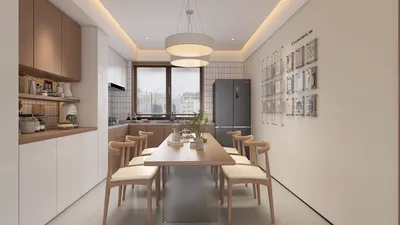


Last year, a client approached me with the challenge of fitting a full eight-seater dining table, a comfy sectional sofa, and her collection of vintage floor lamps into a compact 20 m² open area. Initially, I thought it was an impossible task, but it quickly became one of my favorite projects. Small spaces like this really inspire me to be both a designer and a sorcerer — merging a living room with a dining area isn't simply about conserving space; it's about creating an environment where both areas feel harmonious yet unique. In this article, I'll present 10 design strategies that I’ve implemented (and refined) to help open-concept living-dining spaces flourish — all while avoiding clutter. And trust me, I’ve made a few blunders along the way, allowing you to skip those missteps!
1. Use Rugs to Define Zones
Rugs act like magic carpets — they instantly inform the eye that “this area is different.” I once placed a bold geometric rug under the dining table and a gentle neutral one under the sofa, which made the space feel significantly larger. The key is maintaining some color harmony so the pieces complement rather than clash. If you find it challenging to visualize the layout, I frequently utilize my go-to digital room planner, Homestyler, to preview my options before finalizing any purchases.
2. Back-to-Back Seating & Dining
Position the sofa with its back to the dining table — this is an effortless way to establish a subtle boundary without erecting walls. This technique works particularly well in narrow areas; just ensure there is enough clearance for smooth traffic flow.
3. Statement Lighting Over Each Zone
I adore replacing a single ceiling fixture with two distinct pendants — one positioned above the dining area and another above the living room. This not only visually divides the spaces but also enables you to create different moods: warm and intimate for dining, bright and airy for relaxation.
4. Multi-Functional Furniture
Consider items like storage benches, extendable tables, or nesting coffee tables. In one project, an extendable dining table also served as my client’s workspace in the mornings. Just be aware that multifunctional furniture can often lead to compromises in style or comfort.
5. Consistent Color Palette
Even with defined areas, a consistent color theme ensures everything feels cohesive. Typically, I select 2–3 main colors and distribute them throughout both spaces. You can experiment with different textures to add variety without disrupting the overall unity.
6. Sliding or Glass Partitions
These can be lifesavers when you want to achieve privacy while allowing light to flow through. In a past project, I installed a frosted glass slider that instantly created a dining ‘room’ — and it turned out beautiful. To visualize configurations before committing, I consult a free floor plan tool, such as Homestyler.
7. Vertical Storage Solutions
In tight spaces, walls become valuable real estate. Floating shelves, wall-mounted cabinets, and even a vertical wine rack can optimize storage without making the area feel cramped.
8. Create a Focal Point in Each Zone
In the living area, this might be an art piece or a media wall; in the dining location, it could be an eye-catching table centerpiece. This technique draws attention where desired and subtly reinforces the zoning.
9. Strategic Furniture Scale
I’ve witnessed numerous individuals squeeze oversized sectionals into small open layouts — which is the fastest route to making both areas feel cramped. Whenever you’re in doubt, opt for a size smaller than you think; your knees (and passageways) will express gratitude.
10. Layered Lighting for Flexibility
Incorporating ambient, task, and accent lighting in both zones allows you to tailor the atmosphere for dining, lounging, or working. One of my favorite small-space transformations featured under-cabinet lighting in a sideboard coupled with soft floor lamps near the sofa; it generated perfect balance. I often map out lighting early using an interactive 3D floor plan tool like Homestyler to prevent unexpected wiring issues later on.
FAQ
Q: How do I make a small living-dining space feel more spacious?
A: Utilize visual dividers like rugs, maintain a unified color scheme, and choose appropriately scaled furniture.
Q: Should my dining chairs match my sofa style?
A: Not necessarily — mixing styles can add character, but it's important to keep at least one element (like color or material) consistent for cohesion.
Q: Is it possible to create a dining area in a studio apartment?
A: Absolutely! Use extendable or drop-leaf tables, stools that can be tucked away, and aim for multifunctional pieces.
Homestyler is your go-to online home design platform that makes creating beautiful spaces effortless. With its user-friendly design tool, stunning 3D renderings, an extensive selection of design projects, and helpful DIY video tutorials, you can transform your vision into reality—no experience necessary!
Design Now for FREE
































