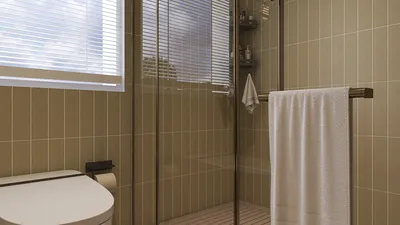


I once worked with a client who wanted midnight-blue walls in a compact 4' x 6' bathroom — a daring choice that nearly enclosed the space. However, after creating a 3D floor mockup using Homestyler, we discovered a harmonious balance that transformed the design.
This near miss highlighted a valuable lesson: small areas can ignite immense creativity. In this article, I will explore five color-centric strategies I've implemented in real projects to enhance compact bathrooms, making them feel airy, dramatic, or serene, depending on the desired outcome.
1. Crisp White with Warm Touches
I enjoy starting a design with a fresh white foundation — utilizing white for walls, the ceiling, and a simple vanity — then infusing warmth through natural wood elements, brass fittings, or a beige towel. White reflects light beautifully and visually enlarges tight quarters; the key is to avoid a sterile feel, which warmth and texture effectively counteract.
save pin
2. Gentle Pastels for a Relaxing Getaway
Soft hues like mint, blush, or powder blue establish a calm, spa-like atmosphere without overwhelming a compact area. Utilizing pastels alongside matte surfaces and natural light is effective, although they may appear dull in poor lighting—thus, I always recommend pairing them with warm LED illumination and reflective mirrors.
save pin
3. High-Contrast Two-Tone Perspective
Incorporating a mid-height strip of darker paint or tile on the lower half combined with a lighter shade above can create an illusion of a higher ceiling. This two-tone technique adds depth and character to the room; although it requires precise proportions, the outcome can feel professionally designed rather than DIY.
save pin
4. Dramatic Jewel Tones with Glossy Finishes
Luxurious deep teal or emerald shades can significantly enhance a powder room's appeal when complemented by glossy tiles or a light-hued countertop. This combination is striking, especially for bathrooms used in the evening; however, always consider moisture-friendly finishes and adequate ventilation to preserve rich colors.
save pin
5. Monochromatic with Textured Variety
Selecting a single color and varying the materials—such as matte paint, glossy subway tiles, and textured storage options—creates a cohesive yet dynamic look. I frequently utilize Homestyler to provide clients with a visual preview of how different textures alter perceptions, encouraging hesitant homeowners to commit to a singular color scheme.
Budget tip: Choose a neutral paint color you love for the walls, then try removable wallpaper or peel-and-stick tiles on an accent wall for a seasonal refresh. I found this approach successful in a rental bathroom, offering a low-risk enhancement.
For inspiration and reference, I suggest exploring a curated gallery of bathroom makeovers to see real project ideas and before-and-after illustrations.
save pin
FAQ
Q1: Which paint finish is ideal for small bathrooms?
I typically advise using satin or semi-gloss finishes in bathrooms since they handle moisture well and are easy to clean, while also reflecting enough light to illuminate smaller spaces effectively.
Q2: Do dark colors make a tiny bathroom appear smaller?
While darker shades can lend a cozy feel, with the right lighting and reflective details, they can create a more intentional and luxurious ambiance instead of feeling cramped.
Q3: How can I choose colors for a bathroom lacking natural light?
Opt for warmer neutrals or lighter pastels, and enhance the space with layered artificial lighting—ambient and task lighting—to avoid a flat, shadowy atmosphere.
Q4: Are there paint options that resist moisture?
Seek paints designed for high-humidity environments and consider mold-repellent primers; brands such as Benjamin Moore offer product recommendations tailored for bathrooms (check out their suggestions: https://www.benjaminmoore.com/).
Q5: Can a single accent wall create a significant impact?
Absolutely — one well-chosen accent can focus attention and bring personality to a space without feeling overwhelming, and it’s a cost-effective method to experiment with bolder hues.
Q6: How do I coordinate tile color with wall paint?
I usually match the grout or trim color to a secondary paint shade to unify the color scheme; small samples and swatches placed on-site are invaluable for making final choices.
Q7: Is using patterned wallpaper suitable for a compact bathroom?
Patterns can be successful if used thoughtfully—choose small repeats and lighter backgrounds to avoid a cluttered look; moisture-resistant or vinyl-backed wallpapers are preferable for durability.
Q8: Where can I see realistic 3D previews before finalizing my design?
Utilizing 3D design previews or AI mockups allows you to visualize the interplay of color, texture, and lighting before purchasing materials, ultimately saving time and costs on modifications.
save pin
Homestyler is an outstanding online platform for home design enthusiasts. Its user-friendly design tool, impressive 3D renderings, and a wealth of DIY video tutorials empower you to creatively transform your space. Start your design journey with Homestyler and bring your vision to life effortlessly!
立即免费设计
































