

I have orchestrated events across a spectrum of venues, from cozy salons to expansive ballrooms. The design of the Tirumala Banquet Hall—a vast, versatile space equipped with pre-function areas, service corridors, and customizable décor—is perfect for elegant celebrations when the essential elements are correctly implemented. A solid foundation includes superior lighting, balanced acoustics, seamless circulation, and visually appealing materials that offer durability and performance.
Lighting is my primary focus. According to WELL v2 standards, multipurpose spaces should have lighting levels between 300 to 500 lux, incorporating glare control and circadian-friendly light spectrums for prolonged events. For banquet arrangements, I aim for around 300 lux ambient lighting with a warm 2700 to 3000K temperature to enhance skin tones, while layering 700 to 1000 lux on key areas (such as the stage, cake table, and mandap) using narrow beam spreads and a CRI of 90 or higher for photography clarity. This lighting strategy significantly boosts guest comfort and visibility. Research from Gensler further indicates that environments with well-regulated lighting enhance attention spans, resulting in more fluid ceremonies and speeches. To minimize acoustic fatigue, I aim for background noise levels below 45 dBA and reverberation times (RT60) between 0.7 to 1.0 seconds for clear speech, incorporating soft materials and strategically placed baffles.
The arrangement of space is just as crucial as its aesthetics. For events hosting between 500 to 700 guests, I maintain main aisles with widths of 1.8 to 2.4 meters and cross aisles at approximately 1.5 meters, concealing service paths behind drapery or partitions for catering purposes. Utilizing a layout visualization tool like Homestyler can aid in testing seating clusters before finalization, allowing for the assessment of chair counts, sightlines to the stage, and buffet flow, ultimately minimizing last-minute adjustments.
Defining Elegance: Proportion, Rhythm, and Light
Elegance stems from both restraint and proportion. I ensure that table centerpieces remain below 30 to 35 cm in dining areas without stages and under 25 cm when a central stage is in use to maintain clear sightlines. Establishing visual rhythm through alternating lower floral arrangements and taller statement pieces along the perimeter creates depth while avoiding clutter. The temperature of the light plays a pivotal role in mood setting: 2700K for dinners, 3000K to 3500K for mixed programming, with cooler highlights reserved for display elements. Adhering to IES recommended practices, I strive for uniformity ratios from 0.6 to 0.8 in dining spaces, ensuring that faces look even and photographers do not struggle with harsh contrasts.
Stage and Ceremony Areas
For a wedding mandap or performance stage styled after Tirumala, I allocate dimensions of at least 6 to 8 meters in width and 4 to 6 meters in depth, providing ample space for the ensemble, décor, and AV equipment. Backdrop lighting is kept around 200 to 300 lux to prevent overexposure of skin tones; key and fill lighting ranges from 700 to 900 lux, utilizing diffused sources softened by scrims or bounce boards. It is advisable to position subwoofers away from stage corners to avoid modal buildup, while a distributed speaker setup with precise time alignment mitigates hot spots and enhances speech clarity. I strive for a Speech Transmission Index (STI) between 0.6 to 0.75 for ceremonies and announcements.
Acoustic Comfort Without Sacrificing Energy
Banquet halls require a vibrant atmosphere yet must facilitate clear speech. I implement a strategy of layered absorption, incorporating drapery, upholstered seating, and carpet tiles with high NRC underlay, complemented by selective diffusion using decorative screens. A targeted RT60 near 0.8 seconds strikes a perfect balance between musical warmth and clarity. Research from Steelcase indicates that minimizing background distractions enhances focus; translating this into event environments means that guests are more likely to remember speeches and enjoy conversations when reverb and noise levels are controlled.
Color Psychology and Cultural Significance
Color choices are vital. Warm reds and golds boost celebratory energy, while soft blush, ivory, and muted greens create a serene, elegant backdrop. According to a color psychology overview by Verywell Mind, red invokes feelings of excitement and captures attention, while blues and greens help reduce stress—this can be strategically applied to different areas: vibrant palettes around performance spaces and calming tones near dining and lounges. It is important to utilize matte or satin finishes on metallic elements to minimize glare under spotlighting.
Guest Movement and Service Efficiency
Pre-function areas serve as critical transition spaces. I calculate a minimum of 0.8 to 1.0 square meters per guest in reception areas, implementing two-sided buffet lines with clearances of 1.5 meters at service points. For an event with 600 guests, staggered buffet islands effectively shorten queue lengths, while back-of-house corridors allow caterers to replenish without disrupting guests. Conducting sightline tests is essential: from any seating cluster, the stage should be visible at a height above 1.2 meters. Utilizing an interior layout planner such as Homestyler early on can validate ADA routes and emergency egress widths.
Material Selection: Function Meets Aesthetic
Flooring must offer high slip resistance, stain resistance, and acoustic backing. I prefer solution-dyed carpets with moisture-resistant padding and high-density edge serging for longevity. Tabletops are best with finishes that resist heat; if linens are used, they should be interlined with a felt layer to minimize noise. Fire-rated drapery is essential, with layered sheers and blackout panels to manage light levels and stage reveals. Sustainable options—including low-VOC finishes, reusable modular décor, and LED fixtures with dim-to-warm features—reduce the environmental footprint without sacrificing style.
Beautifully Photogenic Lighting Layers
I design lighting systems with three distinct layers: ambient lighting (300 lux, 2700–3000K), task lighting (buffet and bar areas at 500-700 lux, 3000–3500K), and accent lighting (pin spots on centerpieces around 500–700 lux with narrow focus). It is crucial to manage glare—luminaires should feature cut-off angles and honeycomb louvers for visual comfort. Photographers value consistency in CRI 90+ across lighting sources to avoid mixed color temperatures that complicate skin tone corrections. Ensuring smooth dimming curves, such as utilizing a 1–10V or DALI system with preset scenes, facilitates seamless transitions from the ceremony to dinner and dance.
Comfort and Connection Through Seating Strategies
Round tables (60–72 inches) promote social interaction; rectangular or banquet-style layouts work well for family serving. Maintaining a space of 1.2 to 1.5 meters between table edges allows ease of movement for servers and guests. Chairs offering lumbar support and cushioned seating diminish fatigue during extended programs; ergonomic studies consistently show a correlation between well-designed seating and perceived comfort during long events. I angle the outer rings of tables by 5 to 10 degrees toward the stage for improved sightlines and a subtle sense of connection.
AV, Power, and Back-of-House Organization
Plan power requirements ahead of time. For mid-sized bands and lighting setups, designate dedicated 20A circuits, isolated audio power when feasible, and keep cable runs in covered trenches or edge channels to minimize spill risks. A flexible patch panel allows for reconfigurations without adding visual clutter. Efficient back-of-house organization includes clearly marked staging areas for caterers, décor teams, and AV support, along with waste sorting stations to maintain a pristine front-of-house appearance.
Timelines and Vendor Coordination for Flawless Execution
The most sophisticated events require careful choreography. I schedule power activation and lighting focus 4 to 6 hours prior to the event, conduct sound checks at least 3 hours in advance, and reserve a quiet hour for final adjustments and table setups. Coordinating a vendor run-of-show with minute-by-minute details prevents last-minute scrambles in guest areas and preserves the visual tranquility that guests anticipate.
Budgeting Wisely: Where to Invest and Where to Cut Costs
Prioritize spending on lighting control, stage AV, and premium materials that guests interact with closely (like chairs, linens, and tabletop items). Economize by concentrating high-end décor in focal areas rather than spreading it throughout the space. Using a room design visualization tool like Homestyler enhances planning confidence, reducing the need for contingency expenses.
Essential References
For information on lighting parameters and health-centric environmental standards, the WELL v2 reference is indispensable; for insights on workplace acoustics and behavioral research applicable to events, Steelcase’s research library provides valuable guidance.
FAQ
Aim for around 300 lux ambient lighting with a warm color temperature of 2700 to 3000K. Keep focus areas like stages at about 700 to 900 lux, ensuring a CRI of 90+ for flattering skin tones and optimal photography results.
Maintain background noise levels below 45 dBA, target an RT60 of around 0.7 to 1.0 seconds to ensure speech clarity, and strive for a Speech Transmission Index (STI) around 0.6 to 0.75 during ceremonies.
Main aisles should measure between 1.8 to 2.4 meters in width, with cross aisles at approximately 1.5 meters, while maintaining hidden service paths to streamline guest circulation.
Round tables sized at 60 to 72 inches stimulate conversation; ensure a clearance of 1.2 to 1.5 meters between tables for easy movement and effective service.
Set light temperatures to 2700K for intimate dinners, and for general programming, use 3000K to 3500K, reserving cooler accents only for display. Ensure a CRI of 90 or higher to avoid flat skin tones.
Select luminaires with cut-off optics, incorporate louvers, carefully aim spotlights, and utilize matte finishes for metallic décor to reduce glare under bright lights.
Utilize an interior layout planner, such as Homestyler, to simulate seating clusters, aisle widths, ADA paths, and sightlines, minimizing on-site modifications and reducing vendor overtime costs.
Focus expenditure on lighting control, stage AV, and premium furnishings. Emphasize high-impact decorative elements in focal zones for maximum effect while managing spending.
Employ distributed speaker arrays, avoid corner-loaded subwoofers, and integrate soft finishes (like carpeting and drapery) to achieve an RT60 of approximately 0.8 seconds and enhance the speech transmission index.
Select solution-dyed carpets with acoustic backing, fire-rated drapery, heat-resistant surfaces on tabletops, and low-VOC finishes to combine performance with an upscale appearance.

Hubbub NBF Freya Table Desk Office - Small Compute

Minimalist Brown Velvet L Shaped Sectional Sofa 3D Model
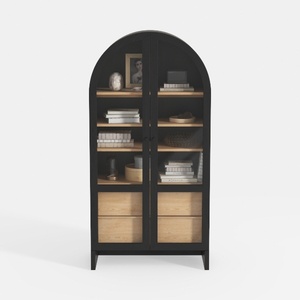
Modway Evie Arched Display Cabinet in Black Oak -
Homestyler is an exceptional online home design platform ideal for anyone looking to revamp their space. Its user-friendly design tool, stunning 3D rendering features, diverse design projects, and helpful video tutorials make home design fun and accessible, regardless of your experience level!
Design jetzt kostenlos
































