

After spending over ten years combining architecture and landscape design, I’ve discovered that the most effective small trees for residential areas possess three essential characteristics: a manageable size, non-intrusive roots, and notable seasonal appeal. The challenge lies in harmonizing aesthetic appeal with the integrity of buildings. Research from Steelcase indicates a relationship between access to nature and enhanced workplace wellbeing, while the WELL v2 guidelines underscore the importance of sunlight and scenic views for occupant satisfaction—these findings are equally applicable in home environments. Incorporating framed foliage, filtered light, and vibrant colors can boost comfort while safeguarding structural health. The WELL Building Standard (specifically Light concepts L03 and L04) stresses glare reduction and optimal lighting, supporting the benefits of delicate canopies that temper sunlight by windows.
The scale of trees is crucial. One guideline I adhere to is maintaining a mature height of 20 to 25 feet and a spread of 15 to 20 feet when planted 8 to 12 feet from a building facade. According to the Illuminating Engineering Society (IES), residential living spaces typically aim for a lighting level between 100 to 300 lux for visual ease; a compact canopy can diminish direct sunlight while maintaining necessary brightness, which helps reduce glare on indoor surfaces. Equally important is root behavior: I recommend selecting species with gentle, fibrous root systems and positioning them at least 5 to 10 feet away from foundations and hard surfaces. For visual symmetry and window alignment, I use a layout tool like Homestyler to simulate how tree canopies interact with windows and the overall front elevation of the house.
Top Picks for Small Trees to Plant Close to Your Home
Here are several trees I frequently recommend for planting in foundation areas and compact urban plots. These selections are based on their mature size, root behavior, canopy structure (impact on light quality), upkeep needs, and how well they integrate with different architectural styles.
• Mature size: Ranging from 10 to 20 feet in height and 10 to 15 feet in width (with dwarf selections available from 6 to 10 feet).
• Ideal for: Softening façades, enhancing entryways, and filtering afternoon light.
• Here’s why it’s effective: Fine branches, layered foliage, and gradual growth create an appealing silhouette. Opt for upright forms like ‘Sango-kaku’ or ‘Seiryu’ for narrower beds; select true dwarf varieties for tight spaces under eaves.
• Cautions: Shield from intense western sun exposure in hotter climates; maintain a breathable mulch area and prevent overwatering near foundations.
• Mature size: Height ranges from 15 to 25 feet and widths from 12 to 20 feet; multi-stemmed options complement contemporary designs.
• Best for: Year-round appeal featuring spring blooms, edible purple berries, striking orange-red fall hues, and graceful winter silhouette.
• Here’s why it works: A light, airy canopy allows natural light into the interior while providing privacy.
• Cautions: Position at least 6 to 8 feet away from siding; prune lightly post-bloom.
• Mature size: Between 12 to 20 feet tall and 12 to 20 feet wide; ‘Forest Pansy’ features burgundy foliage, while ‘Rising Sun’ showcases apricot new growth.
• Ideal for: Creating a striking spring presence against neutral façades; heart-shaped leaves soften harsh lines.
• Here’s why it works: Possesses shallow, manageable roots and thrives in partial sun to bright shade.
• Cautions: Avoid overly saturated soils; ensure a clearance of 6 to 8 feet from foundation and utilities.
• Mature size: Ranges from 10 to 18 feet tall and 10 to 15 feet wide (look for varieties tolerant to scab and fire blight).
• Ideal for: Spring blooms, bird-attracting fruit, and a structured shape that suits traditional architecture.
• Here’s why it’s effective: Numerous dwarf forms can keep width constrained near walkways.
• Cautions: Select varieties with persistent fruit to minimize litter accumulation near entrances.
• Mature size: 15 to 25 feet tall and 12 to 20 feet wide, usually narrower than native flowering dogwood.
• Ideal for: Layered horizontal branching, white bracts, and mottled bark that add seasonal interest in winter.
• Here’s why it works: Its V-shaped structure can complement windows without blocking them.
• Cautions: Prefers well-draining, slightly acidic soil; lightly mulch to keep roots cool.
• Mature size: ‘Stellata’ reaches 8 to 12 feet; ‘Little Gem’ between 15 to 20 feet with a slender, columnar form.
• Ideal for: Early blooms (stellata) or evergreen screening with limited width (Little Gem).
• Here’s why it works: The evergreen ‘Little Gem’ provides year-round structure without dominating small properties.
• Cautions: Maintain a distance of at least 6 feet from walls; avoid heavy pruning that disrupts its natural shape.
• Mature size: 6 to 12 feet in-ground; less in containers.
• Ideal for: Edible produce, delightful fragrances near entrances and patios.
• Here’s why it works: The controllable root systems of containerized plants allow for easy adjustments to maintain façade balance.
• Cautions: Shield from frost; employ high-quality, well-draining potting mixes, ensuring 4 to 6 hours of sunlight.
• Mature size: Ranging from 6 to 10 feet for dwarf shrubs; up to 15 feet for compact trees.
• Ideal for: Mediterranean or modern designs; silvery foliage reflects light, creating a bright, sharp appearance.
• Here’s why it works: A slender profile and gradual growth allow them to be planted closely to walls in warm, arid climates.
• Cautions: Confirm local regulations on fruiting olives; ensure fruit doesn’t cause staining on nearby walkways.
Root Systems and Foundation Safety
• Distance: Keep small trees no closer than 5 to 10 feet from foundations, extending this to 10 to 15 feet for species with broader crowns.
• Water: Avoid concentrated watering near foundations which can lead to soil displacement in expansive clay conditions; direct emitters outward and promote infrequent deep watering once established.
• Barriers: Utilize root barriers to guide shallow roots away from sidewalks; however, careful species selection remains the primary defense.
• Drainage: Maintain a 2 to 3 percent slope away from the house; refrain from planting in low-lying areas prone to water accumulation around the foundation.
Light, Color, and Views
A well-thought-out canopy density can mitigate glare while preserving natural light. I aim for a medium porosity allowing 30 to 50 percent light transmission through the leaves around high-traffic windows. Lighter-colored leaves or silvery foliage (such as some eucalyptus or olive varieties) can brighten shaded façades, while burgundy leaves from trees like ‘Forest Pansy’ add richness against light-colored siding. Properly positioning a small tree to frame a window, rather than obstruct it, helps maintain connection to the outdoors—this connection has been linked to improved mood and lower stress levels as per environmental psychology research.
Placement Strategy Near Walls and Windows
• Align with architectural rhythm: Center multi-stem trees between paired windows; utilize columnar varieties to flank entrances without overwhelming them.
• Height to eave ratio: Aim for the mature tree height to be between 0.7 to 1.2 times the height of nearby eaves for an aesthetically pleasing profile, slightly less for taller facades.
• Sconces and cameras: Maintain 2 to 3 feet of clearance from fixtures and sensors; prune trees for optimal airflow and sightlines.
• Utilities: Ensure underground services are marked before planting; maintain at least 3 feet of space from cleanouts and meters.
• Visualization: When adjusting canopy span in relation to window widths, utilizing a tool like Homestyler can help preview light patterns and balance privacy before planting.
Soil, Water, and Maintenance
• Soil: Only amend soil to correct drainage issues; planting in a mix that differs greatly from native soil can create drainage problems and lead to root circling. Ensure that backfill mirrors native soil; top-dress with organic compost and mulch.
• Water: In the initial year, water deeply 1 to 2 times weekly during dry spells; gradually reduce frequency as the roots become established. Avoid consistently wet soil near foundations.
• Pruning: Conduct formative pruning in late winter or just after blooming (depends on species) to maintain clearance from walls and gutters; avoid topping limbs.
• Mulch: Use 2 to 3 inches of organic mulch, keeping it 3 to 6 inches away from the trunks, to stabilize soil moisture and temperature.
Regional Considerations
Select trees suited for your specific climate and light exposure. In hot, arid regions, drought-resistant olives or compact desert willow varieties (like ‘Burgundy’) work well when spaced properly. In humid areas, prioritize crabapples resistant to diseases and kousa dogwoods. Coastal zones benefit from salt-tolerant species such as compact forms of bay laurel (Laurus nobilis) in shrub or small standard formats. Always check with local nurseries to confirm mature sizes.
Designing for Human Use and Circulation
Incorporating foundation plantings also serves as navigation aids: a flowering small tree can define the entry pathway, guiding visitors while creating a welcoming threshold. Ensure clear pathways of 36 to 48 inches in width. Around patios and home offices, a tree with a delicate canopy can soften acoustics and provide visual breaks; studies by Gensler have consistently indicated that access to nature and scenic views correlates with improved experiences in the workplace, which translates to the home setting where remote work is increasingly common.
Common Mistakes to Avoid
• Overplanting: Introducing too many trees can complicate maintenance and obstruct egress.
• Disregarding mature size: A 5-gallon tree may appear small but can quickly outgrow window spaces.
• Planting too deep: Set the root flare slightly above ground level to prevent rot.
• Mixing species with high water needs near foundations: Excessive irrigation in these areas can lead to moisture problems.
FAQ
For trees that mature to heights under 20 to 25 feet and 15 to 20 feet in width, I maintain a distance of 5 to 10 feet from the foundations. For broader crowns or expansive clay soils, this can extend to 10 to 15 feet.
Serviceberry and upright Japanese maple offer a semi-open canopy that provides privacy while allowing daylight, aligning with IES residential lighting recommendations.
Japanese maples typically feature shallow, non-invasive roots. Their risk is minimal when planted at least 6 to 10 feet from walls while ensuring proper drainage and avoiding chronic overwatering.
Magnolia grandiflora ‘Little Gem’ has a narrow, evergreen profile that maintains structure year-round. Ensure a clearance of 6 to 8 feet and prune selectively to keep it from encroaching on walls.
Yes, but opt for persistent-fruit crabapples or consider dwarf citrus in containers to control litter. Prevent placing heavy fruit-bearing trees directly overhead pathways to avoid dropping fruit.
Choose a variety with fine-textured leaves and medium canopy density. Position it slightly off-center from windows to filter light effectively, which aligns with WELL v2 guidelines on glare management and balanced natural light.
In most regions, the best planting times are fall or early spring so trees can establish roots before extreme weather sets in. In warmer climates, late fall is ideal once the soil temperatures have stabilized.
Trim crossing branches and gradually elevate the canopy to clear window sills and fixtures. Maintain a natural shape rather than excessively shearing the tree to reduce stress and maintain light quality.
With carefully chosen species and appropriate spacing, there could be minimal issues. If proximity to sidewalks is unavoidable, a vertical root barrier can help direct roots away from pavement.
Utilize flexible, small-canopy species like serviceberry or kousa dogwood and stake them only during their establishment phase. Retain a tapered leader and avoid heavy pruning to prevent top-heaviness.
Yes, with true dwarf varieties positioned to ensure that mature heights remain 12 to 24 inches below eaves to prevent any rubbing. Also, ensure that roof runoff does not saturate root zones.
Keep 2 to 3 feet clear from fixtures, prune to maintain sightlines, and select columnar or upright varieties that won't obstruct sensors or create glare.


Rattan TV Stand for TVs up to 85'', Boho
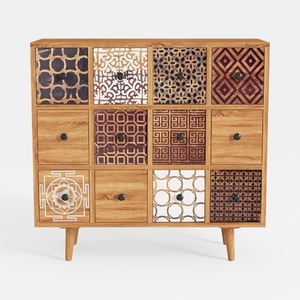
Bohemian Solid Wood Multidrawer Accent Cabinet With Patterned Fronts 3D Model
Homestyler is the ultimate online home design platform for transforming your space effortlessly. Utilize its user-friendly design tool, explore stunning 3D renderings, and dive into a wealth of design projects and DIY video tutorials. Bring your interior vision to life today!
Progetta ora GRATIS
































