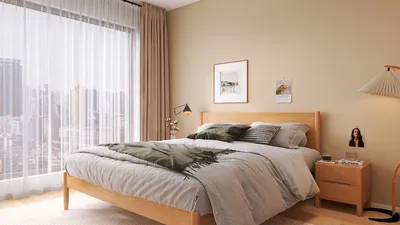


An 8x9 bathroom presents an ideal blend of versatility, encompassing approximately 72 square feet, which allows for the installation of a full bath with a spacious shower or a compact bathtub, all without feeling cramped. In my design projects, this area has proven to be highly functional for family bathrooms as well as tranquil primary ensuites, as long as we maintain essential clearances and sightlines. The concept of measurable comfort is crucial: according to WELL v2 guidelines, managing glare and selecting suitable color temperatures in work areas play a vital role in perceived comfort and stress management. By combining 3000–3500K lighting near the vanity with controlled reflectance, we can help keep eye fatigue at bay. Meanwhile, research from Steelcase suggests that environments with thoughtful lighting and spatial ergonomics yield higher user satisfaction, underscoring the importance of such considerations in our everyday home spaces, much like we would with tools like Homestyler.
In terms of ergonomics, the National Kitchen & Bath Association recommends maintaining a minimum clearance of 30 inches in front of fixtures such as sinks and toilets to ensure safe access and use. When it comes to shower interiors, a minimum dimension of 30x30 inches is advisable, though 36x36 inches provides much greater comfort. The Illuminating Engineering Society suggests that for effective grooming tasks at the mirror, a lighting level of 500–1000 lux is optimal; I often aim for the lower end of this spectrum using layered, dimmable sources to avoid overly harsh lighting. Regarding color psychology, Verywell Mind has indicated that cooler shades can impart calming effects, while softer neutral tones minimize visual distractions. Incorporating blues or soft greiges on larger surfaces and reserving vibrant colors for accents can help maintain visual harmony within the bathroom.
Essential Layout Guidelines for 8x9 Bathrooms
Begin by identifying the door and window placements within your 8x9 bathroom space. It's important to position the toilet such that there is at least 30 inches of clearance in front, alongside 15 inches from the centerline to each side wall; 18 inches is preferable for added comfort. Try to align the vanity with incoming natural light while avoiding direct backlighting at the mirror to prevent unwanted silhouettes. For those considering various layout options, utilizing a room layout tool can efficiently illustrate traffic patterns, door swings, and fixture arrangements; tools like Homestyler can simulate different designs before finalizing any plumbing decisions.
Layout Option A: Shower + Single Vanity + Standard Toilet
This layout is my top choice for an 8x9 bathroom scenario. Position a 36x48 inch shower against the 9-foot wall, enclosed with clear glass and featuring a hinged door that opens away from the toilet. Opposite the shower, center a 30–36 inch vanity on the wall to achieve symmetry. Ensure a minimum of 36 inches of clear space between the vanity edge and the opposite fixtures to promote a smooth flow. If a window is present, place the shower as far away as possible to limit water exposure; if keeping it near the window is unavoidable, using corrosion-resistant hardware and a high-quality seal around the jamb will help mitigate moisture concerns.
Layout Option B: Alcove Tub + Compact Vanity
For families with younger children, an alcove bathtub measuring 60x30 inches can be a great addition along the 8-foot wall. Adjust the vanity to occupy 30 inches of space while ensuring a shallow depth of 18–20 inches to allow for sufficient circulation. The toilet should be centered on the remaining wall, adhering to the required side clearances. Installing a curved shower rod can enhance elbow room, and opting for light-colored curtains can help reflect more light around the tub area, making the space feel brighter without amplifying glare.
Layout Option C: Double Vanity + Shower (Tight but Possible)
When accommodating two users in an 8x9 layout, a 60-inch double vanity can be integrated alongside a 36x36 inch corner shower with meticulous doorway planning. This option necessitates strict adherence to clearances: a minimum of 36 inches is required for the aisle, ensuring that the door swings 24 inches offset from the vanity and maintaining at least 21 inches in front of the toilet, with 30 inches being the target. Using recessed medicine cabinets can free up counter space and preserve the vertical rhythm on the mirror wall.
Layout Option D: ADA-Informed Comfort
Although complete ADA compliance may not be feasible within an 8x9 space, you can still adopt certain principles: consider a rolling shower with no threshold, a wall-mounted toilet to ease transfers, and lever handles throughout. Aim for a clear approach space of 36 inches to the vanity, and think about a knee-space segment positioned at 32 inches high. Smooth transitions, along with non-slip porcelain tiles (DCOF ≥ 0.42 when wet), can significantly enhance safety while maintaining aesthetic appeal.
Lighting: Lux Levels, Color Temperature, and Glare Control
To ensure optimal lighting at the vanity, consider layering your sources: vertical sconces set at 65–70 inches high on either side of the mirror will provide uniform facial lighting. Aim for 500–750 lux at face level, with a CRI of at least 90 for accurate skin tone rendition, along with a color temperature of 3000–3500K. In the shower, place wet-rated downlights offering 200–300 lux to effectively eliminate shadows. Dimming capabilities across various zones support circadian comfort; WELL v2 emphasizes that this controllability is crucial for overall occupant satisfaction. In lower ceilings, prioritize shallow fixtures and incorporate indirect cove or perimeter lighting to soften stark contrasts.
Materials and Maintenance
For bathrooms sized 8x9, selecting durable materials that are easy to maintain is key. I prefer large-format porcelain tiles for both the floor and shower walls, as they minimize grout lines and create a spacious visual effect. Pairing a quartz vanity top with an under-mount sink makes for easy cleaning. If you're looking for warmth, consider engineered wood-look porcelain with a matte finish to mitigate glare. Bright whites might evoke a clinical feel; breaking them up with soft taupe or powder blue, based on color psychology principles, can help maintain a serene atmosphere without making the space feel dull.
Acoustic Comfort
Hard surface materials can amplify sound. To counteract this, incorporating soft furnishings—like textured bath mats, fabric shower curtains, and acoustic-backed drywall—can help reduce noise levels. A low-sound exhaust fan (≤ 1.0 sone) can preserve a spa-like environment. For optimal performance, positioning the fan to provide airflow between 80–110 CFM, based on shower size and humidity conditions, is advisable.
Storage Strategy
Maximizing vertical storage space is essential: consider incorporating recessed niches in showers, flush-mounted medicine cabinets, and a tall shallow linen cabinet (12–15 inches deep) featuring ventilated shelves. Utilizing mirrored doors can help reflect light and give the illusion of a wider space. Store frequently used items between 36–48 inches high, reserving the upper shelves for seasonal or rarely used items above 60 inches.
Plumbing and Ventilation Notes
In a compact bathroom, precise planning for plumbing is critical. Center the drain lines to minimize the need for offsets, and only use offset flanges when absolutely necessary. It's also important to establish a dedicated GFCI circuit for vanity outlets and a separate circuit for heated floors if desired, this will help mitigate nuisance trips. For ventilation, ensure that the airflow goes directly to the outdoors, avoid lengthy duct runs, and insulate ducts to prevent condensation.
Spatial Ratios and Visual Balance
Aim to maintain a balance between visual masses by pairing a heavier vanity with a lighter shower enclosure or vice versa. The largest uninterrupted surface—the floor—should have a calming arrangement through consistent material. A palette of 60% neutrals, 30% accents, and 10% metallics can be visually pleasing; repeating metallic finishes across all hardware helps create a cohesive look. Introducing a strong vertical element, such as a mirror or a niche, can anchor the design while aligning edges with door and window frames ensures visual rhythm.
Planning with Digital Tools
I leverage digital tools to develop 1:1 layout representations which aid in testing door swings, clearances, and sightlines. Employing a layout simulation tool minimizes errors prior to plumbing rough-in; this room design visualization tool can be incredibly helpful in evaluating whether your chosen 8x9 arrangement adheres to the recommended 30-inch clearances for fixtures and optimal spacing between the vanity and toilet.
Reference Insights
For more in-depth guidance regarding lighting and wellness, the WELL v2 framework provides established criteria surrounding light, comfort, and materials; its focus on controllability and glare complements the requirements for bathroom tasks. The Illuminating Engineering Society offers illuminance recommendations specifically for grooming tasks, while ongoing research by Steelcase affirms the connection between cognitive function and spatial ergonomics. These references ensure that design insights remain anchored in measurable comfort.
Tips 1: Quick Dimension Checklist
- Maintain a minimum of 30 inches clear space in front of toilets and vanities (targeting 36 inches is preferable).
- Allocate 15 inches from the toilet centerline to each side, with 18 inches deemed ideal.
- For showers, adhere to a minimum size of 30x30 inches, with 36x36 inches highly recommended.
- When it comes to vanities, width should range from 30–60 inches depending on user needs, while maintaining a depth of 21–24 inches.
- Install sconces at a height of 65–70 inches; opt for a color temperature of 3000–3500K with a CRI ≥ 90; aiming for 500–750 lux at the mirror.
- For exhaust fans, keep the sound level at ≤ 1.0 sone; airflow should be 80–110 CFM based on the size of the shower.
FAQ
Q1: Is it possible to fit a double vanity in an 8x9 bathroom?
A1: Indeed, a 60-inch double vanity can be accommodated alongside a compact 36x36 inch shower, providing careful management of door swings. Ensuring at least a 36-inch aisle clearance helps prevent crowding.
Q2: Can I reasonably include a soaking tub in an 8x9 space?
A2: An alcove bathtub measuring 60x30 inches is effective. Keeping a 30-inch vanity and maintaining 30 inches clear in front of all fixtures is crucial for optimal circulation.
Q3: What lighting levels are ideal for tasks?
A3: Target 500–750 lux at the mirror, with color temperatures at 3000–3500K and a CRI of at least 90 for accurate skin tones, while the shower should have 200–300 lux via wet-rated downlights.
Q4: How can I minimize glare at the vanity?
A4: Utilize vertical sconces positioned at eye level on either side of the mirror, matte finishes on adjacent surfaces, and incorporate dimmers. Steer clear of overhead lights positioned directly above the mirror.
Q5: Are wall-hung fixtures advantageous in compact bathrooms?
A5: Wall-hung toilets and vanities free up floor space and enhance visual lightness. They simplify cleaning and can provide an additional 2–3 inches of perceived width in the aisle.
Q6: Which tile dimensions are most suitable?
A6: Large-format porcelain tiles (24x24, 12x24) are perfect for minimizing grout lines and enhancing the visual space. Opting for matte or low-sheen finishes helps control glare and prevent slips.
Q7: How should I approach storage planning?
A7: Incorporate recessed medicine cabinets, shower niches, and tall, shallow linen cabinets. Position frequently used items at heights between 36–48 inches for ease of access.
Q8: What ventilation specifications should I follow in a bathroom?
A8: Employ a quiet fan rated at ≤ 1.0 sone, providing 80–110 CFM based on shower size; be sure it's ducted directly outdoors, and insulate ducts to prevent condensation.
Q9: Is it feasible to include accessibility features without full ADA compliance?
A9: Absolutely—features like no-threshold showers, lever handles, and 36-inch approach clearances can enhance comfort and safety even without full compliance.
Q10: How do color choices impact the mood of the bathroom?
A10: Softer neutral tones and cool colors foster a sense of calm, while more vibrant accents can inject energy. Keeping larger areas lighter helps reduce visual noise, supported by color psychology research.
Q11: Where should the door be positioned?
A11: The door should be located to avoid direct views of the toilet, facilitating clear access to the vanity and allowing offsets in door swings to avoid conflicts with the shower enclosure.
Q12: How can heated floors be incorporated into the design?
A12: Heated flooring adds a layer of comfort to compact bathrooms. It's crucial to utilize a dedicated circuit and verify clearances beneath fixtures prior to installing heated mats.

Minimalist Solid Oak Vinyl Record Storage Boxes 3D Model

Nordic Simple Resin Ceiling Lights, Modern Flush
Homestyler is your go-to online home design platform that makes transforming spaces effortless. With its intuitive design tool, stunning 3D renderings, and a rich library of DIY video tutorials, you can unleash your creativity and bring your design visions to life in no time!
Zaprojektuj teraz za darmo
































