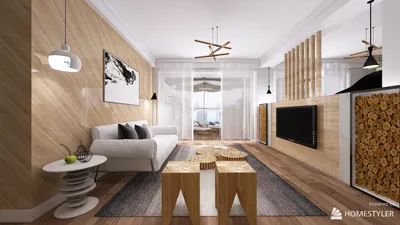


When considering dining room fans, I see them as essential climate controllers and visual centerpieces. A well-placed ceiling fan can effectively regulate temperature, soften harsh lighting, and highlight the dining table as a focal point for gatherings. Research backs up the comfort benefits; for example, the International WELL Building Institute states that air movement at approximately 0.2 to 0.8 m/s can enhance thermal comfort in spaces that mix different climates, allowing occupants to feel cooler without overcooling the environment. Furthermore, findings from Steelcase suggest that sustained comfort in shared spaces boosts productivity and satisfaction, which is particularly relevant to home dining where engagement, focus, and time spent are crucial. Moreover, using tools like Homestyler can help visualize these setups and aid in planning for optimal comfort and design.
Lighting should complement the airflow generated by the ceiling fan. I recommend selecting the fan's light kit to achieve lighting levels between 150 to 300 lux at the dining table for practical tasks, with dimmable options that can adjust to 50 to 100 lux for creating ambiance. The Illuminating Engineering Society (IES) advocates for adjustable layers and glare reduction techniques to manage high-brightness sources within view, which is particularly vital when diners gaze upward at a glimmering centerpiece. Additionally, the WELL v2 standards emphasize the importance of control over lighting and visual comfort, providing guidelines for shielded light sources and appropriate color rendering that enhances food presentation. For more resources on these standards, consider reviewing the WELL Building Standard (v2) along with IES directives on visual comfort and task lighting strategies.
Choosing the Appropriate Fan Size and Installation Height
The diameter of the fan is key to its performance and proportionality in relation to the room. For dining areas of around 100 to 150 square feet, a fan measuring 44 to 48 inches usually offers a balance between airflow and scale; larger spaces, from 150 to 300 square feet, tend to benefit from fans that are 52 to 60 inches wide. It is crucial to ensure that the blade tips are at least 24 inches away from walls, pendants, or tall cabinetry. The fan should be positioned so that the blades are roughly 7 feet 6 inches to 8 feet 6 inches above the floor in most residential settings—ensuring enough clearance while still providing a noticeable breeze for seated individuals. For ceilings that exceed 10 feet, adding a downrod will help maintain the ideal blade height. If your dining layout is open or asymmetrical, determine the table's location first; using a room layout tool like Homestyler can help prevent off-center installations and potential shadows.
Ensure Airflow is Balanced Without Causing Drafts
Comfort in dining areas should be characterized by gentle, even air movement, rather than a harsh breeze. I typically opt for medium fan speeds that create an airspeed of approximately 0.3 to 0.6 m/s at seated height. In warmer seasons, I recommend setting the fan to turn counterclockwise for a downwash effect, enhancing perceived cooling by about 2 to 4 degrees Fahrenheit. In the colder months, switching to a clockwise direction at low speeds will redistribute warm air without imposing a draft across the dining table. For tables that seat eight or more people, you might need a larger fan or consider installing two smaller fans symmetrically to ensure that airflow remains consistent across the entire tabletop.
Harmony of Light Temperature and Color Accuracy
Food appears most appealing at a Color Rendering Index (CRI) of 90 or above, with a color temperature between 2700 and 3000K. This range is warm enough to enhance skin tones and food colors while remaining neutral enough to accurately showcase greens and whites. I frequently match the fan's integrated lighting with dimmable pendants or wall sconces for layered control of illumination. It's best to maintain synchronized dimming, either through a single control point that offers preset scenes or through compatible smart dimmers to avoid flicker and inconsistencies in lighting curves. Shielding light sources to minimize glare is essential, aiming for a harmonious luminance between the tabletop and surrounding surfaces. A slight wash of light on the walls (10 to 20% of the tabletop illumination) helps to reduce contrast whenever diners look upward.
Design Considerations: Proportion, Style, and Ceiling Shape
The language of design plays a significant role. A sleek, three-blade fan is perfect for contemporary spaces that feature straight-lined tables; conversely, five-blade designs fit nicely within transitional environments that require more visual softness. For coffered or beamed ceilings, selecting a compact motor housing will prevent visual overcrowding while ensuring the blade path remains unobstructed. In rooms with low ceilings, hugger fans can help maintain essential headroom; for grand dining areas, employing a downrod illustrates beautiful negative space above the table, while ensuring proportionality between table width and visible blade sweep remains in the 1:1 to 1:1.25 range for pleasing visual balance.
Quiet Functionality and Sound Comfort
As conversations are at the heart of the dining experience, the sound profile of the fan must be unobtrusive. I evaluate fans for balanced blades, high-efficiency DC motors, and verified sound levels when available. It is advisable to aim for a fan that operates within a quiet sound spectrum—free from low-frequency hums or motor whine at typical dining speeds. When combining a pendant light with a fan, be sure to utilize dampers and solid mounts to eliminate noise from chain contact or glass-on-metal interactions. Incorporating soft design elements—such as table rugs, upholstered seating, and drapes—can help control reverberation, ensuring any residual fan sound keeps below conversational levels.
Control Approach: Scene-Centric Comfort
Combine fan speed and lighting control into straightforward scenes: ‘Dinner’ (fan on low, 150-200 lux), ‘Prep/Cleanup’ (fan on medium, 300 lux), and ‘After-hours’ (fan on low or off, 50-100 lux). Tactile wall controls often perform better than intricate app menus when hosting guests. If smart control systems are your choice, ensure compatibility between the fan's DC motor module and the dimmer switch, as mismatched components may lead to flickering lights or operational noise.
Material and Finish Selection
Choosing blades in wood veneer or matte finishes helps reduce glare and creates a soothing atmosphere over shiny table surfaces. In humid environments or spaces connected to kitchens, opt for damp-rated fans to prevent warping. When selecting metals, match them to one or two primary finishes in the room—such as coupling aged brass with warm woods, or matte black with oak and leather—rather than attempting to achieve the exact finish for each item. The fan should seamlessly blend into the overall aesthetic rather than appearing as an afterthought.
Clearances and Creating Spatial Harmony
It's important to maintain a clearance of at least 30 to 36 inches between the fan's orbit and tall decorative pieces such as centerpieces during operation; also, ensure that pendant cords and mobiles are well out of the fan's path. If layering a statement pendant with the fan, either ensure they align along the room’s long axis or, for a more centered approach, position the pendant over the table with the fan aligned on the room's centerline—this avoids overlapping airflow that can disturb lamp shades or cast flickering shadows on dining plates. I prefer a layout that places the fan at the center of the room while centering the pendant above the dining table, preserving a clear and intentional visual hierarchy.
Energy Optimization and Seasonal Planning
A well-calibrated fan can allow for an increase in the thermostat setting by 2 to 3 degrees Fahrenheit during summer months while still maintaining comfort levels. This strategy can help reduce energy expenses without compromising hospitality. In winter, utilize the reversible setting to recirculate warm air, ensuring that speeds remain low to prevent drafts. Additionally, LED light kits operating within the 2700 to 3000K range with high CRI ratings minimize heat output at the fixture and assist in lowering long-term operating costs—an essential consideration for prolonged meals or frequent entertaining.
Emerging Trends for 2024–2025
- Super quiet DC motor-driven fans that provide high-efficiency airflow per watt while featuring slim profiles for visual lightness.
- Warm-dimming lighting options that transition from 3000K down to a cozy 1800-2200K, mimicking the inviting glow of candlelight for late evening meals.
- Eye-catching finishes such as brushed bronze or smoked oak blades combined with matte opal diffusers for a soft lighting effect.
- Integrated control systems that harmonize fan speeds, dimming options, and scene-setting capabilities without sacrificing manual control.
- Space-efficient fans designed for smaller apartments, tailored for café table dimensions, with appropriately scaled blade sweep and rounded edges to eliminate bulkiness.
Streamlined Layout Strategies
Begin by sketching the room to establish the table’s placement, then arrange the fan relative to either the room's focal point or directly over the table based on the dominant axis. In open-concept kitchens, align the fan specifically with the dining area rather than the entire space to sustain targeted airflow and lighting where guests will be seated. Utilizing tools such as an interior layout planner helps to visualize clearances with beam structures, pendants, and decorative wall art prior to finalizing electrical connections and junction box positions.
Common Questions
For most six-seat tables, which typically measure 36 to 42 inches wide and 72 to 84 inches long, a fan size between 48 and 52 inches works effectively while ensuring that blade tips are at least 24 inches away from surrounding walls and fixtures, delivering even airflow across the tabletop.
Aim for a blade height of approximately 7 feet 6 inches to 8 feet 6 inches. For ceilings reaching 9 to 10 feet, a short downrod generally achieves this. Taller ceilings will require longer downrods to maintain effective airflow at seated levels.
Indeed, position the pendant directly above the table alongside the fan on the room's centerline, or offset them along the longer axis. Ensure there's a distance of at least 24 to 30 inches between the pendant shades and blade tips to prevent unwanted vibrations and flickering shadows.
Activate counterclockwise rotation for a subtle downwash that heightens evaporative cooling. Employ medium or low speeds to avoid direct drafts impacting dining plates.
Stick with a color temperature of 2700 to 3000K and a CRI above 90, which ensures skin tones and food presentation appear natural. Include dimming to transition from task-oriented brightness to a warm ambience during dessert or late-night meals.
Opt for opal diffusers, shielded optics, or shallow bowls with internal baffles to control glare. Balance the illumination level of the tabletop (150 to 300 lux) with gentler wall lighting to manage contrast effectively. Position shiny surfaces out of the direct sight line to the light source for visual comfort.
For dining areas, choosing a fan with a DC motor is advisable. These motors typically operate quieter, demonstrate greater efficiency, and provide superior speed control—perfect for maintaining a consistent low airflow during dining conversations.
Select a 36 to 42 inches fan with a low-profile mounting design. Aim for a clean blade silhouette and matte finishes that help to reduce visual weight. In exceedingly compact spaces, consider a compact fan and wall sconces to avoid overwhelming the ceiling structure.
Utilize a suitably rated junction box, verify blade balance, and ensure all hardware is securely fastened after a week of operation as materials may settle. Adding rubber isolation grommets between the bracket and beam can effectively reduce vibration transmission.
Using a fan that enables an increase of 2 to 3 degrees Fahrenheit on your summer thermostat setting helps maintain comfort through enhanced convection. Combined with efficient LED lighting options, this solution reduces heat output and overall operational expenses.
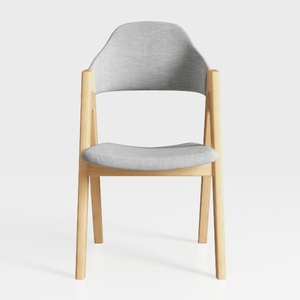

Minimalist Solid Oak Fabric Upholstered Dining Armchair 3D Model

Minimalist Solid Wood White Cabinet With Glass Doors Drawers 3D Model

Minimalist Solid Oak Wood Dining Bench 3D Model
Homestyler is your go-to online home design platform, perfect for transforming your vision into reality. With an intuitive design tool, stunning 3D renderings, a plethora of inspiring design projects, and engaging DIY video tutorials, it's never been easier to create your dream space!
Design Now for FREE
































