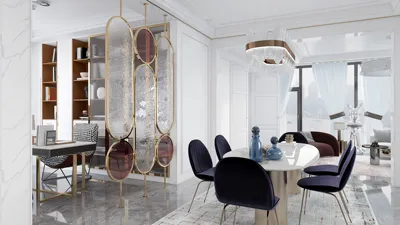


I consider the welcome room—also known as the foyer or entryway—an essential introduction to the home. This space establishes the atmosphere, energy, and expectations almost immediately. A thoughtfully designed entry harmonizes lighting, colors, materials, and movement, enabling guests to intuitively navigate and feel comfortable. In my designs, my focus is on enhancing visibility, acoustic quality, and tactile experiences, ensuring that arrivals are seamless and unforgettable, often utilizing tools like Homestyler for planning.
Effective entries excel notably when light levels and ergonomic principles are properly addressed. According to WELL v2 guidelines, an illumination of 300–500 lux is recommended for communal areas to enhance visual comfort and navigation, while focused task areas may require up to 500 lux. Consistent vertical lighting helps to minimize shadows and fosters better recognition of faces. The Illuminating Engineering Society also suggests strategies for glare reduction and uniform lighting, enhancing comfort levels in living spaces. These principles inform my choices regarding layered ambient lighting, low-glare fixtures, and adjustable settings for circadian rhythm support.
The interaction within a space is significantly influenced by layout. Research from Steelcase indicates that environments with clear directories and appropriately scaled transitions facilitate movement and lessen mental strain, allowing individuals to acclimatize more quickly and engage naturally. In my designs, I implement a clear pathway of 1.2–1.5 meters from the doorway to the main flow of the home, maintaining a minimum clearance of 0.9 meters around furnishings, with a visual reference point opposite the entry to enhance orientation. A room layout tool, like Homestyler, is invaluable for simulating traffic and ensuring efficient furniture arrangements.
Creating a Focal Point
Each welcome area should include a prominent focal point that draws attention immediately upon entrance. This could be a striking sculptural console, an impressive piece of art, or a unique textured wall. I strive for a harmonious proportion, ideally a 2:3 ratio between the focal's width and the wall's length, ensuring the design feels balanced rather than cramped. Introducing vertical elements, such as pendant or sconce lighting, alongside a horizontal aspect like a runner or console surface, adds rhythmic visual interest. Strategically placed mirrors can amplify natural light and create a sense of spaciousness, but I position them slightly off-axis to prevent glare and unexpected reflections.
Lighting for Comfort, Guidance, and Atmosphere
Layered lighting is essential in any entryway design. Basic ambient light should hover around 300–400 lux, while accent lights highlight key textures and features. For a congenial ambiance, I recommend light temperatures of 2700–3000K; in homes benefiting from cooler natural light, consider 3000–3500K to achieve a pleasing balance. Sconces positioned at a height of 150–160 cm from the floor create flattering illumination for faces, while dimmers allow for adjusting brightness for different times of day. To maintain a low Unified Glare Rating, I select diffusive shades, wall washers, and indirect uplighting techniques to soften ceiling lines.
Understanding Color Psychology at the Entry
Color profoundly influences emotions right from the onset. Warm neutral shades, such as taupe and sand, evoke feelings of safety and grounding, while soft greens can promote a sense of restoration, and deep blues instill calmness. According to Verywell Mind’s exploration of color psychology, blues are often perceived as reliable and tranquil, whereas greens create feelings of balance and renewal. I advocate for neutral tones complemented by a single vibrant accent—whether art pieces, a runner, or a painted alcove—to establish a deliberate palette that doesn’t overwhelm smaller spaces.
Proportionality, Flow, and Human Dimensions
Ergonomic considerations begin right at the entryway. Ensure a clearance of at least 1.2 meters for door swings and passage, alongside a minimum of 90 centimeters around furnishings to prevent unnecessary collisions. The ideal height for console tables ranges between 76 to 86 centimeters, providing comfortable drop-off points for items. Installing coat hooks at 150 to 165 centimeters caters to various user heights. Additionally, integrating a bench or place to sit within a couple of steps from the door for shoes and bags is practical. Transitioning flooring should be flush to avoid tripping hazards, and non-slip backing is necessary for runners to ensure safety.
Choosing Materials and Enhancing Tactility
Entrances experience heavy traffic, thus material choices must be durable and easy to clean. I recommend stone or porcelain surfaces with light textures for grip, engineered wood with hardwax oil finishes, and paints that are easy to wipe in eggshell or satin finishes. Sustainability remains a priority—low-VOC finishes and FSC-certified wood contribute to better indoor air quality and adhere to wellness standards. A layered approach with rugs (like flatweave combined with coir mats outside) captures dirt before it enters the home. Textural diversity, such as ribbed plaster or woven grasscloth accents, enhances sensory experience.
Sound Dampening Strategies
Hard surfaces in an entryway can often lead to excess noise. To mitigate this, I balance hard materials with softer, sound-absorbing elements, such as textile runners, padded upholstery, and artwork with acoustic backing when possible. Implementing soft-close mechanisms on doors and seals can help diminish unwanted noise from slamming. Ideally, utilities such as heating systems should be situated away from the welcome area, or if proximity is necessary, adding acoustic sealing can help with sound management.
Invisible Storage Solutions
A cluttered entry can greatly undermine first impressions. I prefer to incorporate closed storage options for items like keys, gloves, and pet leashes—options may include shallow drawers within consoles or a discreet cabinet with doors. Strategically placed trays and bowls help organize daily essentials without creating visual disorder. In smaller entries, consider a tall cabinet featuring a mirrored front for both storage and spatial enhancement. Keeping items like umbrellas or packages near the hinge side of the door allows for an easy, quick access.
Incorporating Texture and Artwork
Texture adds a cozy element to small areas. I recommend blending a natural fiber, such as jute or sisal, with more refined materials, like brushed metal or stone, to maintain visual cohesion. Art pieces should be impactful, identifiable from 2–3 meters away; larger prints or singular relief pieces often have a more significant effect than a collection of small artworks, especially in compact entries. Position artwork at centerline heights of 145–155 centimeters to accommodate most users, adjusting slightly lower for shorter inhabitants or a more relaxed ambiance.
Establishing Wayfinding and Sightlines
It’s crucial to maintain visibility of the home's next key feature—be it a living room window, a fireplace, or a staircase. If the layout is complex, introduce subtle guiding cues such as a runner directing toward main pathways, a rhythmic lighting scheme, or a shift in wall paint tones to indicate movement. When the welcome area functions simultaneously with circulation routes, careful planning with an interior layout planner can help visualize turning clearances and prevent bottlenecks, ideally utilizing tools like Homestyler.
Practical Lighting Fixtures for Entry Spaces
For lower ceilings, flush mounts with opal diffusers help minimize glare and visually elevate the space. For rooms with ceilings between 2.7 and 3.0 meters, small lanterns or compact chandeliers can enhance the ambiance; it's critical to keep their diameters in proportion—approximately one-third of the entry’s narrow measurement—to prevent them from feeling overpowering. Pairing these fixtures with wall lights can also help eliminate shadows created by overhead lighting. Consider integrating motion sensors for outdoor illumination and a subtle night setting for indoor lights, ensuring safety during late arrivals.
Seasonal Styling Made Simple
Being selective is key when it comes to seasonal décor. Opting for one wreath or a singular floral display per season often suffices; maintaining a color scheme aligned with the established palette is ideal. Simple changes, such as alternating runners or swapping out decorative bowls can refresh the space’s mood. It’s best to choose gentle fragrances—woodsy, herbal, or citrusy—so that the arrival experience remains inviting, rather than overwhelming.
Smart Solutions for Small Entries
In compact apartments, vertical organization becomes essential: utilize slim console tables, wall-fixed hooks, and shallow cabinets. Light colors and glossy finishes boost illumination within the space. Incorporating a large mirror and a delicate tall plant can enliven the area without sacrificing floor space. Avoid bulky furniture, and leverage a layout simulation tool before acquiring new items to ensure adequate clearances and proportions.
Inclusive Practical Guidelines
- 300–400 lux for ambient lighting, with color temperatures between 2700–3000K and dimmable layers
- 1.2–1.5 meters for clear pathways, ensuring 90 centimeters of circulation around furnishings
- Integrated closed storage and dedicated drop zones
- Non-slip runners and seamless floor transitions
- A prominent focal feature accompanied by proportional lighting
- Use textiles and seals for acoustic dampening
FAQ Section
Q1: How bright should my welcome space be?
A1: Aim for an ambient light level of 300–400 lux along with accent lighting for highlights, which is aligned with WELL v2 recommendations for public spaces, aiding in orientation.
Q2: What color temperature creates the coziest ambiance?
A2: A range of 2700–3000K provides warmth and an inviting atmosphere. In homes utilizing cooler daylight, consider 3000–3500K to create a more harmonious feel.
Q3: What is the recommended clearance around entry furniture?
A3: Maintain at least 90 centimeters around consoles and benches, with a clear pathway of 1.2–1.5 meters from the door to the primary corridor to avoid congestion.
Q4: Which materials are best suited for high traffic areas?
A4: Durable materials like porcelain or textured stone, along with engineered wood featuring hardwax oil, and performance fabrics for seating. Pair these with low-VOC options to support healthier indoor environments.
Q5: Do mirrors truly enhance the perception of space in smaller entries?
A5: Absolutely. Mirrors can create an illusion of depth and amplify light. Position them slightly off-axis to mitigate glare and to avoid abrupt reflections.
Q6: What types of fixtures minimize glare in an entryway?
A6: Utilizing opal diffusers, indirect uplighting, and sconces set at approximately 150–160 centimeters provides enjoyable lighting while adhering to glare-control best practices as recommended by IES.
Q7: How can I quiet down a hard-surface entryway?
A7: Introducing textile runners, soft-close hardware, and effective seals can significantly dampen noise. Upholstered seating options and art with acoustic properties also help in minimizing echoes.
Q8: What's an effective storage solution for everyday items like keys and mail?
A8: Opt for shallow console drawers combined with a designated tray area for easy access. Position mail collections next to the hinge side of the door for quick drop-off and to reduce clutter.
Q9: What colors create a calm atmosphere upon entry?
A9: Opt for soft neutrals, gentle greens, and deep blues. Research into color psychology indicates that blues generate feelings of trustworthiness while greens symbolize balance.
Q10: How do I accurately plan a small entry without purchasing inappropriate furniture?
A10: Utilize a room design visualization tool to confirm dimensions and pathways before purchase, ensuring functional movement and appropriate sizing.
Q11: Is it feasible to install a chandelier in a low-ceiling entryway?
A11: For ceilings less than approximately 2.7 meters, compact flush-mounted or semi-flush fixtures are advisable. Save larger chandeliers for spaces with more vertical height and adjust fixture diameters to remain proportional to the room size.
Q12: What’s the best approach to seasonal decorations?
A12: Limit decorations to a single defining piece per season—like a wreath or floral arrangement. Adjust small details, such as runners and bowls, to keep the entry sophisticated and serene without overwhelming it.


Discover your creativity with Homestyler, the ultimate online home design platform! With its user-friendly design tool, stunning 3D renderings, and a plethora of design projects and DIY video tutorials, transforming your spaces has never been easier or more inspiring. Start designing today!
Design Now for FREE
































