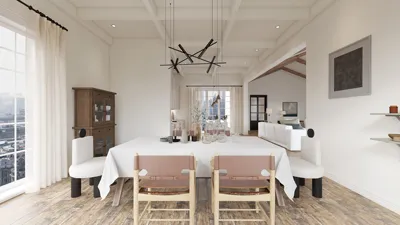


I regard hotel guest rooms as small ecosystems where every inch plays a vital role in comfort, functionality, and revenue generation. Ensuring the correct dimensions goes beyond meeting codes; it involves harmonizing circulation, storage, acoustic privacy, and lighting so that guests instinctively feel relaxed. In my projects, disciplined spatial proportions—bed zones, circulation pathways, and service cores—have consistently yielded exceptional performance and enhanced construction details. Leveraging tools like Homestyler can aid in visualizing these spaces effectively.
The sizes of rooms are determined by market tiers and regulations, yet some benchmarks remain surprisingly constant. Gensler's hospitality research underscores the increasing focus on wellness features and clear spatial designs as key to guest satisfaction and brand distinction. This trend emphasizes providing generous clearances around beds and minimizing door conflicts. WELL v2 suggests ambient lighting of approximately 2700–3000K for relaxation and ensuring task lighting is at least 300 lux for reading. I incorporate these critical factors into the layout plans and finish schedules right from the start, and tools like Homestyler can help represent these nuances visually.
Effective clearances are essential for usability. My target is a minimum of 900 mm (36 in) on either side of a queen bed in midscale rooms to prevent luggage collisions and nighttime hazards. For workstations, I design them to have a height of 760–800 mm (30–31.5 in) with knee clearance of at least 600 mm (24 in) based on ergonomic principles. Task lighting should provide ~300–500 lux at the work surface as per IES recommendations, ensuring the room feels accommodating regardless of its price point. Using a design platform like Homestyler can streamline this planning process.
Core Room Types and Practical Dimensions
Economy (Limited Service) Guest Room: 18–22 m² (190–235 ft²). Typical queen bed area: 3.2–3.6 m x 2.4–2.7 m. Bathroom: 3.0–3.5 m². Clear circulation spine: 900–1000 mm. Ideal for budget properties, utilizing modular bathrooms and compact wardrobe niches to manage expenses.
Midscale Guest Room: 22–28 m² (235–300 ft²). Featuring either queen or king beds with nightstands and possibly a small sofa or lounge chair. Bathroom: 4.0–5.5 m² (consider a 1500 mm tub or 1200–1400 mm shower). A luggage bench and a full-height wardrobe with a 600 mm depth are also recommended.
Upscale / Boutique Room: 28–36 m² (300–390 ft²). Incorporate a separate sitting area (two chairs plus a table), a larger vanity, and sound insulation from the corridor (aim for STC 50+ assemblies). Prioritizing natural light is crucial, and closet doors should not impede circulation.
Junior Suite: 36–48 m² (390–520 ft²). Design should facilitate zoned areas: sleeping, lounging, working, and a wet bar. Circulation around furniture clusters should be maintained at 1200 mm; opting for sliding doors can minimize swing conflicts.
Spatial Ratios and Traffic Flow
I design hotel rooms based on three key sections: the entry/service core (wardrobe and bathroom), the central circulation spine, and the bed/living area. A typical 30/30/40 split often applies in 22–28 m² rooms: roughly 30% for the service core, 30% for circulation, and 40% for both the bed and lounge. In narrower rooms (e.g., with a clear width of 3.4–3.8 m), maintaining a continuous circulation spine helps minimize door swing interference. Testing furniture arrangements and clearances can be enhanced by utilizing tools like Homestyler for layout validation before construction begins.
Bed Zone and Nightstand Planning
The average dimensions for a queen bed are 1520 x 2030 mm; for a king, it is 1930 x 2030 mm. I recommend a minimum of 450 mm (18 in) on either side for nightstands in economically priced rooms, and at least 600 mm for midscale and higher. Accessibility for electrical/USB outlets should be within 300 mm (12 in) of the pillow line, ensuring cord paths are not on the floor to prevent trip hazards. Integrating carpet tiles with built-in underlay helps reduce sound impact, whereas headboard panels with acoustic backing limit noise transfer from the corridor.
Bathroom Dimensions and Wet Area Arrangement
For compact bathrooms, dimensions of 1500 x 2100 mm (5 x 7 ft) can accommodate a shower, toilet, and single vanity when door management is executed wisely. Clear door openings should be around 800 mm (32 in) while maintaining 900 mm turning zones when required by building codes. Showers measuring 900 x 1200 mm provide a premium feel without unnecessary excess; for tubs, plan a length of 1500–1600 mm for a comfortable soaking experience. A vanity depth of approximately 500–600 mm, combined with mirror lighting at 300–500 lux and a warm color temperature of 2700–3000K, eliminates harsh glare and supports relaxation.
Wardrobe, Luggage, and Work Area Design
A hanging depth of 600 mm (24 in) is the established standard. I suggest providing a luggage bench between 500–550 mm deep, positioned away from primary circulation paths to avoid obstructing bathroom entry. For desk niches, a width of 1200–1400 mm is ideal to accommodate a chair, task light, and minibar while ensuring the chair can be pulled out comfortably without interfering with bed space. Cable management should remain hidden—guests expect orderly appearances and accessible charging options.
Acoustics, Lighting, and Color Psychology
Walls facing the corridor should utilize staggered studs, resilient channels, and sealed penetrations to enhance soundproofing. Installing door sweeps and perimeter gaskets is essential. In terms of lighting, it’s important to create layers: ambient (ceiling or cove) at approximately 100–200 lux, task lighting (desk or bedside) at 300–500 lux, and accent lighting for art displays at 150–250 lux. Warm-white lighting at 2700–3000K encourages relaxation; cooler task lighting can be used if independently controlled. Muted, low-saturation color schemes help create a calming environment, with studies suggesting that blues and neutrals reduce stimulation and align with sleep objectives found in many hospitality brands.
Ergonomics and Human Factors
Guest comfort is contingent on predictable touchpoints: switches should be at a height of 900–1100 mm, thermostats from 1200–1400 mm, and storage within 1400–1600 mm reach. Bed heights around 600–650 mm (top of mattress) accommodate a broad guest range. Chairs need to feature lumbar support and stable arms; desk surfaces should be designed to avoid glare under task lighting.
Accessible Room Dimensions
Meticulous planning of maneuvering clearances is vital: 1500–1600 mm turning circles, 900 mm door clear openings, and roll-in showers requiring a minimum dimension of 1500 x 1500 mm with linear drains. Vanity knee clearance should be provided, along with ensuring outlets and controls are easily reachable and maintaining an unobstructed transfer space next to the bed (usually ≥900 mm clear on at least one side).
Layout Variations According to Building Constraints
In structures with deep floorplates, room depths often range between 7.0–8.5 m; avoid piling furniture against windows to maximize natural light access. In narrow-width rooms, utilizing pivot or pocket doors can free up 200–300 mm of critical circulation space. It’s essential to explore cross-ventilation possibilities while avoiding bed placements directly beneath supply diffusers to mitigate drafts.
Sustainability and Material Selection
Choosing durable and easy-to-clean finishes lowers lifecycle costs. Low-VOC paints and adhesives are essential for maintaining good air quality. Opting for modular carpet tiles simplifies replacements, while considering FSC-certified woods with water-based finishes is beneficial. Energy-efficient lighting with dimming features conserves ambiance while also decreasing operational expenses. Prioritizing local materials reduces shipping emissions and ensures more reliable lead times.
Design Process: From Sketch to Mockup
I usually develop three potential layout options that examine door conflicts, egress routes, and furniture usability. Utilizing a room design visualization tool enhances stakeholder engagement by allowing them to see sightlines and lighting configurations before finalizing the selections. Constructing physical mockups, even partial ones, can effectively reveal challenges associated with luggage movement, curtain stacking, and dawn glare that blueprints alone might overlook.
Tips 1: Quick Dimensional Cheat Sheet
- Clearance for queen beds: ≥900 mm on each side in midscale and higher, 750–900 mm in economy.
- Circulation spine: 900–1000 mm clear.
- Desk dimensions: 1200–1400 mm wide; height of 760–800 mm.
- Shower size: 900 x 1200 mm for a premium feel; roll-in must be at least 1500 x 1500 mm.
- Wardrobe depth: 600 mm hanging space; luggage bench of 500–550 mm.
- Ambient lighting: ~100–200 lux; task lighting: 300–500 lux; 2700–3000K for relaxation.
Tips 2: Common Pitfalls to Avoid
- Avoid overlapping door swings that obstruct circulation pathways.
- Ensure nightstands are sufficiently wide for lamps and controls.
- Be cautious of wardrobe doors that impede bathroom access.
- Ensure adequate acoustic sealing around corridor doors.
- Prevent harsh mirror lighting that may strain eyesight at night.
FAQ
Room sizes of 18–22 m² (190–235 ft²) can accommodate a queen bed, compact bathroom, and clear circulation if door swings are managed and storage is effectively integrated.
Aim for at least 900 mm (36 in) on both sides in midscale and higher tiers. In economy, clearances of 750–900 mm may suffice with careful nightstand sizing and lighting considerations.
Light levels of approximately 100–200 lux ambient and 300–500 lux for tasks at the desk or bedside, along with warm-white 2700–3000K lighting for rest, align with IES task guidance and WELL v2 wellness criteria.
The standard hanging depth for wardrobes is 600 mm (24 in). It’s advisable to provide a luggage bench measuring 500–550 mm deep while ensuring it is out of the primary circulation path.
A compact bathroom size of 1500 x 2100 mm can accommodate a shower, toilet, and single vanity with appropriate door management. Showers sized at 900 x 1200 mm offer a premium experience without excess space.
Utilize staggered studs or resilient channels for corridor walls, seal all penetrations, and incorporate door sweeps and gaskets, alongside acoustic tiles that feature integral underlay.
Desk dimensions should range from 1200–1400 mm wide and 760–800 mm high, providing at least 600 mm knee clearance. Task lighting should be set at 300–500 lux, and glare can be minimized through matte finishes.
Conduct circulation tests and door swing simulations using a layout tool like Homestyler, followed by the construction of physical mockups to evaluate luggage handling, curtain stacking, and lighting glare.
Warm-white lighting (2700–3000K) is ideal for ambient and bedside lighting to promote relaxation, while cooler task lighting is acceptable if controlled separately.
Junior suites typically range from 36–48 m², designed with distinct zones for sleeping, lounging, work, and a wet bar. Maintaining at least 1200 mm of circulation around clustered furniture is critical for overall comfort.
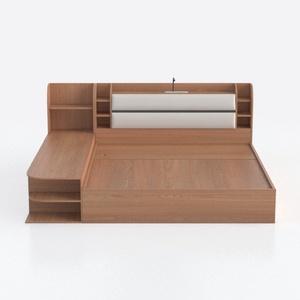
Minimalist Solid Wood Storage Platform Bed With Built In Shelves 3D Model
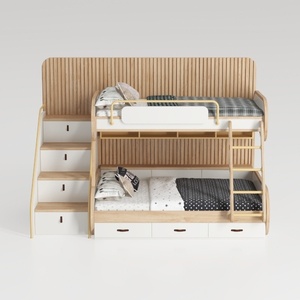

Modern Solid Wood Bunk Bed With Storage Stairs Drawers 3D Model

Mid Century Modern Solid Oak Nightstand with Single Drawer 3D Model
Homestyler is your go-to online home design platform, perfect for anyone looking to create stunning interiors. With its user-friendly design tool, impressive 3D renderings, an array of design projects, and helpful video tutorials, you can transform your vision into reality effortlessly!
Design Now for FREE
































