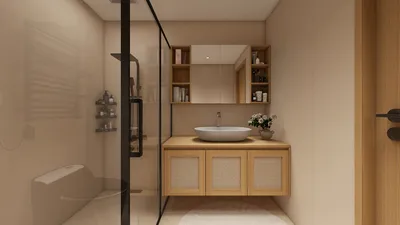


The future is increasingly characterized by compact living spaces as contemporary apartments face tightening constraints. Research from organizations like AIA and NAHB highlights a gradual trend toward smaller living areas, a theme echoed by rental patterns visible on Zillow’s platform. Within this constraint, a 300 sq ft floor plan emerges as a blueprint for our future lifestyles—streamlined, modular, and boldly innovative. I perceive these living spaces as updated versions of domestic life, viewing each unit not merely as a "room," but as a toolkit for spatial reasoning, much like the flexible designs offered by Homestyler.
Rail Studio: Linear Design with Adaptable Core
Design Rationale: A single-loaded rail spatially organizes cooking, bathing, and storage in a manner akin to the layout of a motherboard—prioritizing bandwidth for the central living/sleeping area. The preference going forward is clearly for adaptable cores rather than fixed walls.
Flow: Entry leads into a galley, transitioning to a fold-down table segment, followed by a lounge/sleep area, and finally a window bay; ensuring there’s no need to retrace steps, resulting in a clean sequence of commands.
Sightlines: The unobstructed pathway from door to glass enhances visibility; vertical storage structures frame the view with a layering effect—foreground items are slim while brighter elements recede.
Storage: A 24-inch deep wall system acts as a cache; complete with toe-kick drawers, overhead storage, and a tall pantry designed to accommodate seasonal items.
Furniture Integration: Designed to fit a 72–80 inch sofa/sofabed, a 24-inch drop-leaf table, and an 18-inch deep media rail; API limitations ensure smooth circulation without obstruction.
Conclusion: This configuration successfully accommodates single occupants, adapting to different needs throughout the day—whether it’s for work, hosting guests, or enjoying quiet mornings—without disrupting the spatial grid.
save pin
Corner L: Sunlit Micro Suite
Design Rationale: Featuring two windows, the L-shape prioritizes natural light; the sleeping and working areas are separated by a 3/4-height partition that serves as guiding flexibility rather than confinement.
Flow: The entry space acts as a buffer leading into the kitchenette pod, followed by an L-turn to the dedicated desk area, transitioning to the sleeping bay, then onto a window lounge; loops are optimized to reduce cross-traffic.
Sightlines: The diagonal connection from the entry toward the corner window creates an illusion of depth; a partial screen modifies the view, keeping critical signals visible.
Storage: A corner wardrobe complemented by an overhead bridge and bed drawers provide cold storage for infrequently used items—creating layered, efficient caches.
Furniture Integration: Features a 30-inch wall desk, a 54-inch loveseat, and a full-size bed rotated to allow a 30-inch pathway; dimensions work together to enhance functionality.
Conclusion: This layout caters to remote professionals; natural light operates like an enabling system, reducing fatigue by allowing tasks to flow seamlessly.
save pin
Pod + Plaza: Central Cube with Open Area
Design Rationale: A utility pod containing bathroom, closet, and essential utilities forms a cube; the surrounding zone becomes flexible, adaptable to future routines and tools.
Flow: The loop around the pod creates redundancy—offering two pathways that minimize collisions during busy days.
Sightlines: Low-profile elements maintain a 360-degree view; focal points are carefully arranged: greenery, work surface, and a portal window, reminiscent of HUD interfaces.
Storage: Pod walls contain 14-inch deep niches, featuring ceiling-mounted rails for sliding bins—hot caches below and cold caches above.
Furniture Integration: Incorporates a 36-inch round table as a central node, modular poufs, and a Murphy bed with adjacent 12-inch closets; every decision is made with clearance in mind.
Conclusion: When schedules change, the plaza accommodates shifts; the pod acts as a stable core, dependable as life habits evolve over the coming years.
save pin
Key Takeaway
A 300 sq ft living area should not be viewed as a limitation; instead, it functions as an intentional design compiler. Micro apartment configurations and tiny home designs thrive on seamless flow akin to efficient coding, while storage solutions are disciplined and well-structured. The compact homes of the future will feel more spacious, not due to movable walls but because their interfaces are sophisticated. From my perspective, the most adaptable environments regard furniture and circulation as an API that aligns with evolving needs, similar to how Homestyler allows for personalized design solutions.

Minimalist Solid Oak Open Bookshelf Storage 3D Model
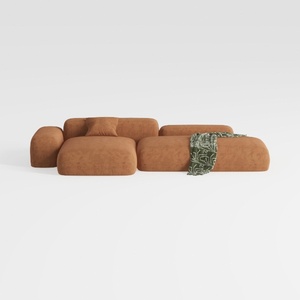
Minimalist Brown Fabric Modular Sectional Sofa 3D Model

Minimalist Solid Oak Floating Shelf 3D Model
Homestyler is your go-to online design platform for bringing your home ideas to life. With an easy-to-use design tool, stunning 3D renderings, and a wealth of DIY video tutorials, you can explore countless design projects and transform your space effortlessly.
今すぐ无料でデザイン
































