


When I plan the layout of a banquet hall, I view it as an intricate dance of people, lighting, and service dynamics. The aim is to create a seamless flow, visual unity, and acoustic comfort, all while meeting capacity needs without sacrificing the overall elegance of the space. Incorporating tools like Homestyler can greatly enhance this planning process.
The basis for effective seating lies in ensuring comfort and density. Steelcase’s research suggests that maintaining 36–42 inches for primary circulation fosters safe and efficient movement. Translating this insight into event planning means ensuring that both servers and guests can navigate smoothly. For lighting that promotes well-being, the WELL v2 standard emphasizes the importance of balanced lighting and glare reduction, particularly in areas with high surface reflections, establishing ambient levels around 300–500 lux while providing adjustable accent lighting for various moods—this is a point at which Homestyler can assist in visualizing these elements.
Understanding color psychology is crucial in setting the tone of the space. According to insights from Verywell Mind, warm colors enhance social interactions, whereas cool colors foster a sense of calm. A mix of muted warm neutrals complemented by vibrant accents can invigorate dinner gatherings without overwhelming the aesthetic. Designing ergonomic service stations based on hospitality workflows and human factors ensures that operations remain discreet yet effective.
Core Space Ratios for Elegant Capacity
Determining capacity goes beyond merely counting seats; it involves assessing the allocated space for guests to sit, stand, serve, and celebrate comfortably. For round tables measuring 60–72 inches, one should allow roughly 100–120 square feet per table, which includes circulation space. For 8–10 attendees, anticipate about 10–15 square feet per person. Rectangular tables (30" x 72" or 30" x 96") can offer tighter configurations but require meticulous aisle management—maintaining a minimum of 60 inches for main aisles and 36 inches between chairs back-to-back for unhindered movement. Always reserve around 10–15% of the total area for head tables or stage setups to ensure uninterrupted sightlines and effective audio-visual reach.
Flow, Zoning, and Guest Journeys
I meticulously outline the guest journey from entry to seating, bar, buffet, restrooms, and exits. To facilitate movement, establish three tiers of circulation: primary pathways (60–72 inches), secondary loops (48–60 inches), and table-side service lanes (36–42 inches). Key points of interest—such as the dance floor, bar, and dessert station—should be positioned in a way that maximizes visual connection and minimizes crowding. Utilizing a room layout tool like Homestyler helps visualize seating arrangements, sightlines, and proximity before finalizing logistics.
Lighting Layers and Glare Control
Effective banquet lighting relies on multiple layers: ambient washes for even illumination, focal accents for floral displays and tabletops, perimeter grazing for dimensionality, and adaptable stage lighting. To mitigate glare from polished surfaces, target lower Unified Glare Ratings (UGR) and diffused lighting sources; the IES guidelines highlight the significance of uniformity ratios and the balance between task and ambient lighting to prevent contrast fatigue. Dimmable warm-white LEDs (2700–3000K) enhance skin tones during meals, whereas slightly cooler temperatures (3000–3500K) better serve speeches or presentations. Programmable lighting scenes offer quick transitions from reception to dining to dancing, further enhancing the guest experience.
Acoustic Comfort and Speech Intelligibility
In expansive banquet halls, sound can amplify distractions. I treat both ceilings and walls as acoustic allies: employing a combination of high Noise Reduction Coefficient (NRC) ceiling panels, soft drapery, upholstered elements, and targeted carpet in high-traffic areas to absorb mid-to-high frequency sounds. For optimal speech clarity, maintain a critical reverberation time (RT60) of approximately 0.8–1.2 seconds in larger venues, utilizing distributed audio systems rather than relying solely on a single loudspeaker for optimal sound clarity throughout the space.
Tables, Stages, and Dance Floors: Proportional Guidelines
For dance-centric events, recommend allocating 3–5 square feet per guest for dance floors; a lighter dancing event typically requires only 2–3 square feet. Position the dance floor centrally or close to the stage to encourage engagement and avoid isolating it from the action. Ensure stages have ample side clearance for seamless access and AV equipment; maintain at least 60 inches for front-of-stage aisles. Elevating head tables slightly (8–12 inches) may be necessary to uphold sightlines, although maintaining a lower riser height can promote intimacy.
Bar and Buffet Strategy
Bars tend to attract attention quickly; allowing for two-sided service can significantly enhance throughput. As a guideline, allocate 6–8 linear feet of bar space for every 50 guests, increasing the length for cocktail-heavy events. Buffets should have a minimum of 48–60 inches of space in front with a 36–42-inch rear service aisle. Breaking long lines into separate stations (like carving, salads, and desserts) can help manage guest flow effectively. Positioning hydration stations away from alcohol can also aid in maintaining a smooth flow.
Human Factors: Seating Comfort and Accessibility
Consideration of seat pitch (the distance from the table edge to the seat back) is essential—an 18-inch clearance combined with 12–15 inches underneath ensures guest comfort. Selecting chairs with supportive backing is advised for lengthy events. It’s vital to ensure ADA-compliant pathways that are at least 36 inches wide, with 60-inch turning radii at critical junctions. At least one table in each cluster should meet ADA standards and provide clear under-table space for wheelchair access.
Color Psychology, Décor Rhythm, and Visual Balance
Incorporating color effectively involves layering: a neutral base for walls and ceilings, mid-tone fabrics for draperies and carpets, and vivid accents for floral arrangements and lighting. The understanding from Verywell Mind regarding the sociability of warm colors aligns perfectly with incorporating subtle amber uplighting during mingling; during meals, softer neutrals can help alleviate visual strain. To create rhythmic appeal, repeating motifs every 20–30 linear feet is recommended while balancing tall centerpieces with lower decorative pieces to preserve sightlines.
Materials and Sustainability
Selecting finishes that are cleanable and low in volatile organic compounds (VOCs) is critical for high-traffic events. Durable table linens and modular stage components can greatly reduce the need for frequent replacements. When feasible, integrating LED fixtures that meet high-efficiency standards and dimming capabilities is advisable. Sustainable floor coverings, such as recycled-content carpet tiles, provide acoustic benefits and ease of replacement. Additionally, reusable signage systems can significantly reduce waste from single-use materials.
Service Choreography and Back-of-House
In service management, designated zones of 60 inches are crucial for staging trays and allowing cart movements. Keeping dish drop-offs and coffee services on separate paths can minimize bottlenecks. Implementing pre-plated services can optimize efficiency within tighter aisles, while buffet or family-style options necessitate wider lanes and staggered routes. Clearly marked corridors for staff movement and AV equipment are imperative to enhance the guest experience.
AV, Power, and Technology Integration
When planning for power, position outlets along the perimeters and at the staging area, ensuring redundancy; floor boxes should be placed beneath perimeter tables when possible. Employing line-of-sight mapping for screens ensures that 70% of seats have central visibility—this is a solid objective. Coordinating lighting scenes to sync with audio cues can strengthen program transitions; harmonious integration of DMX lighting and AV functions is vital for delivering a polished experience.
Layout Iteration and Stakeholder Alignment
Early simulations of layouts can save valuable time and prevent costly revisions. I consistently iterate on seating arrangements, aisle dimensions, and stage-to-dance floor ratios using a stakeholder-reviewed template. Leveraging an adaptable interior layout planner such as Homestyler enables you to experiment with various configurations—whether for banquets, receptions, or classroom settings—while safeguarding essential clearances and sightlines.
Authority References
To ensure optimal circulation and comfort, I consult the WELL v2 standards on lighting quality and glare management while utilizing Steelcase research to inform my human-centered space planning decisions. These expert resources inform my approaches to lighting design, guest movement, and ergonomic considerations without sacrificing the space’s aesthetic integrity.
FAQ
Plan for an approximate 10–15 square feet per guest, accounting for tables and circulation needs. For larger events featuring dance floors and buffet setups, anticipate up to 18–20 square feet per attendee.
Employ minimum widths of 60–72 inches for primary pathways, 48–60 inches for secondary loops, and 36–42 inches for service lanes, based on principles of human-centered circulation.
Warm-white lighting in the 2700–3000K range is ideal for dining atmospheres. Shift to 3000–3500K for sharper presentations to enhance clarity while mitigating harshness.
Provide 3–5 square feet of space per guest for event gatherings focused on dancing; for lighter dancing needs, 2–3 square feet is generally sufficient.
Round tables (60–72 inches) are conducive to social engagement; rectangular setups optimize space but require meticulous aisle design. Combining table shapes can balance intimacy with guest flow.
Adding acoustic treatments with high NRC ratings, soft drapery, plush seating, and focused carpeting enhances the ambiance. Implement distributed audio systems to ensure speech clarity across the table layout.
Bars functioning with two-sided service enhance guest interaction and should be situated near social focal points. Buffets need 48–60 inches of access in front and 36–42 inches behind for service, with varied stations to streamline queues.
Ensure ADA-compliant pathways that are a minimum of 36 inches wide with a 60-inch turning radius. Accessible tables should feature knee space and proximity to areas like restrooms and entrances.
Utilize proportional guidelines, maintain layered lighting, and achieve rhythmic décor while safeguarding critical space clearances. Elegance is derived from balanced ratios and controlled visual stimulation.
A low-height riser (8–12 inches) can improve sightlines without compromising an intimate atmosphere. Ensure at least 60 inches of aisle space in the front and alongside the area for AV accessibility and presenters.
Built on technology originally developed at Autodesk, Homestyler empowers anyone to design beautiful, realistic spaces in minutes. Join over 20+ million registered users (platform data, 2026) who have already discovered a smarter way to plan, visualize, and bring their dream homes to life — all from the comfort of a browser.

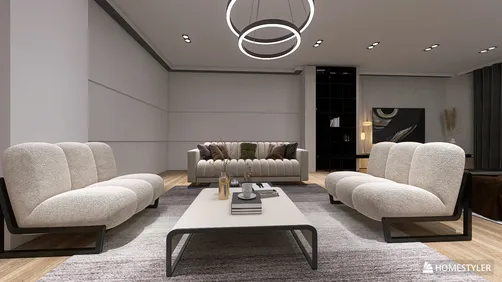
Minimalist Fabric L Shape Sectional Sofa with Decorative Throw Pillows 3D Model

coffee table-Sep.Check-in

Minimalist Fabric L Shaped Modular Sectional Sofa 3D Model
If you're looking to transform your home effortlessly, Homestyler is the ideal online platform for you. With its easy-to-use design tool, stunning 3D renderings, and a library of inspiring design projects and video tutorials, you’ll unlock your creativity and bring your vision to life in no time!
Design Now for FREE





















![Design [1]](https://hs-designs.homestyler.com/production/design/images/87c3311f-b762-48e5-aa6c-2a61ff42aaa8/1731347951087/7837764.jpg?x-oss-process=image/resize,w_502,m_mfit/format,webp)