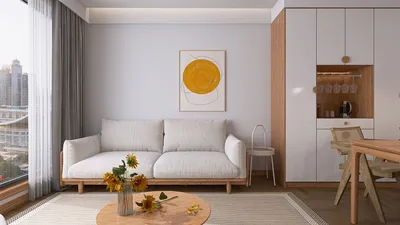


Having transformed numerous studio apartments, I've discovered that the most effective designs begin with strategically placed dividers. A room divider's role extends beyond mere separation; it also influences light distribution, enhances daily activities, minimizes noise levels, and maintains an open atmosphere. In studio settings, materials such as translucent screens, modular shelving, and fabric panels can curate a balance between privacy and functionality while optimizing daylight, ventilation, and movement throughout the space.
Living in a studio calls for layouts that prioritize human experience and visual comfort. Research from Steelcase suggests that individuals in open environments express up to 44% higher satisfaction when they can manage privacy and sound—concepts that are equally relevant in residential studios. The WELL v2 guidelines support this, highlighting the importance of controlling glare and achieving proper illumination to alleviate eye strain and fatigue, which emphasizes the advantage of utilizing partial dividers that diffuse light instead of obstructing it. These insights guide my designing of dividers that not only control sightlines but also improve acoustic comfort and allow for smooth airflow.
The selection of colors and materials is just as critical as their placement. According to findings from Verywell Mind, soft neutral tones and muted greens can help reduce stress levels, whereas vibrant reds can increase arousal—considerations that are essential in choosing divider fabrics or finishes suitable for both rest and work areas. From a lighting perspective, I aim for ambient illumination around 200-300 lux in living spaces and 300-500 lux in work areas, adhering to IES standards, with warmth levels of 2700–3000K near relaxation zones and 3500–4000K in workspaces. Merging these lighting standards with textured materials contributes to creating distinct yet harmonious zones.
Key Strategies for Effectively Dividing a Studio While Maintaining Space
Dividers need to enhance functionality without adding bulk. I focus on spatial proportions—approximately 60% for open circulation, 20% for flexible buffers, and 20% for dedicated zones—ensuring that the studio retains a breathable atmosphere. Sightlines should be layered: seating-level views can feel more intimate even when standing perspectives remain expansive. To control glare, arrange taller features perpendicularly to windows, or opt for translucent panels that emit light softly rather than casting stark shadows. Ergonomics are vital: ensure passageways are clear at widths of 800–900 mm and that door swing zones are unobstructed, creating pathways that minimize unnecessary backtracking.
Option 1: Modular Shelving as a Functional Divider
When storage space is limited, modular shelving becomes my preferred solution. Backless designs enable light to permeate while keeping top shelves under 1,800 mm to avoid a looming presence. I often stagger storage with greenery or decorative baskets to absorb sound. In work areas, placing the shelving to shield the workspace from the sleeping area minimizes distractions and bolsters concentration. If regulations permit, secure shelving with inconspicuous wall anchors or use wide bases for stability in rental situations.
Option 2: Adjustable Fabric Panels
Curtains of linen or wool-blends on ceiling tracks provide a flexible means to manage privacy. Using medium-weight materials with a subtle weave promotes light diffusion and sound absorption. For sleep spaces, calming warm neutrals are effective, while textured off-whites are better in work zones to avoid reflections. Layering a sheer curtain in front of a blackout one offers filtered daylight during the day and privacy at night, with a clearance of 20–30 mm off the floor to facilitate airflow and prevent dust buildup.
Option 3: Translucent Screens and Ribbed Glass
Polycarbonate or ribbed glass dividers create luminous borders that don’t compromise on brightness. I prefer maintaining a 60–70% light transmission for reasonable privacy levels. Utilizing slim black or oak frames ensures visual cohesion, and integrating a low shelf or bench can reduce the sensation of a barrier. These types of screens work perfectly near windows where glare control is crucial; the ribbed texture effectively refracts light and helps soften contrast ratios in working areas.
Option 4: Collapsible Partition Walls
Foldable or accordion-style partitions provide adaptable zoning for guests and workouts. I recommend panels that measure 400–600 mm wide to ensure compact stacking when folded. Enhancing acoustic performance can be achieved by lining the interior with felt or cork—an accessible DIY project suitable for weekend tasks. Maintaining low-profile hinges and ensuring slim frames prevents the studio from feeling visually heavy, facilitating an open look even when the partition is extended.
Option 5: Plants as Natural Dividers
Utilizing a staggered array of tall planters offers an effective means of privacy while improving acoustics and introducing biophilic elements. Designing with heights between 1,200–1,800 mm and varying leaf density controls visibility effectively. Placing plants strategically can slow movement through the space and create soft navigation routes; I cluster them near high-traffic zones to direct flow without implementing rigid barriers. Selecting upright species with matte leaves minimizes reflections under accent lighting.
Enhancing Divider Functionality Through Layout Adjustments
Begin by analyzing daily routines: waking, working, exercising, and entertaining. Position dividers along activity transitions to ensure functionality. Utilizing an interior layout tool helps in experimenting with divider heights and orientations, especially in uniquely shaped studios. This allows for identifying flow conflicts and glare zones before any installation begins. If your layout requires multiple setups—like a sleep nook and a work screen—experiment with the sequences and make necessary adjustments.
room design software
Light, Color, and Acoustics: Perfecting Comfort Levels
Incorporate a blend of ambient, task, and accent lighting. Ambient lighting through diffused pendants or ceiling washes should achieve around 200–300 lux; task lighting, like desk lamps with high-CRI LEDs at 3500–4000K, should minimize glare on glossy surfaces; accent lighting at warm 2700K behind screens can highlight textures and create intentional boundaries. Color psychology recommends softer hues for restful areas and slightly cooler neutrals for work zones, steering away from intense colors on large divider surfaces to avert visual fatigue. Acoustic comfort improves through soft materials like linen, felt, cork, and wool, complemented by strategically positioned rugs to dampen sound reflection.
Smart Material Choices for Durable Designs
Select materials that offer practical usability and require minimal maintenance. Wooden frames and oak-laminate shelves impart warmth, while powder-coated steel assures clean lines without glare. For fabric choices, seek tightly woven options that enhance acoustics and longevity. Translucent polycarbonate serves well in rental situations, while ribbed glass is preferable in permanent structures. If eco-friendliness is a priority, opt for low-VOC finishes and natural textiles. Material selection tools assist in comparing performance and durability, and I always consider WELL v2’s material health intent to avoid high-emission coatings.
Evaluating Success: Human Experience and Spatial Flow
A well-designed divider fosters intuitive movement, eases sightlines, and organizes activities into designated zones. I monitor key indicators: reduced visual distractions when working, consistent darkness in sleep areas, and clarity of speech without echo. Should any area fall short, I tweak the thickness, angle, or perforation of the divider. Subtle adjustments—such as elevating a shelf by 50 mm or increasing fabric overlap—can yield significant enhancements.
Insight from Experts
Studies consistently link spatial control with user comfort and productivity. Steelcase research emphasizes the importance of being able to control privacy, while WELL v2 highlights glare management and acoustic conditions as fundamental comfort pillars. These frameworks illustrate how small, precise adjustments to dividers can vastly improve livability, making tools like Homestyler invaluable for envisioning these changes effectively.
Frequently Asked Questions
To ensure privacy without adding heaviness, consider heights between 1,500–1,800 mm. Keep taller elements away from windows to maintain an even spread of daylight, and opt for translucent panels if increased height is necessary.
Medium-weight linen, wool blends, or acoustic felt provide great sound absorption and diffusion. Consider pairing a sheer panel with a heavier fabric to achieve brightness during the day and privacy at night.
No need for complete enclosure if the shelving is backless and under 1,800 mm in height. Stagger items to preserve sightlines and prevent overcrowding; incorporate plants and baskets for acoustic enhancements.
Adding soft surfaces such as rugs, upholstered chairs, or textured fabric panels can mitigate noise. Avoid positioning two hard, parallel surfaces directly opposite; angling one or introducing a perforated feature can help.
Aim for ambient brightness of 200–300 lux in leisure zones and 300–500 lux in workspaces. Use warm 2700–3000K lighting for relaxation areas, switching to 3500–4000K in the workspace. Shield light sources to minimize glare on shiny dividers.
Absolutely—stagger tall, upright plant species in planters to create a naturally filtered boundary. Pair this with lightweight curtains for nighttime seclusion.
Keep pathways at 800–900 mm wide, avoid obstruction of door swings, and position dividers where activity transitions occur. Utilize interior layout planners to identify potential traffic snags early.
They provide a softer visual presence without obscuring completely. Opt for ribbed glass or textured polycarbonate that allows 60–70% light transmission to blur outlines while letting daylight in.
Consider freestanding shelves, tension-rod curtains, lightweight polycarbonate barriers, and folding partitions. These solutions require minimal drilling and can adapt to future layout changes.
Establish a hierarchy: a primary divider (whether a shelf or screen) along with aSoft layer (like curtains or plants). Keep frames slender and finishes consistent to achieve a unified aesthetic.
Looking to redesign your space? Homestyler is your go-to online home design platform! With its user-friendly design tool, stunning 3D renderings, and a wealth of DIY video tutorials, you can effortlessly create and visualize your dream interior. Transform your ideas into reality today!
Desain sekarang Gratis
































