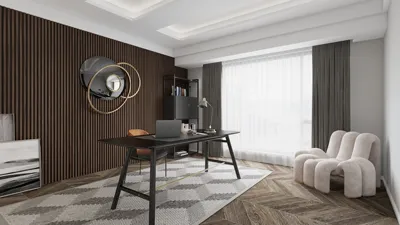


Some homes feel spacious and cozy despite their modest size, while others seem cramped and inefficient even with identical floor areas. The key difference almost always lies in the quality of the floor plan or layout. A well-designed floor plan serves as the foundation for everything, whereas a poor one cannot be fixed simply with fancy interiors, expensive furniture, or premium paint.
This article explores essential principles for creating effective minimalist home layouts, the most common mistakes to avoid, and how you can draft and assess your own digital floor plans before construction begins.
Why the Floor Plan Is the Most Critical Decision When Building a Home
A home's floor plan determines your daily living experience for decades. Incorrect bedroom placement, for instance, might result in the noise from the living room TV disturbing your sleep every night. A kitchen separated from the dining area disrupts the natural flow of cooking and family meals. Long, narrow corridors waste valuable space that serves only as passageways.
Mistakes in the floor plan are almost impossible to fix once the building is up—except through costly and time-consuming renovations. In contrast, good upfront decisions require no extra expenses.
Zoning Principles Essential for Minimalist Floor Plans
Zoning involves categorizing house areas based on privacy levels and the types of activities occurring there. A well-organized minimalist home clearly defines three zones: public, semi-private, and private.
The public zone includes spaces like the living room, dining room, kitchen, and areas accessible to guests, typically positioned at the front or in the most accessible spots from the entrance. The semi-private zone encompasses the family room—a gathering area for household members that guests do not typically access. Meanwhile, the private zone consists of bedrooms and bathrooms, which must be shielded from direct access by public areas.
Common Floor Plan Errors to Avoid
Bathrooms located directly adjacent to the living or dining rooms without a buffer zone significantly impair everyday comfort. Sounds and odors from the bathroom can cause discomfort during social occasions. Always ensure there is a wall or intermediary space separating bathrooms from public zones.
Excessively long corridors represent costly space wastage. Every square meter used as a corridor is a lost opportunity for functional living space—it cannot be furnished or used for activities. An effective floor plan minimizes corridors by allowing rooms to be accessible through one another rather than requiring extended dedicated hallways.
Orienting the kitchen facing west is another frequent mistake that negatively affects cooking comfort. Kitchens subjected to both cooking heat and afternoon sunlight from the west can become unbearably hot. It’s preferable to position kitchens facing north or east for a cooler, more pleasant environment.
Master bedrooms placed directly against noisy streets or external sources of sound can severely impact long-term sleep quality. Position these rooms in the deepest, quietest parts of the house away from both internal and external noise.
Efficient Minimalist Home Floor Plan Examples
For a 36-square-meter house built on a 6x15 meter lot, the most efficient layout usually adopts a linear design—combining the living and dining rooms at the front in an open-plan concept, with the kitchen centrally located and connected to the dining space. Two bedrooms sit at the rear, accessed via a very short corridor, while the bathroom is strategically placed between the kitchen and bedrooms.
For larger 45-square-meter homes with broader plots, a small central courtyard can offer an elegant solution—providing natural light and ventilation to all rooms, while serving as a striking visual focal point visible from multiple interior angles.
Comparing Different Minimalist Floor Plan Layouts
How to Create a Digital Minimalist Home Floor Plan with Homestyler
Creating digital floor plans no longer requires advanced AutoCAD skills or architectural knowledge. With Homestyler, accessible via browser or desktop apps for Windows and macOS, anyone can craft precise minimalist home layouts within hours.
Begin by inputting your land and building dimensions. Use Homestyler’s intuitive drag-and-drop tools to draw walls that organize rooms according to your planned layout. Place doors and windows in optimal locations. Homestyler automatically calculates room areas and provides real-time feedback on the layout’s proportions.
What sets Homestyler apart from ordinary floor plan software is its ability to instantly convert 2D plans into 3D models that you can freely explore. You can virtually walk through your planned home, experience the scale and flow of each room, and spot potential design issues that are not obvious in 2D views—all before any construction decisions are made.
Conclusion
A good minimalist home floor plan isn’t about maximizing room count within limited space, but about creating a natural, comfortable living flow for all occupants. Proper zoning, minimizing wasted corridor space, orienting rooms to optimize sunlight and ventilation, and smooth area transitions are crucial principles that determine whether your house truly feels like a welcoming home or merely a structure to live in.
Start designing and evaluating your minimalist home floor plan digitally with Homestyler today—free to use through your browser or desktop apps on Windows and macOS. Create Your Minimalist Home Floor Plan Now.
FAQ
1. What is the most important principle for creating a good minimalist home floor plan?
Clear zoning between public and private areas, minimal unproductive corridors, orientation that maximizes natural light and cross ventilation, and smooth transitions between spaces are the four key principles that greatly influence floor plan quality.
2. What are the minimum comfortable sizes for bedrooms?
A single bedroom should be at least 2.5x3 meters to accommodate a bed and closet while allowing comfortable movement. A double bedroom ideally measures a minimum of 3x3.5 meters, and the master bedroom should be no smaller than 3.5x4 meters.
3. Can I design my own home floor plan digitally without technical expertise?
Yes, Homestyler offers an intuitive drag-and-drop interface accessible via browsers or desktop apps for Windows and macOS, enabling anyone to create accurate minimalist home layouts without needing AutoCAD or architectural skills.
4. What does an unproductive corridor mean, and how can it be avoided?
An unproductive corridor is a hallway that only serves as a passageway between rooms without any additional function. Avoid this by designing layouts where rooms connect directly to one another or via multifunctional areas.
5. How do I evaluate if my floor plan is well designed?
Visualize daily activities concretely on the plan—for example, routes from bedrooms to bathrooms at night, kitchen workflows during cooking, guest access without passing through private spaces. Such practical questions often reveal hidden design flaws not obvious on a quick glance.
6. Is open-plan living always better for minimalist homes?
Open-plan designs are very effective for homes under 80 square meters by creating a strong sense of spaciousness. For larger homes, combining open-plan public areas with separate bedrooms strikes the best balance between openness and privacy.
7. How does Homestyler aid in creating minimalist home floor plans?
Homestyler enables precise 2D floor plan creation, automatic conversion to navigable 3D models, natural lighting simulations, and photo-realistic 4K renders—all within a single platform accessible via browsers and desktop apps on Windows and macOS.
8. What is the difference between architectural plans and digital plans in Homestyler?
Architectural plans are official technical documents required for permits and construction, while Homestyler’s digital plans serve as useful visual tools for planning, exploring ideas, and communicating with architects prior to finalized formal drawings.


Homestyler is an easy-to-use online platform that lets you design your home with powerful 3D rendering, explore inspiring interior projects, and learn through helpful DIY video tutorials. It’s perfect for bringing your home design ideas to life effortlessly.
立即免费设计
































