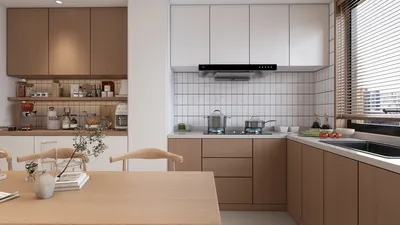


In my experience, I encountered a client who insisted that all the kitchen cabinet doors should share the same width, disregarding practical considerations for the appliances involved. After we executed this idea, the dishwasher door appeared mismatched, highlighting how crucial door dimensions are for both functionality and aesthetic appeal, particularly in compact kitchens where every inch counts. Small spaces often inspire innovative solutions, so I'm excited to present 5 effective design ideas for kitchen cabinet door sizes rooted in actual projects.
1. Standard Base Cabinet Doors: Embrace Modularity and Predictability
In the majority of kitchens I work on, base cabinet doors adhere to standard widths such as 12, 15, 18, 24, and 30 inches. These uniform dimensions facilitate smoother production and installation processes, making future replacements hassle-free. The advantages include cost-effectiveness and a pleasing visual rhythm; however, less adaptability for awkward corners is a drawback — this is where custom panels or fillers become essential.
save pin
2. Tall/Pantry Doors: Opt for Height While Maintaining Accessibility
Tall cabinets typically start at a width of 24 inches, extending to 36 inches and beyond. I advocate for full-height doors to achieve a sleek design; however, incorporating internal pull-out shelves or a pantry pull can help make use of the space at the back. While taller doors look impressive, they can be cumbersome; thus, investing in soft-close hinges and quality hardware is worthwhile.
save pin
3. Wall Cabinet Doors: Create a Balance Between Height and Reach
Wall cabinets often sport widths like 12, 15, 18, and 30 inches, with heights ranging from 12 to 42 inches. In smaller kitchens, opting for shallower wall cabinets (12 inches deep) paired with taller doors keeps items accessible without overcrowding the space. The compromise is reduced storage depth, so planning for vertical organization or smaller-tier shelving is prudent.
save pin
4. Narrow Doors for Tall, Slim Storage Solutions
When space is limited, I appreciate employing narrow doors — sizes of 6 or 9 inches — perfect for spice racks, broom closets, or appliance garages. They optimize storage in slim gaps and lend an intentional look when used repetitively. The challenge lies in the hardware: narrow doors necessitate reliable hinges and magnetic catches to prevent warping over time.
save pin
5. Custom Widths for Appliance Alignment and Flow
At times, the most aesthetically pleasing solution diverges from standard measurements. I regularly design 27-inch base doors to create alignment with a 27-inch range, or a custom 21-inch drawer setup to maintain cohesive sightlines. Custom widths enable you to harmonize cabinet designs with appliances while ensuring ergonomic drawer placements, but anticipate slightly increased costs and extended lead times.
save pin
Quick Planning Tips
Always measure twice and account for door overlay styles (full, partial, inset) as these alter the visible width. Be mindful of hinge types, which influence clearance, and allow at least 2 inches of filler space on each side. To preview layouts before making a purchase, I sometimes create mock-ups of cabinet face widths using cardboard — a low-tech yet informative approach.
save pin
Utilizing Homestyler for Visualization
When refining proportions for my clients, I frequently employ a room planner like Homestyler to visualize scale and cabinet door movement in a 3D space — this method significantly reduces unexpected issues during installation. For comprehensive, shareable layouts that clarify door sizes and demonstrate how cabinets relate to islands, a room planner proves invaluable.
save pin
FAQ
Q: What are the most common cabinet door widths?
A: Common widths typically include 12, 15, 18, 24, and 30 inches for both base and wall cabinets. These standard sizes simplify the manufacturing and replacement processes.
Q: What height should wall cabinet doors have?
A: Wall cabinet heights range from 12 to 42 inches; in kitchens with low ceilings, I prefer shallower, taller doors to ensure items remain within reach.
Q: Is it possible to mix standard and custom door widths?
A: Absolutely — blending standard and some custom widths creates a visually appealing design while addressing specific alignment requirements with appliances.
Q: Do different door overlays influence measurements?
A: Indeed. Full-overlay doors mask the cabinet face frame, impacting visible width, so always consider the overlay type when determining final measurements.
Q: How can I prevent heavy tall doors from sagging?
A: Opt for high-quality soft-close hinges and consider reinforcing the face frame; using hardware that is rated for heavy doors is essential.
Q: Are narrow doors durable for the long term?
A: Narrow doors can be effective but require solid hardware and occasional adjustments to prevent warping; they are particularly useful for specialized storage solutions like spice racks.
Q: Where can I experiment with layouts prior to purchasing cabinets?
A: I suggest utilizing a room planner like Homestyler to visualize cabinet configurations and door sizes in 3D; this can prevent many on-site complications.
Q: What source provides standard cabinet size information?
A: The National Kitchen & Bath Association (NKBA) offers comprehensive, industry-standard advice on cabinet dimensions and spacing (https://nkba.org).
Homestyler is your go-to online home design platform, perfect for creating stunning interiors. With its user-friendly design tool, impressive 3D rendering, and a wealth of inspiring design projects and DIY video tutorials, you can effortlessly transform your space and unleash your creativity.
تصميم الآن مجانا
































