

Each week, I engage in designing for small spaces, where gates serve as the initial point for both security and aesthetics. In smaller lots, selecting the appropriate gate can optimize circulation space, improve visibility, and create a subtle yet striking impression for the overall façade. Considerations such as hardware selection, hinge design, and sightline management are as crucial as the choice of materials and finishes. Tools like Homestyler can aid in visualizing these designs effectively.
Quantifying security and usability is essential; we cannot leave it to chance. Research conducted by Herman Miller indicates that clear visibility at entry points enhances navigation and eases cognitive burden for users, facilitating smooth transitions through thresholds. This principle extends to gate sightlines and the placement of latches at convenient eye and hand heights. WELL v2 emphasizes the significance of unobstructed pathways and controlled lighting—key factors in determining gate height (typically 1.2–1.5 m for privacy without the gate dominating the space) and ensuring latches are reachable between 810–1060 mm to promote ergonomic comfort. Utilizing Homestyler can help visualize these aspects before implementation.
Data from Steelcase shows that user comfort is linked to fewer friction points in everyday activities; when applied to residential gates, it suggests that gates should open effortlessly, follow predictable movements, and provide clear landing zones of 900–1200 mm. For planning, I design gate corridors with at least 900 mm of free width to accommodate strollers or bins, while ensuring latches are positioned to prevent knuckle pinching or awkward reaches. For compact front yards, a sliding or bi-fold gate often maximizes usable space—consider visualizing this with software like Homestyler.
Effective Gate Designs for Limited Spaces
Sliding gates are perfect for narrow setbacks, utilizing a single-track steel or aluminum panel on bottom rollers, allowing for the complete swing arc area to be used for planting or seating. Maintain a sliding pocket that is no less than the width of the gate plus 150 mm to ensure clearance. For frequently used entrances, employing concealed soft-close mechanisms helps eliminate slamming and minimizes noise disturbances to the surroundings.
Bi-fold gates, consisting of two hinged leaves that either fold in or out, reduce the swing radius by half. I recommend bi-folds when a full sliding pocket isn’t feasible. Effective weather stripping and alignment pins at the bottom help mitigate rattling noises, and ensure that top pivots are installed to maintain a clean footprint and minimize trip hazards.
For those with boundary walls accommodating a cavity, pocket gates are an excellent space-saving solution as they conceal the gate entirely. However, moisture control and drainage at the base of the pocket are crucial to prevent debris accumulation.
In ultra-compact lots with zero-lot line constraints, employing a vertical pivot gate can be ideal; this design utilizes a counterbalanced vertical pivot mechanism to lift the gate leaf above the entry. Although a more specialized option, this design helps prevent intrusion onto the sidewalk. Acoustic seals and slow-lift motors are beneficial in close neighborhood settings.
Determining Sizes, Reaches, and Human Factors
Define clear sizes for pedestrian gates at 900–1000 mm, or 1200 mm if accommodating prams, deliveries, or bins regularly. Handle heights should range between 950–1050 mm for optimal user access. Attention to sightlines is key: utilize semi-opaque designs with 30–50% openness to achieve a balance between privacy and passive surveillance. For glare reduction, I opt for matte finishes and select hardware that minimizes reflectance; creating a comfortable luminance level around entries helps meet IES pathway recommendations while reducing harsh contrasts.
Lighting, Color, and Visibility Considerations
Ensure entry lighting targets 10–20 lux for ambient illumination, and use accent lighting at around 50–100 lux specifically on the gate to highlight texture without causing glare. Warm-white (2700–3000K) lights create an inviting atmosphere, while neutral-white (3500–4000K) adds a fresh touch suited for contemporary designs. Research on color psychology suggests that blues and greens foster feelings of calm and trust—these shades can be subtly applied through powder-coated finishes instead of vivid panels. Aim for a CRI of 80 or above to ensure that finishes appear natural at night.
If the gate is part of a collection of small outdoor elements—such as planters, bike racks, and waste bins—consider using an interior layout planner to avoid pinch points; utilizing a room layout tool can visually depict swing arcs and clearances in relation to lighting and the façade.
Choosing Materials and Ensuring Durability for Small Sites
Powder-coated aluminum is lightweight, resistant to corrosion, and works well for sliding or bi-fold systems. It supports delicate slat designs and allows for the integration of cable routing for locks and lighting elegantly.
Galvanized steel offers great toughness and is budget-friendly. I prefer welded frames with slat infills and a matte powder coat to reduce glare while ensuring hot-dip galvanization is applied for coastal areas.
Hardwoods or engineered timber provide warmth and textural appeal paired with stainless fixings. Combining timber with steel frames helps minimize thickness while preventing warping. On tighter lots, employing vertical slats can visually elongate the façade.
Composite boards require low maintenance and maintain consistent color—a great choice in humid environments. Pair these with slim metal frames to keep the overall design unobtrusive.
Achieving Privacy Without Added Bulk
My preferred design technique involves layering a perforated metal skin with about 30–40% openness backing staggered slats, which can provide privacy while ensuring airflow. Offsetting slat spacing (for example, 20 mm in front and 40 mm in the rear) assists in diffusing direct sightlines. To enhance acoustic comfort in busy areas, incorporating a mass layer and neoprene stops to prevent rattling is effective. Position the overall gate thickness between 70–85 mm to maintain visual lightness in small-scale facades.
Hardware, Automation, and Safety Measures
Opt for stainless or marine-grade materials for hinges and latches. Using sealed bearing rollers for sliding gates ensures resistance to grit. Soft-close kits lessen impact noise, a significant courtesy in densely populated areas. When incorporating automation, setting the motor speed to a safe interval and including obstacle detection is crucial. Compliant reach ranges and ergonomic handle profiles accommodate users of all ages, with a tactile strip on the latch side aiding orientation in low-light conditions.
Design Elements That Enhance Small Gate Aesthetics
- Slat rhythm: Alternate slat widths of 40/60 mm to introduce movement without cluttering the visual space. Align slat breaks with the positions of mailboxes or intercoms for a unified design.
- Integrated mail and intercom functions: Collapsing these elements into a single vertical panel ensures functionality is maintained. Position the intercom around 1400 mm and the mail slot at about 1100 mm for easy access.
- House numbers and uplighting: Use narrow backplates with edge lighting to improve nighttime visibility without creating glare.
- Planting: Utilizing climbing plant species on adjacent trellises can soften rigid edges. Ensure vines do not interfere with moving components of the gate.
Predicted Gate Trends for 2024–2025
Minimalistic slat designs that incorporate mixed metals, such as black or graphite powder-coated frames matched with bronze or brushed stainless elements.
Soft automation features, including quiet motors and app-based sensors for latches paired with low-power LED indicators.
Hybrid privacy solutions, where perforated panels are layered over timber for versatility throughout different times of the day.
Warm-neutral color schemes, encompassing shades like sand, clay, olive, and charcoal, are expected to enhance curb appeal in smaller urban settings.
Tips for Planning and Layout Consideration
Commence with a swing/slide diagram to assess space. If street access is limited, prioritizing sliding or bi-fold gates can save 1–1.5 m of arc space. Protect approach zones by maintaining 300 mm of side clearance and ensuring the threshold is flush to mitigate trip hazards. Utilizing a layout simulation tool together with Homestyler can aid in visualizing your gate next to bins, bikes, and delivery points to identify optimal daily flow and avoid conflicts.
Maintenance Strategies for Longevity
Conduct quarterly inspections of hinges, clear out tracks of debris, and reapply powder coatings every 8–10 years based on the level of UV exposure. Use dry PTFE lubricant on latches to minimize dust accumulation. For coastal properties, it’s advisable to rinse away salt weekly and consider using sacrificial anodes for steel frames wherever possible.
Frequently Asked Questions
Sliding or pocket gates entirely preserve the swing radius. In scenarios where pockets are unfeasible, a bi-fold design effectively reduces the swing footprint and typically fits within narrow setbacks.
Aim for a clear width of 900–1000 mm; increase to 1200 mm if supplying frequent access for prams or bins. This promotes comfortable circulation and minimizes daily friction.
For most small houses, a width between 1200–1500 mm suffices. It provides necessary sightline protection without overwhelming smaller façades.
Reliable options include powder-coated aluminum and hot-dip galvanized steel. Always pair with stainless hardware and routinely rinse to combat salt exposure.
Definitely—choose quieter motors, soft-close features, and rubber stops. Ensure moderate speeds and integrated obstacle detection for enhanced safety.
Implement lighting with a warm-white tone around 50–100 lux on the plane of the gate, complement such with low-glare fixtures, and maintain a CRI of 80 or higher so that finishes appear true to color.
Overlaying a perforated metal layer over offset slats (maintaining about 30–40% openness) provides a buffer against direct views while ensuring airflow and a sense of openness.
Set handle heights between 950–1050 mm. Ensure latches fall comfortably within reach and maintain smooth profiles to avert hand strain during use.
Indeed. Soft neutrals and muted greens or blues create a spacious feel. Opting for matte finishes helps in reducing glare while visually streamlining the gate design.
Quarterly checks are recommended. Make sure to clean tracks from any grit, lubricate using dry PTFE, and ensure alignment pins on bi-fold gates are regularly examined.

Mid-Century Dark Green Velvet Solid Wood 3 Seater Sofa 3D Model
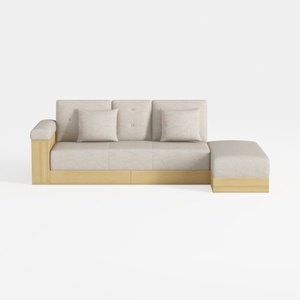
Minimalist Linen Solid Wood Sectional Sofa 3D Model

Vintage Solid Wood Leather Three Seater Sofa 3D Model
Homestyler is your go-to platform for turning home design dreams into reality! Enjoy user-friendly online design tools, stunning 3D renderings, and a wealth of inspiring design projects and DIY video tutorials. It's never been easier to create the perfect space!
Design Now for FREE
































