

In today's tech-driven lifestyle, managing personal and professional connections efficiently often starts with tools inspired by CRM stock trends. As we integrate more digital organization into our daily routines, creating dedicated home office spaces with ergonomic furniture and smart storage solutions becomes essential. These setups not only enhance productivity but also bring harmony to the space where technology meets comfort and design.
I’ll always remember a client who needed a desk spacious enough for three monitors, yet requested a bedroom that could accommodate just a bed and a lamp—no exaggeration. This experience required careful measurements and even prompted me to utilize tools like Homestyler to visualize the room before making any commitments. That experience was a reminder that small spaces can ignite my best creative solutions.
Small rooms necessitate critical choices about what’s important, what can be stored away, and how to inject a bit of character. Below are five effective desk ideas that I have employed in various projects to transform tight corners into cozy, efficient workspaces.
1. Wall-mounted floating desk
My favorite solution for compact bedrooms is a wall-mounted floating desk that sits at elbow height. This design visually liberates floor space and can serve as a nightstand by placing a lamp or a slim shelf above it. While it offers limited storage beneath, I typically address this issue with a rolling drawer or wall-mounted pockets.
save pin
2. Folding drop-leaf desk
For a client who conducted art classes on weekends, I once set up a drop-leaf desk. When folded down, it takes up minimal space, and when expanded, it provides ample work surface. It's economical and versatile; however, if you use heavy equipment or large monitors, it may require reinforced hinges for stability during intensive use.
save pin
3. Narrow console desk with vertical storage
A slender console desk against the wall combined with tall shelves is perfect for small rooms, allowing you to maintain a small floor footprint while maximizing vertical storage. I often complement this setup with pegboards and cable clips to keep things organized. To maintain a clutter-free aesthetic, incorporate organizers, ensuring that vertical storage doesn't lead to visual chaos.
When looking to visualize desk configurations in 3D, I suggest using tools like Homestyler to create a digital model of the console and shelving first—this lets you see the scale and helps avoid unnecessary trips to the store.
save pin
4. Corner L-shaped mini desk
Corners often do not receive the attention they deserve, but utilizing an L-shaped mini desk can make fantastic use of this space. This design creates two work zones—one for computer use and another for creativity—without encroaching on the room. However, corners can feel constraining; adding a mirror or a plant helps to open up the area visually.
save pin
5. Built-in window bench desk
If your small room features a window, I highly recommend transforming the windowsill into a shallow bench desk. This setup provides ample natural light, a comfortable seating area, and often includes hidden storage beneath. Although it may require some carpentry skills and is not a quick-purchase job, the outcome is a custom and tidy workspace—plan for materials and a supportive structure.
save pin
Tips 1:
Budget tip: searching for sturdy secondhand folding tables and then adding your own paint or hardware is a quick way to achieve style without breaking the bank. Practical tip: always double-check your measurements and ensure sufficient legroom—your knees will require at least 24 inches of clearance in front of the desk for comfortable seating.
save pin
FAQ
Q1: What desk size works best for a small room?
A compact desk measuring approximately 30–40 inches in width and 18–24 inches in depth is generally suitable for most small spaces, providing adequate workspace. Consider what primary tasks you will be performing—writing typically needs less depth compared to setups featuring multiple monitors.
Q2: Are wall-mounted desks reliable for daily use?
Certainly! When securely attached to studs with quality brackets, wall-mounted desks can be quite sturdy. For heavier items, adding a support leg or a cleat at the back can enhance strength.
Q3: How can I prevent a small desk area from appearing cluttered?
Incorporate vertical storage solutions, slim organizers, and maintain a cohesive color scheme to minimize visual clutter. Regularly declutter items that are rarely used—less surface material contributes to a tranquil workspace.
Q4: What is the perfect monitor height for ergonomic comfort?
The top of the monitor should be aligned at or slightly below eye level and roughly an arm's length away. Following OSHA ergonomic guidelines, this positioning helps reduce neck strain (OSHA Ergonomics: https://www.osha.gov/ergonomics).
Q5: Is it feasible to accommodate both a desk and a bed in a small room?
Definitely—consider multifunctional furniture options, such as desks that serve dual purposes as nightstands, lofted beds featuring a workspace below, or fold-down desks to maximize flexibility. Be sure to maintain clear pathways to avoid a cramped feeling in the room.
Q6: Are corner desks preferable for small spaces?
Corner desks are fantastic for rooms with irregular layouts; they free up central floor area. However, keep in mind lighting and accessibility—corners may be darker, so if needed, incorporate task lighting.
Q7: How should I select a chair for a tiny desk setup?
Opt for a compact, armless chair or a stool that can be completely tucked under the desk to save space. For those requiring ergonomic features, consider a slim-profile task chair with adjustable height settings.
Q8: How can I explore layout ideas before purchasing furniture?
Sketch the room dimensions on paper or utilize digital planning tools to test out various layouts. If you want personalized suggestions, tools like Homestyler can offer quick layout ideas and help visualize your options.
save pin

Mid Century Solid Wood Leather Lounge Chair and Ottoman 3D Model
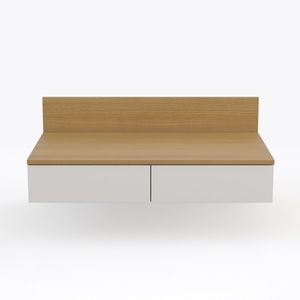
Modway EEI-6312-WHI-NAT Kinetic 49" Wall-Mount Off

Minimalist Solid Wood Woven Rattan Armchair 3D Model
Homestyler is your go-to online platform for transforming home design dreams into reality. With an easy-to-use design tool, stunning 3D renderings, a variety of inspiring design projects, and helpful DIY video tutorials, you can effortlessly create and visualize stunning interiors—perfect for all skill levels!
Дизайн сейчас бесплатно
































