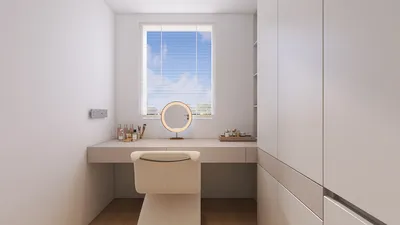


I once had a client who required a craft table that could conceal an entire glitter catastrophe just before her mother-in-law's visit — and that’s a true account. That sense of urgency was a valuable lesson for me: I quickly discovered how an inventive surface combined with intelligent storage transforms disorder into serenity, and how compact areas can ignite grand ideas. If you’re considering a petite studio or seeking inspiration for a snug corner, explore these effective compact studio layouts that offer genuine examples and quick wins: compact studio designs.
1) Foldable table with concealed compartments
I adore wall-mounted fold-down options since they provide a vast work surface when necessary and can be tucked away when not in use. The underside transforms into prime space for slim drawers or magnetic strips—ideal for scissors, rulers, and small jars; however, you will need to ensure it is properly attached to a stud or uses reinforced fixings to avoid sagging.
save pin
2) Multi-functional bench + table
Benches with liftable seats are often overlooked: the seats can store larger supplies while the top serves as an extra workspace or seating for guests. This is cozy, dual-purpose furniture that imparts a sense of permanence and neatness, although the padding might incur additional expenses, and you'll prefer breathable fabrics to prevent glue odors from lingering.
save pin
3) Vertical pegboard + narrow shelf arrangement
Utilizing vertical space can greatly preserve floor area—pegboards with labeled containers and a slim shelf arrangement help organize small items effectively. I often apply principles from kitchen planning to design distinct zones, arranging supply areas akin to a culinary prep line to facilitate project workflow. For those who appreciate visual planning, check these workflow-friendly counters for layout inspiration: workflow-friendly counters. The only downside is that pegboards present best when curated; therefore, take time to select uniform containers and colors to minimize visual chaos.
save pin
4) Mobile island with drawers
A compact rolling island provides versatility—work in well-lit areas and store it away afterward. Deep drawers are excellent for keeping papers and power tools, while a butcher-block top serves dual purposes for cutting; just be conscious of weight—select casters suitable for the load and think about adding a brake to maintain stability while working.
save pin
5) Narrow wall-mounted desk with 3D layouts
A slender, wall-hugging desk paired with overhead storage is my preferred setup in micro-studios. Prior to construction, I create a 3D mockup to verify clearances and storage adequacy—visualizing the space helps prevent surprises: 3D designs. This setup is space-efficient and stylish, although it will limit extensive projects unless paired with a foldable or mobile auxiliary surface.
save pin
Tips 1:
Budget reminder: many of these solutions can be DIYed for between $50–$300 if you reuse materials and scour clearance hardware; custom finishes and upholstery can elevate costs. Practical advice: always create a full-size template on cardboard to test ergonomics prior to wood cutting.
save pin
FAQ
Q1: What is the optimal height for a craft table?
I suggest a height between 28–36 inches based on whether you're sitting or standing; architects typically aim for 30 inches for seated workspaces and around 36 inches for standing tasks. For kitchen-related projects that involve heavier cutting, many experts recommend approximately 36 inches (refer to NKBA for standard countertop guidelines: https://nkba.org).
Q2: How can I store small items without creating a messy appearance?
Utilize uniform containers, label the edges, and keep frequently used supplies in shallow drawers or clear bins at arm's reach. Pegboards alongside small modular bins allow for easy visibility of inventory and streamline maintenance.
Q3: Can a craft table also function as dining or office space?
Definitely—select a design that is convertible or foldable with durable surfaces that resist glue and ink stains. Look for easy-to-clean finishes, and consider the use of placemats when changing its purpose.
Q4: What is the simplest craft table upgrade I can make myself?
Incorporating drawer organizers or installing a pegboard is quick and cost-effective; even replacing casters can significantly enhance mobility. These minor adjustments can often enhance functionality more than a complete redesign would.
Q5: How much storage should I allocate?
Aim for at least double the visible workspace in hidden storage—dedicate one area for tools and another for consumables like paper and adhesives. If purchasing in bulk, set aside a specific shelf or drawer to prevent supplies from encroaching upon your workspace.
Q6: What materials do you recommend for durability?
Butcher block and high-pressure laminate tops are resilient against cuts and are easy to refinish; metal drawers alongside powder-coated frames can withstand extensive use. Soft woods are not advisable for high-traffic surfaces unless you are ready for periodic refinishing.
Q7: How can I reduce costs while enhancing storage?
Repurpose old furniture—antique dressers, nightstands, and filing cabinets can serve as excellent bases for drawers and islands. Search for discounted hardware and reuse containers for internal organization to save expenses.
Q8: How can I visualize my layout before beginning?
Utilize simple sketches or free online design tools to evaluate dimensions and sightlines; a quick mockup can help avoid expensive errors and ensures that your setup won't block windows or doors when constructed.
save pin
Discover your creative potential with Homestyler! This online home design platform offers an intuitive design tool, stunning 3D renderings, and a wealth of inspiring design projects. Plus, with DIY video tutorials at your fingertips, transforming your space has never been easier!
تصميم الآن مجانا
































