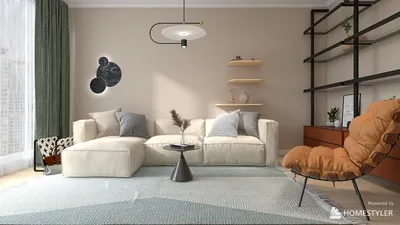


Once, I worked with a client named Daniel who had a peculiar preference for hanging his wall paintings exactly 137 cm above the floor — reasoning that "that’s where the soul sits." While I found it amusing, this unique obsession made me reconsider sightlines and scale, which led me to gather some surprisingly helpful guidelines on art placement and composition. If you're under the impression that small spaces limit artistic expression, think again: modest areas can ignite significant creativity. Here, I'll share five design insights that transformed Daniel’s eccentric request into stunning outcomes. For quick visual references on layout, I frequently utilize real space planning illustrations, allowing clients to grasp the concepts more tangibly.
1. Striking oversized singular pieces
Using one large Daniel wall painting as a centerpiece anchors the room's design effectively — it simplifies the overall aesthetic while providing an immediate focal point. This strategy offers clarity by removing visual distraction, though challenges may arise regarding scaling and budget, as larger canvases and frames can get pricey. A smart approach is to allocate budget for shipping and framing beforehand; often, using raw stretchers and in-house framing can save substantial amounts.
save pin
2. Tight gallery-style grid arrangement above a sofa
In confined areas, an organized grid of smaller Daniel paintings can convey a unified message. I implemented this in a studio with each piece measuring 30x30cm — creating a powerful visual impact while being budget-conscious. The only downside? Ensuring proper alignment: measure twice before installation and utilize lightweight hanging systems to avoid damaging the walls.
save pin
3. Layering mixed media with textures
Combining Daniel’s painted pieces with shelves, sculptural accents, or textiles adds depth and a tactile quality to the composition. In one instance, I layered a small painting over reclaimed wood planks and incorporated a narrow shelf below for ceramics — the contrast made the artwork stand out. If you want to visualize the look before making decisions, consider using tools like Homestyler for realistic 3D renders to ensure everyone agrees on proportions.
save pin
4. Thoughtful placement above furniture
Art displayed above consoles, beds, or kitchen islands must maintain proportion. My guideline: the width of the artwork should be approximately two-thirds to three-quarters that of the furniture underneath. This approach facilitates a balanced composition, although custom framing or mounts may be necessary to achieve that perfect fit. A budget-friendly tip: float frames with slim margins often cost less and provide a contemporary vibe.
save pin
5. Rotating mini-exhibitions on a picture rail
If Daniel (or even your inner curator) enjoys a sense of novelty, consider installing a picture rail or slim rail system, allowing for effortless rotation of paintings without putting numerous holes in the wall. I set this up for a client who liked to change out their pieces monthly — it kept the space feeling fresh and made each artwork feel like an event. The only consideration is storage — ensure you have a protective rack or portfolio for the artworks not currently on display.
save pin
FAQ
Q1: How do I select the appropriate size for a Daniel wall painting in my room?
A1: Start by measuring the wall and furniture, and then look for artwork that occupies 60–75% of the width of the furniture beneath it, or choose a focal piece that occupies a significant section of an empty wall. Step back and visualize; sometimes, a printout taped to the wall can help.
Q2: What kind of lighting is best for Daniel’s paintings?
A2: Opt for adjustable warm white LED spotlights or picture lights with dimmers to reduce glare and maintain colors. Position the lights about 30 degrees off-axis to minimize reflections.
Q3: How do I frame mixed-media pieces by Daniel?
A3: Float frames and shadowboxes are ideal for mixed media as they preserve the depth while keeping the artwork visible. Consult your framer about UV acrylic options for lightweight support and enhanced protection.
Q4: Is it feasible to hang several small paintings in a grid pattern without professional assistance?
A4: Absolutely! With a template and a level, you can create a DIY grid. Mark the centers on kraft paper, tape it to the wall, and use it as your drilling guide to ensure consistent spacing.
Q5: What’s the best way to preserve older Daniel wall paintings?
A5: For aged paint or varnish, it’s best to consult a conservator; general care tips include maintaining stable humidity, avoiding direct sunlight, and gently dusting with a soft brush. For authoritative information, refer to resources from the Getty Conservation Institute on painting care.
Q6: Are removable hanging systems secure enough for valuable pieces?
A6: High-quality removable systems can indeed be quite safe if they are appropriately rated for the weight of the artwork; always check the load rating and adhere to the manufacturer's guidelines. For particularly valuable or heavy items, consider wall anchors or professional installation.
Q7: How frequently should I rotate wall paintings?
A7: There’s no strict rule — rotating them seasonally keeps your space feeling new, but changing them every few months is sufficient to notice a difference. Keep an easy catalogue to track which piece is placed where.
Q8: Can technology assist in planning painting placement?
A8: Definitely — visualization tools can streamline layouts and lighting arrangements, avoiding mistakes, particularly in complex sightlines. When I need compelling visuals for clients, I sometimes utilize Homestyler to present design suggestions and compare placement options.
save pin
Discover the effortless creativity of Homestyler! This top-notch online home design platform offers an intuitive design tool, stunning 3D renderings, and a wealth of design projects. With engaging video tutorials, you can transform your home into a masterpiece, no matter your experience level. Start designing today!
Design Now for FREE
































