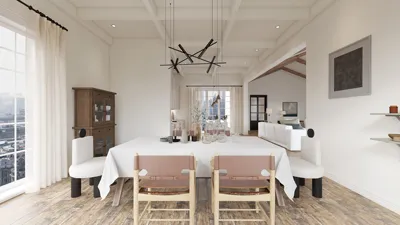


Living rooms today serve multiple purposes—they cater to remote work, casual dining, entertainment, and social gatherings. Therefore, utilizing partitions is a smart strategy to create distinct zones while maintaining a sense of openness and light. Well-planned dividers can effectively direct movement, manage sound, and create defined spaces while keeping the modern aesthetic intact. Incorporating digital design tools like Homestyler can facilitate the zoning process, ensuring that these dividers harmonize with the overall layout.
Research emphasizes the effectiveness of zoning as a way to enhance performance. The WELL v2 Lighting framework highlights that proper lighting and glare control are essential for comfort, linking the quality of light to cognitive efficiency. Additionally, studies from Steelcase indicate that giving people the ability to choose how they utilize a space significantly boosts their productivity and sense of well-being. This underscores the importance of adaptable partitions that allow spaces to effortlessly switch functions. When making color choices for these dividers, insights from Verywell Mind suggest that cool colors promote calmness while warm tones energize—valuable considerations when tailoring spaces for focused work or relaxed social interaction. For visually planning layouts, employing a room layout tool like Homestyler can assist in evaluating sightlines, circulation, and furniture arrangements before starting your project.
Layered Partition Strategies
I prefer strategies using layered partitions over solid walls. By incorporating low cabinet storage, open shelves, and partial screens, one can achieve varying levels of privacy. For instance, a console table around 36–42 inches tall, positioned behind a sofa, intuitively separates a lounge area from a workspace while maintaining an open line of sight. Adding a ribbed glass panel above can diffuse visibility without obstructing natural light, enhancing visual connections and preventing the creation of enclosed corridors.
Transparent Partitions: Emphasizing Light
Using materials such as glass, polycarbonate, or perforated metal for partitions ensures the continuity of natural light. My design goal for living areas is to achieve an illumination level of 300–500 lux (consistent with standard IES guidelines), coupled with task lighting reaching 500–750 lux for reading areas. Clear glass should be positioned near external windows, while fluted or reeded glass is ideal for work zones to minimize noise and glare. It’s crucial to keep the vertical elements narrow—between 25–40 mm—for a seamless appearance in seating areas.
Open Shelving as an Architectural Element
Freestanding shelving can serve as semi-permeable walls while maximizing space. I strategize shelf heights according to human ergonomics: the optimal height for often-used items should be between 450–600 mm, while 1200–1500 mm is suitable for showcasing decorative pieces and plants. A robust base with at least a 300 mm depth is essential for stability. Not only do deeper shelves act as acoustic diffusers when filled with books and other items, but they also soften the noise between entertainment and social zones.
Dynamic Sliding and Pivot Screens
In smaller apartments, sliding partitions introduce flexible separation. Attention should be paid to sightline arrangements: position a pivot screen 150–250 mm away from a sofa arm to prevent swing conflicts. Translucent panels on tracks enable easy one-handed operation, and incorporating soft-close hardware minimizes noise. Maintain 900 mm pathways for natural movement, even when the screen is partially drawn.
Textile Dividers for Acoustic Comfort
Ceiling-mounted curtains, layered sheer fabrics, or felt panels can instantly alter the ambiance of a room. Heavier drapes provide significant acoustic benefits by reducing echo, particularly in smaller spaces. I typically pair these textile dividers with a textured rug and upholstered ottomans to help absorb sound frequencies around entertainment setups, ensuring clearer dialogue without raising the volume.
Half-Height Partitions and Bench Backs
Knee walls or built-in benches create inviting, social boundaries. Setting half-height walls at 900–1100 mm ensures that seated guests feel engaged, not confined. A bench-back partition equipped with integrated power outlets and reading lights can transform circulation spaces into cozy micro-libraries. When used to separate dining areas, aligning their height with tabletop surfaces fosters visual coherence.
Living Plant Screens for Biophilic Design
Incorporating plants into partitions fosters a connection with nature while improving air quality. I recommend using tall plants (like ficus or rubber plants) alongside mid-sized planters at 600–800 mm height. Arranging plant screens perpendicular to windows allows gentle light to filter through. A handy tip is to aim for 30–40% plant coverage to maintain an airy feel while offering a calming retreat, aligning with biophilic design principles that alleviate stress during focused tasks.
Color Psychology for Zoning
Using color strategically can help convey the intended purpose of a room. Soft neutrals and muted blues can create serene reading spaces, while warm terracotta and honey-toned woods encourage lively interactions around social areas. Studies in color psychology indicate that blue and green hues foster relaxation and concentration, while warmer shades enhance sociability—apply these color schemes thoughtfully to guide behavior without overwhelming the overall decor.
Material Choices and Sustainability
I advocate for the use of FSC-certified timber, recycled aluminum, and low-VOC finishes to enhance indoor air quality. Opting for matte finishes reduces reflective glare on vertical dividers. By combining materials such as cork, cane, and wool felt, a unique textural interest is achieved while simultaneously improving acoustic comfort in modern environments.
Designing with Ergonomics in Mind
Ergonomics should inform decisions regarding the height of partitions, reach zones, and circulation paths. When integrating storage into a divider, ensure that essential items are positioned between 600–1200 mm off the ground for ease of access. Switch and outlet placements should be logically set at 1000–1100 mm high. It’s advisable to avoid sharp corners in busy areas; using rounded edges (50 mm radius) can prevent accidents when transporting items.
Spatial Proportions, Rhythm, and Harmony
Effective partitions respect spatial balance. I often follow a zoning ratio of 60% for primary seating, 30% for secondary activities (like dining or working), and 10% for circulation space. To stabilize the layout, repeat vertical elements—such as slats spaced 80–120 mm apart or shelf arrangements at 600 mm—while aligning the edges of partitions with ceiling details or area rugs for a unified design.
Integrating Lighting with Partitions
Incorporating light into dividers contributes to both ambiance and clarity. Edge-lit glass partitions provide a beautiful sparkle while minimizing glare; I recommend warmer tones of 2700–3000K for evening use and neutral 3500–4000K for daytime. Ensure that lighting fixtures are shielded to limit glare, and my general rule is to mount linear lights at a height of 1800–2000 mm for an even wash of light across the partitions without obstructing sightlines.
Planning and Visualizing Spaces
Before executing your design, use an interior layout planning tool to simulate flow and sightlines. Tools like Homestyler can quickly analyze different configurations—whether shifting shelves, adjusting pivot screens, or modifying rug layouts—and observe how partitions influence spatial dynamics, views, and lighting conditions.
Innovative Ideas for Adaptation
Insights from workplace design can commonly translate to home zoning strategies, as demonstrated by research from Steelcase. For guidance on health and lighting approaches that enhance comfort, the WELL v2 framework is an excellent reference. Additional context on color psychology is distilled by resources like Verywell Mind.
Frequently Asked Questions
For half-height walls, use 900–1100 mm for private areas seated, or opt for 1800–2000 mm for full-height partitions made of translucent materials to allow daylight to permeate the room.
Aim for 300–500 lux of ambient light in living areas, with added illumination of 500–750 lux for reading tasks. Select warm 2700–3000K tones during the evening and neutral 3500–4000K light for daytime activities to maintain comfort levels.
In areas with significant sunlight, consider using frosted or reeded panels, keeping mullions slender, along with protected linear lighting to evenly illuminate surfaces without direct spotlighting.
Maintain 80–120 mm spacing between slats to ensure transparency while providing visual filtering. Align the spacing of slats with existing architectural lines to prevent visual clutter in the space.
Absolutely. Using textile dividers, dense shelving, and felt panels can significantly reduce echoes and dampen mid-to-high frequency sounds, ensuring clearer conversations and TV audio.
Materials such as FSC-certified wood, recycled aluminum frames, cork, and low-VOC finishes can effectively balance durability with indoor air quality and tactile comfort.
Ensure clear pathways of at least 900 mm around partitions and furniture to facilitate smooth movement and minimize collisions in busy areas.
Cool blues and neutrals encourage focus and tranquility, while warmer tones invite social interaction. Use colored accents on partitions to subtly encourage behaviors without overwhelming the design palette.
Indeed! They offer flexible privacy solutions and can be stored neatly when not in use. Implementing soft-close mechanisms and translucent panels helps in retaining light and quiet functionality.
Utilizing a room design visualization tool can aid in evaluating sightlines, clearances, and lighting patterns. Quick adjustments can help prevent costly errors in your design process.
Looking to reinvent your space? Homestyler is your go-to online home design platform! With its user-friendly design tool, stunning 3D renderings, and a wealth of DIY video tutorials, you can effortlessly create and visualize your dream home. Start designing today!
今すぐ无料でデザイン
































