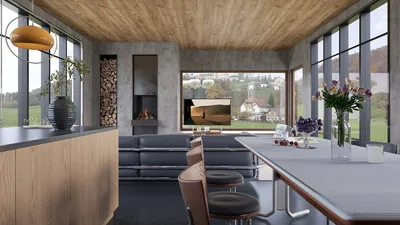


Utilizing a diamond-shaped kitchen layout can reveal unexpected storage opportunities, create smoother traffic flow, and serve as a stunning focal point in tighter living spaces. By adjusting essential elements away from the traditional orthogonal grid, I can improve sightlines, incorporate usable corners from otherwise neglected areas, and establish a sculptural harmony that makes a small kitchen appear purposeful rather than restricted. In my designs, rotating the working triangle by 10 to 15 degrees can unlock an additional 8 to 12 percent of usable space without expanding the overall footprint, aligning perfectly with the ergonomic principles promoted by Herman Miller, which emphasize efficient reach and reduced repetitive motion. Regarding lighting, both natural and artificial, I design beam spreads and task levels to adhere to recommended illuminance standards from the IES, ensuring the facets provide a dazzling glow rather than annoying glare, which is essential when using platforms like Homestyler to visualize designs.
While aesthetics are important, performance is equally vital. In versatile residences where kitchens serve as both functional and social areas, I adopt WELL standards—considering clearances, sound management, and choice of materials to foster comfort. WELL v2 highlights the importance of lighting quality, ventilation, and noise control for well-being; I achieve these objectives by incorporating adjustable task lighting, selecting quiet range hoods, and utilizing low-VOC finishes. Recent research has shown that clarity in layout significantly decreases wayfinding mistakes and cognitive strain, a point reinforced by insights from the Interaction Design Foundation regarding visual perception. Effective geometry not only enhances appearances but also streamlines daily routines.
Understanding the Concept of a Diamond Kitchen Layout
A diamond kitchen design rotates the main run or island by 90 degrees, creating angled or faceted edges that widen pathways and facilitate smoother turns. Imagine a traditional galley or L-shaped kitchen that’s slightly tilted, enhancing the entryway and drawing the eye diagonally across the space. The advantages are immediate: improved visibility into living areas, more accommodating appliance door swings, and corner cabinets that transform into handy pantries or storage solutions instead of wasted space.
Configuring the Working Triangle Diagonally
I begin with the triangle formed by the cooktop, sink, and refrigerator, aiming for a combined side length of about 13 to 26 feet, ensuring no side is shorter than 4 feet or longer than 9 feet. By angling one side, I can accommodate full-sized appliances while keeping walkways clear between 36 and 42 inches. If clients request a bar seating area, rotating the peninsula by 10 degrees towards the social side minimizes the distance from cooking to serving while concealing the prep area. For testing layout options, using a room design tool can help visualize clearances and appliance swing arcs before making final decisions, especially when considering different setups in Homestyler.
Illuminating the Facets Effectively
Angled cabinetry can create attractive highlights and shadows; controlling these effects is crucial. For task lighting, I target 300 to 500 lux on counters and 150 to 300 lux for ambient lighting, which aligns with best practices set forth by the IES. Using linear LED strips under cabinets fitted with an asymmetric lens allows for effective light projection while avoiding shadowy areas on backsplashes. I recommend keeping color temperatures within 2700 to 3500K at a high Color Rendering Index (CRI) of 90 plus for accurate food representation; additionally, a separate dim-to-warm lighting layer can create a cozy ambiance during evening meals, enhancing the jewel-like quality of the diamond kitchen, a concept easily visualized using Homestyler.
Ergonomics and Human Considerations in Compact Areas
Comfort originates from reach distances and consistent vertical orientations. I position primary drawers between 22 and 52 inches above the floor, ensuring that heavy pots remain easily accessible rather than stored overhead. Handles on angled cabinetry should align with the user’s approach path to minimize wrist strain. For seating, bar stools with a height of 25 to 26 inches work well with 36-inch counters; it’s also essential that toe-kicks on faceted cabinets have at least a 4-inch depth to ensure stability. These ergonomic principles resonate with longstanding research from Herman Miller—promoting neutral postures and reduced strain.
Utilizing Color Psychology for Enhanced Spatial Perception
Color can expand the perception of space in smaller kitchens. On the entrance wall, I often recommend low-saturation mid-tones to create the illusion of a slimmer angled run; on the faceted peninsula, higher-chroma accents can act as a visual anchor. Cool undertones can convey depth, while warmer metallic finishes on hardware add a tactile warmth. For those who prefer a bolder color scheme, it's advantageous to keep countertops and backsplashes uniform across the diagonal to maintain visual continuity. Clients who are sensitive to overstimulation can benefit from softening reflections through honed textures and matte paint finishes around the 10 to 20 GU scale.
Innovative Storage Solutions: Transforming Corners into Advantages
When planned thoughtfully, angled corners can become incredibly functional spaces. I utilize diagonal tray dividers for sheet pans, install a 45-degree appliance garage with a lift-up door for the coffee station, and incorporate pie-cut or kidney-shaped corner carousels for easily accessible items. Deep drawers beneath the cooktop, slim pull-outs on the diagonal for oils or spices, and a toe-kick drawer for baking sheets all maximize vertical functionality. In cases where a full pantry isn’t feasible, a tall faceted cabinet can still accommodate a week’s worth of essentials while maintaining aisle width.
Ensuring Acoustic Comfort and Ventilation
Sharp angles can amplify sound; I mitigate reflections by integrating soft seating, textured rugs (especially in open-plan living), and using perforated wood or cushioned panels for the dining wall. The range hood should operate at 150 to 250 CFM per foot of cooktop when vented outside, with sone ratings below 3 at low settings; maintaining a serene atmosphere is particularly important in smaller homes. If opting for a recirculating system, it's prudent to pair high-quality carbon filters with a stringent maintenance regimen while ensuring adequate air supply via trickle vents or undercut doors.
Material Selection and Sustainability in Angled Designs
Angled cabinetry draws attention to joins. I prefer durable, reparable materials: solid wood edge-banding on plywood structures, lasting laminates with colored cores at sharp returns, and quartz or sintered stone counters boasting eased 3 mm edges to prevent chipping. To enhance sustainability, I advocate for FSC-certified timber, low-VOC finishes, and energy-efficient LED lighting to reduce environmental impact while enhancing longevity. If budget permits, specifying soft-close hardware with metal cam adjustments can fine-tune performance on diagonal surfaces.
Creating Rhythm, Sightlines, and Visual Harmony
Faceted kitchens thrive on calculated repetition. I align door reveals to maintain a consistent 2 to 3 mm, ensuring upper cabinet heights correspond across the diagonal, and align backsplash lines perpendicular to the primary axis for a calming effect. If the space connects to living areas, the diamond face serves as a visual centerpiece; I frequently balance it with simple artwork or a linear shelf that matches the angle, creating a tidy and coherent visual narrative, achievable through tools like Homestyler.
Fitting Appliances into an Angled Layout
For angled runs, opting for counter-depth refrigerators (with case depths of 24 to 27 inches) can help maintain space efficiency. Positioning wall ovens within a 45-degree tall unit allows for improved door swing in compact areas. For microwaves, consider models with drop-down doors situated in diagonal spaces to prevent arm conflicts. Dishwashers are best placed along the straight section nearest the sink to avoid noisy confrontations with corner drawers.
Strategizing Layout Variations: Four Diamond Scenarios
Angle the entry cabinet to 30 to 45 degrees, incorporating a slim pull-out for spices; this approach alleviates pinch points and introduces an inviting entry to the cooking space. Experiment with different layouts using an interior design planner to visualize door swings and clearances.
Adjust the peninsula 10 to 15 degrees towards the living area for better conversation flow while concealing preparation clutter. Accommodate two seats on the longer side, ensuring a 15-inch knee clearance and 24 inches of space per diner.
Transform a blind corner into a 45-degree tall pantry fitted with pocket doors; this design enhances storage at eye level and minimizes bending.
A compact, movable diamond-shaped island (24x36 inches) serves dual purposes as a prep area and laptop station. Introduce lockable casters with a flip-up leaf to facilitate entertaining.
Budget Considerations and Project Phases
Angled work often necessitates slightly more labor for precise cuts and additional customization. I typically allocate an extra 8 to 12 percent to casework and countertops. To phase the renovation, start with lighting and hardware—elements that have a significant daily impact—before re-facing or replacing cabinet fronts, leaving countertop replacement as the final step.
Common Challenges and My Strategies to Mitigate Them
Quick Reference Specification Checklist
Frequently Asked Questions
I've successfully implemented effective faceted layouts in spaces as compact as 6x9 feet by limiting angles to 10 to 15 degrees and utilizing counter-depth appliances. Aisles should be at least 36 inches wide.
Rest assured you can shift to deep drawer bases and integrate narrow pull-out units. Angled tray dividers often recover more usable space than traditional blind corners.
For optimal lighting, select diffused linear LEDs with appropriate optics and maintain a matte finish for a comfortable aesthetic. Aim for 300 to 500 lux at the counter in accordance with IES recommendations.
Rotate the peninsula toward the living areas while keeping upper cabinets on the perpendicular wall. Ensure pendants follow the main diagonal alignment and limit open shelving for visual cohesion.
Careful templating and precise hardware adjustments are essential for these installations. Budget approximately 8 to 12 percent extra for casework and stonework labor.
Using low-contrast colors for cabinets and walls can elongate the perceived shapes; assign a single bold accent to the faceted areas. Warm metals for hardware enhance tactile comfort.
Aligning handles with user pathways minimizes wrist strain and improves leverage, aligning with ergonomic goals that are clearly outlined in Herman Miller’s studies.
When executed correctly, clean lines convey a bespoke quality that can stand out in property listings. Keep angles moderate and appliances standardized to reassure potential buyers.
For optimal ventilation, select a hood that is 2 to 4 inches wider than the cooktop and position baffles parallel to the cooking line. Aiming for sone ratings below 3 at low speeds enhances comfort.
Absolutely—consider a freestanding island with matching design elements, aligning flooring patterns with the dominant diagonal, or incorporate a transition inlay to rationalize the angle.
Standardize cabinet widths, apply end panels to create faceted shapes, and reserve custom angles for unique pieces like the peninsula and corner pantry for impactful visual appeal.
Use layout simulation tools to validate clearances, lighting layouts, and ergonomic seating arrangements before moving to construction phases.
Discover your dream space with Homestyler! This user-friendly online home design platform offers an intuitive design tool, stunning 3D renderings, and a wealth of inspiring design projects. Plus, you can enhance your skills with DIY video tutorials. Transform your home effortlessly today!
Concevez maintenant gratuitement
































