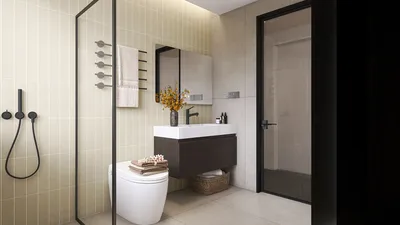


Designing a bathroom with dimensions of 8 by 10 feet requires careful consideration of circulation pathways, comfortable space clearances, and appropriate lighting. Working with an area of around 80 square feet, I aim for effective functional zoning—designating wet, dry, and storage areas—while ensuring a clear path of at least 32 to 36 inches. The WELL v2 standards advocate for glare reduction and suitable lighting in task areas; thus, I aim for 300 to 500 lux at the vanity and about 100 to 200 lux for ambient light to lessen eye strain and enhance grooming precision. Research from Steelcase shows that quality lighting boosts both performance and comfort, and applying these principles in residential designs can greatly enhance everyday routines by utilizing tools like Homestyler for visualization.
Correct fixture positioning relies on accurate dimensions. The National Kitchen and Bath Association (NKBA) suggests at least 30 inches of clearance in front of toilets and a minimum of 24 inches of space before showers or bathtubs. Although a sink should ideally have at least 21 inches of space, I generally prefer to allow 24 to 30 inches for added comfort. According to the WELL v2 lighting recommendations, achieving a color rendering index (CRI) of 90 or above with neutral color temperatures in the range of 3000 to 3500K at the mirror ensures skin-tone fidelity—this simple adjustment significantly enhances the overall atmosphere of the bathroom. For broader planning and visualizing alternate designs, using a room layout tool such as Homestyler can facilitate testing for traffic flow and fixture arrangements prior to beginning construction.
Fundamental Considerations for an 8 x 10 Bathroom
My design process is anchored by three key elements: a clear circulation route, layered lighting options, and effective moisture management. The circulation route typically runs along the longer dimension (usually 10 feet), placing the vanity and toilet on one side with the wet area (shower or bathtub) at the opposite end or across from the entry. I employ layered lighting, beginning with bright and even task lighting at the vanity, soft ambient ceiling lights, and gentle night lighting for added comfort; sound absorption is enhanced with soft finishes and door seals if the bathroom shares a wall with bedrooms. Additionally, I segregate wet and dry zones by utilizing curbless showers equipped with linear drains where feasible, which minimizes trip hazards and enhances accessibility.
Design Option 1: Linear Layout with End Shower
This layout is ideal for narrow doorways. Position the vanity along the left wall as you enter, place the toilet opposite, and feature a 60-inch shower on the far wall. Ensure that there is 36 inches of walkway width for ease of movement. Choosing a 60-inch vanity combined with wall-mounted cabinetry enhances visibility across the floor, making the space appear more expansive. Installing sconces at eye level on either side of the mirror provides balanced vertical lighting, while dimmable recessed lighting contributes to a welcoming atmosphere. The end-shower layout centralizes plumbing within two walls, typically lowering costs and simplifying maintenance.
Design Option 2: Alcove Bathtub with Adjacent Vanity
For those who prioritize bathing, a 60-inch alcove tub can be neatly installed along one of the longer walls, complemented by a glass panel to prevent water spray. The vanity is positioned on the opposite wall directly across from the tub, while the toilet is discreetly located near the door, ensuring privacy without obstructing the flow of movement. This configuration promotes a calm and balanced ambiance, effectively catering to family needs. Opting for a 24-inch deep vanity enables a spacious walkway, reducing the chance of accidental bumps. Acoustic elements are also significant when it comes to bathtubs; incorporating soft textiles and a solid-core door lessens noise transfer to adjoining rooms.
Design Option 3: Corner Shower with Floating Vanity
For clients interested in a modern aesthetic, a neo-angle or square corner shower maximizes the usable floor space. Floating the vanity creates an illusion of more floor area and can include integrated under-cabinet lighting to guide users subtly at night. A wall-hung toilet further enhances visual space and simplifies cleaning. In compact bathrooms, I steer clear of strong contrasts across different surfaces; instead, I incorporate a single light-neutral color palette accented with textured tiles in the shower to add depth without making the area feel cramped.
Design Option 4: Dual Vanity with Pocket Door
When two people need simultaneous access to the space, a 60-inch double vanity coupled with a pocket door preserves necessary circulation space. I ensure that there is a minimum of 36 inches of clear space in front of the vanity, place mirrors centered above each sink, and include a vertical sconce for each individual. Storage solutions such as towers at either end provide vertical storage without crowding the countertop. Pocket doors free up swing space, which is particularly beneficial in narrow entryways.
Zoning: Wet Areas Versus Dry Areas
In an 8 by 10 area, controlling moisture migration is crucial for longevity. I define wet zones using sloped flooring and glass barriers, and install thresholds or unseen water stops beneath tiles. Employing epoxy grout or urethane-based alternatives in critical joints and applying a continuous waterproof membrane behind all shower walls is essential. Adequate ventilation is a must-have: I recommend an exhaust fan size of about 1 cubic foot per square foot (approximately 80 cfm in this instance) and prefer models with low sone ratings to maintain acoustic comfort.
Ergonomics and Clearance Requirements
Comfort is reflected in specific measurements. Vanity heights range from 34 to 36 inches, and I adjust them based on user height and sink depth. Maintain a distance of at least 15 inches from the centerline of the toilet to any side obstruction, with an overall minimum width of 30 inches; 32 to 36 inches is more comfortable. For accessible designs, target a turning radius of 60 inches and consider a roll-in shower with a clear floor space of 30 by 60 inches. Utilizing lever handles, non-slip floor tiles (≥ DCOF 0.42 wet), and rounded edges minimizes daily friction.
Material Approach and Sustainability
I prioritize materials that can withstand humidity fluctuations, including porcelain tiles with a matte or satin finish, quartz countertops, and marine-grade coatings for cabinetry. WaterSense-labeled fixtures aid in water conservation without sacrificing performance; pairing low-flow showerheads with pressure-balancing valves ensures a consistent experience. To add warmth, I introduce wooden accents—preferably white oak or teak treated to withstand moisture—and maintain a unified visual palette across flooring and walls to enhance the sense of space.
Lighting and Color Influence
Task lighting should be designed to minimize shadows; for better results, vertical lighting at the mirror is more effective than relying on overhead solutions alone. According to color psychology, a balanced selection of neutral tones with low saturation can soothe the mind and make morning routines more manageable; softer cool whites visually expand areas, while warmer tones provide comfort. To prevent glare, choose diffused fixtures and matte finishes surrounding the vanity. The WELL v2 framework encourages circadian-friendly lighting strategies—consider incorporating dimmable options and warmer shades around 2700K to aid winding down.
Storage Solutions, Niches, and Micro-Zones
I design storage micro-zones taking reach ranges into account: with shelves placed 42 to 54 inches above the floor for items used daily and 60 to 72 inches for less frequently accessed materials. In-shower niches should be positioned at 38 to 48 inches above the floor to prevent water pooling. Over-the-toilet cabinets must maintain a clearance of 15 inches above the tank for ease of maintenance. Implementing pull-out drawers within the vanity helps organize smaller items, while integrated electrical outlets within drawers can keep surfaces clutter-free.
Ventilation, Sound Control, and Privacy
Opt for quiet exhaust fans (≤1.5 sones) equipped with humidity sensors to facilitate automatic operation. For bathrooms that share walls with bedrooms, resilient channels and proper insulation can effectively minimize sound transmission. To ensure privacy, utilize frosted glass where natural light is necessary, supplemented with considered door hardware featuring soft-close mechanisms to maintain a serene environment, even in heavily trafficked households.
Organizing the Planning Process
I begin by sketching out the zones before exploring various placements digitally to avoid future plumbing adjustments. A digital layout planner like Homestyler is extremely useful for experimenting with configurations such as a double vanity against a corner shower, verifying clearances, and mapping out lighting designs. This capability to compare multiple layouts side by side is invaluable in minimizing on-site changes, which can be costly.
Reference Standards
For insights into lighting quality and health standards, the WELL v2 framework provides essential guidance on illuminance benchmarks, glare management, and color quality (a link is provided below). Research from Steelcase and Herman Miller emphasizes how environmental comfort can enhance routine efficiency—principles which are pertinent even in home bathrooms. These references ground our design decisions well beyond aesthetics.
Frequently Asked Questions (FAQ)
I typically aim for a minimum clearance of 36 inches; 32 inches is the strictest space I’ll accept without sacrificing everyday comfort.
For optimal conditions, I target 300 to 500 lux at face level, ensuring a CRI of 90+ along with a color temperature of 3000 to 3500K. Using vertical sconces on each side of the mirror is an effective way to eliminate shadows.
Certainly, if the required 36 inches of clearance is preserved in front, a 60-inch double vanity can fit effectively while maintaining circulation around the toilet and shower areas.
Absolutely! With the right slope and a linear drain, a 60-inch curbless shower can enhance both accessibility and the spacious feel of the bathroom.
The ideal ventilation ratio is approximately 1 cfm per square foot—so around 80 cfm for this bathroom. It’s advisable to select quiet fans (≤1.5 sones) that include humidity sensors.
Opt for porcelain tiles with a wet DCOF rating of ≥ 0.42, favoring matte or textured finishes in areas prone to water exposure.
Employ light neutrals throughout with minimal contrast to promote seamlessness; introducing texture in the shower or a single accent wall is preferable to multiple darker surfaces.
Incorporate vertical storage towers at the ends of the vanity, recessed niches, and wall-mounted cabinets, placing frequently used items within reach, around 42 to 54 inches AFF.
Not necessarily. A linear design consolidates plumbing along two walls to manage costs, while corner showers may require additional routing but can still be designed efficiently.
Employ individual mirrors centered over each sink alongside vertical lighting at their sides. For single-sink setups, a larger mirror can enhance light distribution effectively.
Incorporate solid-core doors, additional insulation within shared walls, and resilient channels to effectively dissipate sound transmission.
Indeed. Dimming to approximately 2700K in the evenings can promote relaxation, all while bright neutral task lighting supports morning routines.


Homestyler is your go-to online home design platform! With its user-friendly design tool, impressive 3D rendering options, and a treasure trove of DIY tutorials and design projects, transforming your living space has never been easier. Bring your ideas to life effortlessly!
Design Now for FREE
































