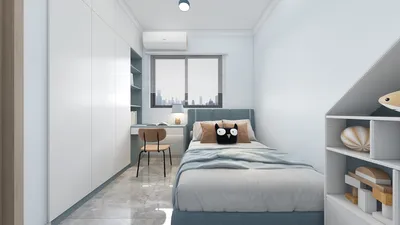


Sky blue possesses a unique ability to subtly elongate spaces, soften sharp lines, and enhance the presence of natural light. In various spaces such as living rooms, bedrooms, and kitchens, this color serves as a strong foundation for contemporary designs while ensuring an open and emotionally balanced atmosphere. In my designs, I often incorporate sky blue to soften rigid materials, establish visual harmony, and promote well-being, particularly where natural light is limited or in rooms with lower ceilings.
Careful design selections significantly impact the overall result. The WELL v2 framework underscores that a harmonious balance of light and glare reduction is vital for visual comfort and mood. It advocates for ample daylight and versatile lighting solutions to support occupant health (WELL v2). Further research from Steelcase reveals that meticulously crafted, serene environments enhance cognitive functionality and alleviate stress, making sky blue an effective backdrop for concentration and recovery, especially in multifunctional living spaces (Steelcase Research). In the realm of color psychology, shades of blue adjacent to the sky consistently prove to be tranquil and expansive, helping occupants experience a sense of openness, particularly notable in smaller urban dwelling areas (Verywell Mind, color psychology).
In terms of layout, sky blue can serve as a spatial enhancer. Cooler, lighter hues can visually retreat, which helps make long, narrow spaces and hallways appear more expansive. When designing floor plans, I use sky blue to create directional dynamics—darker shades for active areas, lighter hues to broaden perspectives. Should you want to explore furniture arrangements or traffic flows, employing a room layout simulation tool like Homestyler can assist you in testing color placements accurately with real dimensions and natural light interactions before you decide to paint.
Set the Right Atmosphere: Selecting the Perfect Sky Blue
Sky blue encompasses a range of tones. For rooms facing north, characterized by cooler daylight, it's advisable to choose a warmer sky hue—perhaps with a hint of green or gray—to avoid a chilly feel. Conversely, south-facing spaces can accommodate sharper, cooler blues that invigorate the area. Strive for Light Reflectance Values (LRV) of approximately 60–70 on primary walls to reflect light without overwhelming texture. Combine it with matte or eggshell finishes to minimize glare, which often arises under intense daylight or strong artificial lighting. The WELL v2 guidelines promote glare reduction through appropriate material finishes and luminaire selections (WELL v2).
Living Rooms: Light, Connected, and Textured
Apply sky blue to the main vertical surface—ideally the wall opposite prominent windows—to enhance the perceived depth of the room. Create contrast with warm wood tones and textured neutral colors to mitigate any coldness. I frequently recommend a standout piece—such as a linen sofa in a warm gray or a caramel leather chair—to maintain a welcoming palette. Incorporating a soft loop or bouclé rug adds a layer of tactile comfort, while blackened metal details bring a sleek, modern touch.
Lighting strategy: blend 2700–3000K ambient lighting with 3000–3500K task lights to enhance reading areas. Incorporate dimmers to foster circadian-friendly atmospheres during the evenings. Aim for around 100–150 lux in general living areas and 300–500 lux for designated reading spots, consistent with recommended standards established by IES (IES standards). Ensure broad beam spreads for ambient lighting layers to avoid any stark contrasts on pale blue walls.
Bedrooms: Tranquil through Color and Texture
Sky blue shines in bedrooms, where rest and routine intertwine. I often opt for a subtly gray-toned sky on the headboard wall to enrich the environment without creating heaviness. The beautiful combination of cotton percale, soft linen, and light oak is ideal here. For harmony, introduce small hints of clay, blush, or wheat to warm the palette and make skin tones more flattering.
From an ergonomic viewpoint, a gentle ambient layer of 50–100 lux paired with bedside task lighting of 200–300 lux supports relaxation and pre-sleep reading. Implement opaque, low-glare shades with a color temperature of 2700K during the late evening hours to minimize disruption to the body's internal clock, aligning with the WELL v2 principles of healthy light timing. In busy neighborhoods, consider integrated sound-absorbing panels or upholstered headboards to lessen early morning noise disturbances.
Kitchens: Clean, Inviting, and Functional
In contemporary kitchens, applying sky blue enamel to upper cabinets or using a satin blue backsplash introduces a refreshing touch without sacrificing function. Pair lower cabinets with white oak or light gray to ground the overall look. Personally, I prefer brushed nickel or matte stainless hardware for a pristine, sanitized appearance. If your kitchen space is compact, consider painting the ceiling a lighter shade of your wall color to create an illusion of added height.
Lighting and workflow: implement under-cabinet task lighting around 4000K to ensure color precision when preparing food, while 3000–3500K ambient lighting maintains a warm and inviting atmosphere. Aim for 300–500 lux on preparation areas and 150–200 lux for general lighting (IES standards). Position accent fixtures over the island fitted with diffusers to prevent concentrated highlights on glossy blue tiles.
Bathrooms: Spa-Like Ambience with Clear Features
Utilizing sky blue tile or microcement for a feature wall creates a clean and spa-like environment. Combine this with white terrazzo or honed marble to avoid glare. Satin brass or matte black fittings can punctuate the color scheme effectively. In smaller bathrooms, a vertical tile layout enhances the perception of height.
In mirror areas, opt for vertical sconces positioned at eye level with lamps of 90+ CRI around 3000–3500K for accurate skin tone representation. Ensure that shower lighting is diffused to minimize glaring reflections on the pale blue surfaces.
Home Offices: Focused Yet Inviting
A muted sky blue backdrop behind your workspace helps divert attention during video calls and minimizes visual distractions. I balance this with warm desk materials, such as walnut, cork, or felt pinboards, complemented by greenery for a touch of biophilic design. Research from Steelcase connects well-lit, serene environments with enhanced focus and emotional well-being, particularly in home workspaces (Steelcase Research).
Layered lighting for functionality: 300–500 lux on the work surface, a 4000K task lamp for contrast, and 2700–3000K ambient fills to avoid eye strain. Eliminate hard, reflective finishes near computer screens to prevent bothersome glare.
Complementary Colors and Material Recommendations
Ideal partners for sky blue include warm whites (avoiding harsh tones), sandy neutrals, light woods, and soft metals. For contrast, incorporate charcoal or dark blue accents sparingly—think frames, side tables, or a uniquely painted door. To add a modern twist, consider employing micro-pattern textiles (such as fine stripes or checks) to enliven the palette without creating visual clutter.
Sustainability consideration: choose low-VOC paints and FSC-certified wood options. Recycled glass tiles in cool tones provide a luminous, aquatic look with negligible maintenance. Utilizing organic cotton or wool felts elevates acoustic comfort while supporting healthier indoor air standards, as highlighted by WELL v2.
Ceilings, Doors, and Following the 60-30-10 Rule
Employ sky blue as either the dominant 60 or the secondary 30 in your color scheme, using it minimally as the accent 10, unless you are focusing on small highlights. For rooms with low ceilings, paint them a lighter variant of your wall color within the same hue family to visually obscure boundaries. Satin sky blue on interior doors combined with understated trim can lend a modern touch without drawing excessive attention.
Maximizing Compact Spaces with Sky Blue
In narrow apartment layouts, extend the same sky blue throughout interconnected areas to establish visual coherence. Repetition reduces perceptual interruptions, making spaces appear more expansive. Position furniture a few inches from the walls to expose more of the color field and improve movement flow. If you are plotting furniture layouts or exploring zoning in a studio setup, testing proportions and color blocks with a layout planner like Homestyler can be advantageous before making a commitment.
Light, Glare, and Finish: Perfecting Your Look
Sky blue benefits from carefully managed light exposure. Applying matte and eggshell finishes on walls mitigates glare, particularly across brightly lit surfaces. Reserve satin finishes for detailed fixtures. Utilize layered window treatments—sheers to diffuse light, blackout options for rest areas—to maintain comfortable light levels throughout the day, referring to IES illuminance norms as a useful baseline; adjustments may be necessary based on specific tasks and the evolving visual needs of occupants (IES standards).
Styling: Incorporating Art, Flora, and Balance
Ground your design with two or three sizeable art pieces instead of multiple smaller frames. Plants featuring broad, matte leaves, like rubber trees or ZZ plants, create striking contrasts against sky blue while adding depth to the overall aesthetic. Establish a unifying rhythm by repeating one metal finish and two types of fabric textures throughout the room to create a cohesive narrative.
Care and Durability
Select scrubbable, low-sheen wall paints for high-traffic areas. Assess swatches across various walls as lighting conditions can alter perceptions throughout the day; in my observations, slightly grayed tones of sky blue tend to maintain their elegance longer than vibrant, pure hues, particularly in regions with intense sunlight.
Common Queries
To counteract cool daylight, opt for a warmer sky blue with subtle hints of green or gray. Test color swatches during both morning and afternoon to confirm the stability of undertones.
Aim for 100–150 lux ambient light and 300–500 lux for reading, combining 2700–3000K ambient fixtures with 3000–3500K task lighting, in line with IES-recommended residential practices.
Absolutely, light, cool hues visually recede and can visually extend walls and ceilings. Keeping trim shades close to the wall color reduces visual interruptions, enhancing continuity.
Incorporate light oak, warm gray textiles, matte black or satin nickel metal accents, and honed stone. Adding one tactile fabric finish such as bouclé or felt prevents a sterile look.
Indeed, a desaturated sky blue can reduce visual distraction on camera, aiding in maintaining focus. Coupled with 300–500 lux lighting on the work surface, this helps decrease eye strain.
Prioritize 2700K lighting in the evening for relaxation, along with 200–300 lux at bedside for reading purposes. Ensure overhead lights are dimmable to control circadian effects.
Utilize matte or honed surfaces, diffuse shower lighting, and vertical sconces fitted at eye level with high CRI lamps. Avoid undiffused downlights in proximity to mirrors to minimize glare.
Yes. Painting ceilings in a lighter tint of your wall color can create an illusion of height. Maintain a low sheen and avoid excessively cool lighting, which might create a stark appearance.
Use charcoal, deep navy, sandy tones, wheat, blush, and brass fittings as accents. Ensure that these accents encompass only 10–15% of the visual area to maintain a calming environment.
Start by mapping functional areas—like seating and dining—and then assign blue shades according to their intended purpose: use lighter tones for expansion and deeper hues to establish focal points. Utilize a room design visualization tool to assess circulation and sightlines before settling on a plan.
Indeed, especially in shared living areas. Opt for durable, washable finishes and incorporate warm textile elements to ensure the palette remains inviting rather than cold.
Select slightly grayed sky blues to avoid color fading. Employ sheer fabrics to diffuse bright light and manage comfortable luminance ratios, adhering to WELL v2's guidelines for glare control.

Modern Two Tone Fabric Modular Sectional Sofa 3D Model
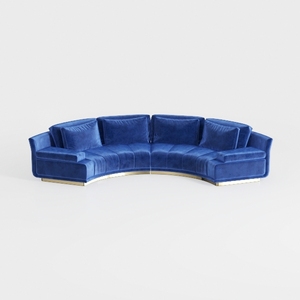

Modern Navy Velvet Gold Base Curved Sectional Sofa 3D Model
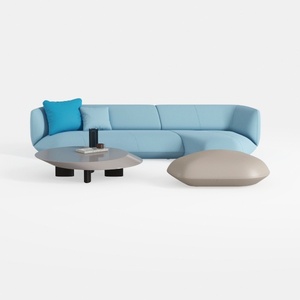
Modern Fabric L-shaped Sectional Sofa with Coffee Table and Ottoman 3D Model
Discover the joy of home design with Homestyler! This user-friendly platform offers a powerful online design tool, stunning 3D renderings, and a wealth of design projects and video tutorials. Whether you're a novice or a pro, bringing your vision to life has never been easier!
Desain sekarang Gratis
































