

In designing multilevel spaces like MSV Halls, I envision a cohesive system where elements such as lighting, acoustics, flow dynamics, and furniture can rapidly adapt to various functions like lectures, workshops, exhibitions, and social gatherings, all while ensuring a comfortable environment. Venues that achieve this flexibility tend to enjoy higher usage rates and more efficient event transitions. Research from Steelcase highlights that environments promoting posture adjustments could boost perceived productivity by 10-15%. In my own experience, I’ve observed similar improvements in multi-purpose areas when optimizing seating, lighting, and AV capabilities for swift role transitions. The WELL v2 guidelines also advocate for a lighting range of 300-500 lux to facilitate general tasks with effective glare management—these recommendations lead to improved focus during presentations and workshops.
Setting appropriate lighting and acoustic conditions is crucial. Following the IES standards for educational spaces, maintaining 300-500 lux on horizontal surfaces with 30-50% vertical brightness enhances facial recognition and clarity of presentations. Combining this with adjustable 2700-3500 K LED fixtures allows for quick shifts between inviting warmth and focused alertness. Insights from Herman Miller's studies on seating ergonomics reveal that adjustable furniture can significantly alleviate discomfort and heighten engagement during extended activities. I allocate zones for lighting, acoustic baffles, and mobile seating arrangements to seamlessly transition between event types with minimal downtime, a strategy I manage through Homestyler's intuitive design tools.
Identifying Functional Spatial Modes and Objectives
Successful MSV halls operate best with pre-established modes. I generally create at least four distinct settings: (1) Presentation Mode—front-oriented sightlines, with staggered seating across 7-9 rows, maintaining a 1:1.6 ratio between screen width and row depth; (2) Workshop Mode—clusters of 4-6 participants equipped with writable surfaces and power outlets available at the edges; (3) Exhibition Mode—a circulating corridor around the perimeter with 1.8–2.1 m wide aisles and mobile display stands; (4) Social Mode—high-top tables near entrances and service points to promote interaction and flow. To efficiently analyze circulation patterns and furniture density, I utilize Homestyler to simulate traffic movement and sightlines.
Lighting Strategy: Multi-layered, Adjustable, and Minimized Glare
I implement three layers of lighting: ambient (consistent ceiling illumination at 300-350 lux), task (track or adjustable spotlights providing 500-750 lux for speakers, demonstrations, or tabletop activities), and accent (wall-mounted fixtures delivering 150-250 lux to enhance vertical spaces and eliminate dark areas). The color temperature is adjustable: 3500-4000 K for presentations and 2700-3000 K for social events or exhibitions. Ensuring shielding angles of 30° or more, with UGR kept below 19 near screens, contributes to overall comfort. Asymmetric lighting distribution around screens prevents glare, and I establish different dimming profiles for the stage, audience, and circulation areas. Emergency exit lighting remains at a modest 10-20 lux in dimmed modes.
Acoustic Design: Enhancing Clarity while Avoiding Muffled Sounds
For venues with varied functionalities, I ensure the reverberation time (RT60) is calibrated to 0.6-0.9 seconds to promote clearer speech while allowing for a vibrant atmosphere during social functions. This involves a mix of 25-35% high-NRC ceiling treatments, fabric-wrapped wall panels for absorption at reflection points, and adjustable features like curtains or deployable baffles to modulate sound absorption based on use. Particular attention is also given to low-frequency control; incorporating bass traps or plenum-mounted panels is vital for managing sound during amplified performances. For workshops, I target NC 30-35 levels, ensuring stable background noise from HVAC systems and isolating sound diffusers from the stage zone. Floor surfaces are chosen for their blend of sound absorption and durability, opting for acoustic LVT with underlayment or engineered wood on acoustic membranes.
Furniture & Ergonomics: Supporting Comfort and Engagement
To maintain attention during events, I blend lightweight stackable chairs with lumbar support for presentations and flexible task stools for interactive workshops. Table heights vary: 740-760 mm for seated tasks and 1000-1050 mm for standing collaborations. Aisle widths allow for easy access: 900-1200 mm for lateral pathways and 1500-1800 mm for primary thoroughfares. I determine chair counts based on clearances: aiming for 12-15% of the area free during presentations, increasing to 20-25% in exhibition setups. Whenever feasible, I incorporate movable elements like lightweight casters and ganging clips, enabling a swift reconfiguration from a 120-seat arrangement to 18-24 small workshop clusters within approximately 12-15 minutes.
Technology & AV Visibility
Screen dimensions are guided by a 4-6x rule—where the image height equals 1/6 to 1/4 of the distance to the farthest viewer—with a maximum off-axis viewing angle of 30°. I position dual confidence displays and short-throw projectors, or high-resolution LED screens, to eliminate glare. Ceiling-mounted microphone arrays paired with beamforming technology facilitate hybrid events where the speaker's voice is evenly distributed, avoiding sound clustering. Carefully planned cable routes embedded in floor boxes are spaced 2.4-3.0 m apart, ensuring each pod includes at least one duplex outlet alongside USB-C/PDU availability.
Flow Management, Egress, and Configuration
Entrances are ideally located on the shorter sides of the hall, which helps minimize cross-traffic near the presentation area. I design a service corridor behind the stage for storage and audio-visual equipment, ensuring a minimum clearance of 1.5 m for two-way movement among staff. Strategic pop-up storage options for coats and bags are positioned near entries to reduce clutter. In exhibition mode, I maintain a 2.1 m wide circular path to accommodate two-way flow and comply with ADA requirements for turning radii. Effective wayfinding is provided through visual cues like varying floor tones, subtle low-glare strip lighting, and informative wall graphics.
Material Choices & Eco-friendliness
Selecting durable materials doesn’t have to imply heaviness. I prefer high-abrasion textiles (with a minimum rating of 100,000 double rubs when appropriate), low-VOC finishes, and sustainably sourced wood materials. Wall panels are often made from PET felt or recycled materials; I opt for floor systems that incorporate replaceable tiles to simplify maintenance over their lifecycle. To manage glare, finishes tend to have a matte texture. For seasonal flexibility, I favor breathable fabrics along with micro-perforated upholstery to enhance both acoustic capabilities and thermal comfort.
Color Psychology and Branding Influence
Color schemes hold power over behavior. Based on findings in color psychology, I choose calming cool neutrals with muted blues and greens to encourage focus, while warm accent colors near hospitality areas boost energy and promote social interaction. I maintain a neutral wall base (with a Light Reflectance Value of 50-70) for optimal light reflectance, allowing branding elements to occupy accent spaces or movable graphics to avoid locking the hall into one stylistic approach.
Natural Light Management
When windows or skylights are part of the design, I strive for a 2–3% average daylight factor during regular use, incorporating motorized blackout shades for presentation scenarios. Light shelves can help diffuse glare; internal blinds offering 3-5% openness maintain visibility without excessively increasing contrast. Automated sensors facilitate daylight harvesting, ensuring workplace illumination remains stable and consistent.
Operational Strategy: Quick Reset Procedures
Efficiency is an essential design goal. I plan for storage locations within 5-8 m of the work area, specify furniture that nests easily, and use color-coded floor dots for chair clusters, along with lighting presets for different activities: Talk, Workshop, Exhibit, Social, and Cleanup. My team can reset the venue in under 15 minutes with a disciplined approach and lightweight equipment. I utilize Homestyler’s layout planning feature to refine staffing models and sequence turnover effectively.
Key Performance Indicators
I assess metrics such as venue utilization rates, turnover duration, noise complaints, and the ratio of occupied seats to total capacity. Surveys on comfort regarding seating, temperature, and glare frequently correlate with repeat bookings. Post improvements to zoning, tunable lighting, and sound treatments, I have recognized a 20-30% reduction in audio-visual issues, alongside faster start times for sessions, thanks to clearer setup presets and organized cable management.
Reference Standards
Recommended illuminance levels for work surfaces stand at 300-500 lux (according to IES and WELL v2 guidelines). Vertical lighting should range from 30-50% of horizontal light in speaking areas. Reverberation time needs to be between 0.6-0.9 seconds. Background noise levels should be NC 30–35. Optimal viewing angles remain 30° at maximum off-axis positioning. Safe aisle dimensions should measure 900–1200 mm for secondary pathways and 1500–1800 mm for main routes. The perimeter loop must offer a clearance of 2.1 m, and standard tables should heighten between 1000-1050 mm, with group setups accommodating 4-6 individuals with power outlets readily accessible within 1.8 m.
Frequently Asked Questions
Maintain ambient light levels between 300-350 lux, layering task lighting up to 500-750 lux for discussion-focused or interactive sessions. Adhere to IES and WELL v2 criteria to effectively manage glare and enhance circadian comfort.
Utilize 3500-4000 K settings for targeted sessions and shift to 2700-3000 K for social gatherings or exhibition evenings. The flexibility of tunable white light allows for rapid adjustments between various modes.
Combine 25-35% high-NRC ceiling acoustic treatment, strategically selected wall absorption at initial reflection points, and retractable curtains to modulate sound absorption. Adjust RT60 to 0.6-0.9 seconds for optimal speech clarity and vibrancy.
Opt for nesting chairs equipped with ganging clips, lightweight rolling tables, and designated floor markers. Ensure storage is located within 5-8 m of the venue’s main space and create presets for swift resets in 12-15 minutes.
Follow a 4-6x guideline where image height corresponds to the furthest viewer distance, with viewing angles secured within a maximum of 30°. Integrate short-throw projection or high-density LED to mitigate glare.
Establish 1.8-2.1 m widths for main exhibit aisles and ensure a 2.1 m perimeter path for dual-direction circulation and compliance with accessibility standards.
Select materials with matte, low-VOC properties and incorporate acoustic solutions such as PET felt or fabric-covered panels, as well as acoustic LVT or engineered wood on sound-absorbing underlayment with strong resistance properties.
Arranging for floor outlets spaced 2.4-3.0 m apart, along with perimeter power distribution units. Each participant area should provide a duplex outlet and USB-C connections without the need to cross primary pathways.
Certainly, employ motorized blackout shades during presentations and utilize blinds with 3-5% openness to strike a balance in daylight while incorporating sensors for optimized lighting stability.
Monitor key performance indicators like utilization rates, time taken for turnovers, seating occupancy, noise disturbances, and satisfaction regarding comfort levels (temperature, glare, seating types). Enhancing these metrics is often linked to improved setup reliability and effective cable management.
Ensure lighting design features asymmetric layouts, adhere to shielding angles of 30° or more, maintain UGR levels below 19 in proximity to screens, and opt for matte finishes on adjoining surfaces to mitigate glare.
Utilize ergonomic stacking chairs that offer lumbar support during talks, flexible stools for workshops, and a select few elevated seating options to foster posture variation throughout activities.

Minimalist Solid Wood Home Office Desk with Storage Hutch 3D Model
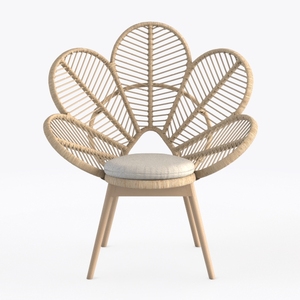
Bohemian Rattan Flower Shaped Accent Chair with Linen Cushion 3D Model
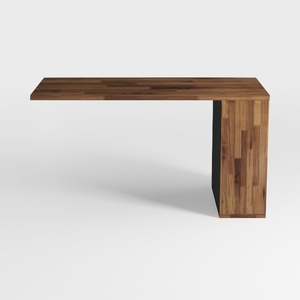
Minimalist Solid Walnut Wood Desk 3D Model
Homestyler is your go-to online home design platform, perfect for bringing your vision to life. With an intuitive design tool, stunning 3D renderings, a variety of inspiring design projects, and helpful video tutorials, creating your dream space has never been easier!
Desain sekarang Gratis
































