

I've revamped numerous mat spaces that serve various purposes—from serene yoga nooks and playful children's areas to small-group workout studios. The optimal designs meld together comfort, safety, and seamless transitions. An effective mat room creates a welcoming atmosphere for bodywork, cushions falls and supports floor exercises, while also easily adjusting between stretching, meditation, play, and strength training. Research from Steelcase shows that a variety of postures and micro-movements enhance comfort and engagement, highlighting the importance of soft, supportive surfaces and adaptable zones in active environments. The WELL v2 standard emphasizes the role of acoustic and lighting considerations that aid recovery and concentration, encouraging designers to look beyond flooring to the entire sensory space. This is where tools like Homestyler can be incredibly helpful in visualizing the complete environment.
The choices in lighting and color significantly impact overall experience. As per IES guidelines, around 300–500 lux is ideal for typical tasks in fitness and educational settings, with additional task lighting tailored for reading or intricate activities. For soothing sessions and winding down, dimmable lighting that provides 150-200 lux has proven effective in my experience. Psychological studies summarized by Verywell Mind suggest that shades of blue and green can lower heart rates and promote tranquility, while warm highlights can invigorate and motivate without overwhelming, especially when used sparingly. These insights assist in calibrating the intensity and ambiance of mat rooms, particularly when the space serves multiple functions, making it easier to integrate tools like Homestyler for effective planning.
Ergonomics are the foundation of durability and performance in design. Research from Herman Miller consistently connects diverse movements to reduced discomfort and improved long-term commitment to wellness habits; in mat rooms, this translates to surface friction that stabilizes poses, sufficient shock absorption for knees and hips, and generous space for transitions. For shared or multi-functional areas, I recommend maintaining a minimum clearance of 60-90 cm around each mat position to prevent interference and facilitate stretching. When experimenting with layouts or assessing density, tools like room layout planners can efficiently model spacing and circulation, much like what Homestyler offers for interior design.
Define the Room's Main Functions First
Begin by identifying two or three central activities—yoga, mobility work, children's play, HIIT, or meditation—and align your material and lighting selections with those activities. A room focused on restorative practices might benefit from softer mats (10–15 mm thickness), lower lux settings with warm-dim control, and calming, desaturated colors. Conversely, a training-focused space requires high-impact flooring modules (EVA or rubber-backed options at 8–12 mm), brighter vertical lighting, and stronger color contrasts for zoning purposes. I typically recommend keeping 70% of the color palette neutral to avoid visual fatigue and enhance safety by allowing any equipment to stand out.
Optimize the Floor: Thickness, Texture, and Modularity
The right flooring is crucial for comfort. For yoga and Pilates, 6–8 mm closed-cell mats provide stability; for playful or dynamic workouts that involve jumping, modular EVA or rubber tiles at 10–12 mm minimize joint stress and dampen sound. It's key to select a surface with medium grip—too slippery can lead to strain, while overly coarse textures can restrict movement transitions. In versatile areas, modular tiles offer the flexibility to quickly convert a high-impact space into a softer one within moments. Ensure that seam edges fit snugly to prevent tripping; I prefer to position seams away from heavy traffic areas and use beveled edges near doorways to mitigate hazards.
Adjustable Lighting Layers for Various Activities
Combine indirect ambient light for a glare-free base with two accent strategies: wall grazers to add depth and task-specific lighting for reading or checking equipment. Aim for 300–500 lux during active use, lowering to 150–200 lux for meditation or cooldowns. For calming spaces, use 2700–3000K lighting, while 3500–4000K is ideal for active settings. Protect exposed lighting sources to maintain a low Unified Glare Rating (UGR) and add dim-to-warm LED strips along baseboards for a subtle spatial indication during balance exercises. Place lights at a 30–45° angle if mirrors are present to avoid glare and to ensure accurate color rendering (CRI 90+).
Color Psychology and Visual Flow
To promote focus, opt for walls in muted earth tones, warm grays, or gentle greens; reserve brighter colors for directional bands or a singular accent wall. Blue-green hues are effective in alleviating stress, while smaller warm accents (like terracotta or muted mustard) can energize without overwhelming. Achieving balance is vital: substantial solid areas have a calming effect on the mind, while rhythmic vertical elements (such as wood slats or fabric panels) contribute gentle movement. In spaces designed for children, larger pattern scales help reduce visual clutter and overstimulation; adults tend to favor more understated textures like woven acoustic felt or micro-ribbed wallcoverings.
Acoustic Comfort Without Over-Engineering
Mat rooms benefit from controlled sound reflections—an overly lively space may cause breath cues or instructions to be missed, while too much absorption can lead to a sterile feel. Incorporate a combination of absorptive panels (NRC 0.7–0.9) on 25–35% of walls or ceilings, complemented by soft finishes, such as curtains, cork pin-up boards, and cushioned seating. Rubber-backed tiles or cork composites help diminish foot noise, while strategically placed area rugs can limit reverberation without covering the entire floor. For sessions featuring music, decouple speakers from the walls, ensuring sound pressure levels remain below thresholds that may cause fatigue in smaller areas.
Considering Human Factors: Clearances, Zones, and Navigation
For adult use, a functional mat space should be around 70 x 180 cm; it's vital to allow for 60–90 cm of buffer space on all sides for lateral movements and spotting. In family-oriented designs, designate a soft area with greater thickness and rounded edges, separated by a visual line or a low storage unit. Circulation routes should avoid cutting diagonally across active mat zones. If testing out setups or storage locations, mock up configurations with an interior layout planner to ensure that strollers, foam rollers, and bins do not encroach upon exercise pathways; tools like Homestyler can greatly assist in this process.
Effective Storage Solutions to Maintain Clear Floors
Incorporating storage solutions like wall-mounted racks for mats, cubbies for props, and ventilated bins for towels can help keep corners orderly. Closed storage for small items (balls, straps) minimizes visual clutter. Benches equipped with toe-kick lighting can serve as seating pre- and post-session while enhancing safety during nighttime use. When designing for versatility, consider foldable mats and under-bench drawers for convenience.
Material Selection: Cleanliness and Eco-Friendliness
Closed-cell foam or TPE mats are low-maintenance and resistant to sweat buildup; it's best to avoid excessively soft materials that may permanently compress. Cork tiles provide a natural, antimicrobial surface and a pleasant underfoot sensation. For wall protection, opt for washable paint (such as eggshell or satin) in areas subject to high contact, and wipeable acoustic felt near equipment can also work effectively. Aim for low-VOC adhesives and finishes to ensure good air quality during intense activities.
Incorporating Mirrors, Props, and Safety Considerations
Mirrors can aid alignment but should not be placed directly opposite bright windows to prevent glare. It’s advisable to mount them 15-20 cm above the ground to avoid edge impact, and to apply safety film where feasible. Props should be easily accessible, yet kept out of fall zones; I prefer a narrow shelf at shoulder level for blocks and a soft plush bin for balls. In children's areas, corner guards should be added to low storage units.
Creating Zones for Versatile Utilization
Segment the room into quiet and active zones. The quieter areas should feature softer lighting, thicker mats, and a gentler color palette, while the more active sections should have brighter vertical lighting, higher-traction flooring, and ample storage solutions. A central open area can facilitate group activities. Implement subtle transitions in flooring textures or tones rather than stark lines, which may create visual barriers and affect balance tasks. If the room also functions as a guest sleeping area, consider integrating a fold-down wall desk or Murphy bed along the wall opposite the activity zone.
Strategies for Compact Spaces
In limited spaces, align mats parallel to the longest wall to enhance sightlines. Use mirrors judiciously to avoid a mirror maze effect—often, one large panel opposite the entrance suffices. Wall sconces and ceiling-edge lighting can help maintain floor area. Utilize collapsible storage, peg rails for resistance bands, and nesting stools to allow for smooth circulation. Choose a compact speaker bar equipped with wall isolation pads to reduce resonance.
Control Scenes from Day to Night
Pre-set lighting scenes with a simple 3–4 button control: Warm Up (4000K, 400 lux), Flow (3500K, 350 lux), Restore (2700K, 180 lux), and Night Safe (only low-level path lights). This scene recall feature aids diverse users in maintaining consistent and safe conditions. Using occupancy sensors with a gradual fade to black can prevent sudden darkness after cooldown periods.
Real-World Details That Stand Out
- A washable runner placed at the entryway to prevent dirt from transferring onto mats.
- A small ledge for water bottles placed outside the main activity area to maintain flow.
- Color-coded mat edges (using subtle threads or piping) to mark zones without causing visual clutter.
- A cork or felt pin-up strip for displaying class notes or children's art, contributing warmth and sound absorption.
- A cluster of low-maintenance plants in the quiet zone to introduce a biophilic element—opt for varieties that shed little and require minimal water to protect finishes.
Maintenance and Hygiene Considerations
Perform quick daily vacuuming with a soft attachment and weekly wipes using recommended cleaners to maintain grip and aesthetics. Rotate modular tiles every few months to distribute wear evenly. Ensure mats are completely dry before stacking to prevent trapped moisture. For sessions that allow shoes, consider establishing a shoe-free perimeter mat or a designated zone with easily changeable top layers.
Cost-Effective Enhancements
- Start with a neutral base flooring and add splash zones using modular tiles in the most impacted areas.
- Invest in a single high-quality dimmable circuit before adding additional fixtures—control is more crucial than quantity.
- Focus on multi-functional storage solutions (such as benches with drawers) to minimize items and maintain a compact footprint.
- Gradually add acoustic treatments, starting with a cloud over high-use central areas, then treating first reflection walls as needed.
Answers to Common Questions
1) What is the ideal floor thickness for a multi-use mat space?
For activities combining yoga, mobility, and light plyometrics, modular tiles in the 8–12 mm range strike a balance between stability and cushioning. Consider a thinner area of 6–8 mm for balance exercises and a thicker zone of 10–15 mm for kneeling tasks or children's play.
2) How bright should the lighting be in the room?
Aim for 300–500 lux during active sessions and reduce to 150–200 lux for meditation or cooldown periods, in keeping with IES standards for active spaces. Utilize dimming options for quick transitions.
3) Which color palette encourages calm without being dull?
Select neutral foundations (such as warm gray, sand, or soft green) with limited warm accents. Shades of blue and green are known to promote calmer physiological responses, making them dependable backgrounds.
4) How much space is advisable between mats?
It is essential to maintain 60–90 cm of space surrounding each mat for safe transitions and spotting. In restricted rooms, consider staggering mats to avoid overlap of feet and hands during activities.
5) What measures can I take to manage echo in a small room with hard walls?
Incorporate sound-absorbent panels (NRC 0.7–0.9) covering about a quarter to a third of wall/ceiling areas. Pair these with rubber-backed flooring and soft furnishings to control reverberation effectively.
6) Are mirrors essential in the design?
Mirrors offer alignment benefits but are not indispensable. If incorporated, angle the lighting at 30–45° and mount slightly above the floor level to mitigate glare and potential impact risks. Use safety films in spaces used by multiple individuals.
7) Which materials are easiest to maintain?
Closed-cell foam or TPE mats are easy to clean and resistant to sweat absorption. Additionally, cork tiles offer a natural, warm surface with inherent antimicrobial properties and are easy to keep clean with mild solutions.
8) What design strategies will harmonize a kid-friendly environment with adult utility?
Incorporate thicker tiles in a designated play area, use rounded-edge storage solutions, and implement color bands for gentle zoning. Maintain an adult-focused area with calmer hues and adjustable lighting to accommodate early morning use.
9) Is it feasible to design this room to also function as a guest space?
Absolutely—select fold-flat mats, install a storage bench, and implement wall-mounted racks. A Murphy bed or fold-down desk can be situated along the non-active wall, storing mats vertically when not in use.
10) What is a straightforward setup for controlling lighting?
Establish four preset scenes: Warm Up (4000K/400 lux), Flow (3500K/350 lux), Restore (2700K/180 lux), Night Safe (low-level path lighting). Utilize a basic wall controller to facilitate quick transitions.
11) How can I evaluate different layouts before making a final decision?
Utilize painter’s tape on the floor for prototyping, then validate clearances and circulation pathways using an online layout simulation tool to identify potential pinch points and storage conflicts.
12) How frequently should mats and tiles be replaced?
Rotate mats and tiles quarterly, inspecting edges and grip. Well-maintained tiles typically last 3–5 years within home environments, but may have a shorter lifespan under heavy group use. Replace them when they no longer rebound after compression or when surfaces have become slick.

VECELO Modern, Rustic Brown, Tall Tree
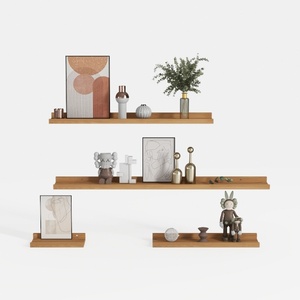
Minimalist Solid Wood Wall Mounted Floating Shelves Set 3D Model
Homestyler is the ultimate platform for home design enthusiasts! With its easy-to-use online design tool, stunning 3D renderings, and a wealth of DIY video tutorials, you can effortlessly transform your space. Whether you're a beginner or a pro, Homestyler will inspire and guide your design journey!
지금 무료로 디자인하세요
































