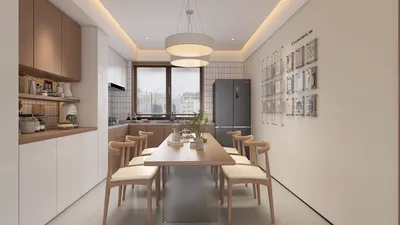


In my experience, a client once asked for a disco ball to hang above the coffee station—apparently, caffeine shines brighter with a bit of glitter. This amusing request taught me an essential lesson: small office kitchens represent the intersection of personality and functionality. If you're looking to design an urban office kitchenette, a thoughtful layout can resolve about 90% of common issues.
1. Open shelving paired with hidden compartments
I enjoy combining open shelving for mugs and plants with hidden drawers for utensils and cleaning supplies. This setup maintains an airy feel while concealing clutter, although you must remember that dusting open shelves can be a chore—ensure you plan for easy access.
save pin
2. Compact appliances and multifunctional units
Utilizing small microwaves, under-counter refrigerators, and coffee makers that also serve as water dispensers can significantly free up counter space. While they may require a higher initial investment, the time and peace of mind you’ll gain each morning with reduced queue times is well worth it.
save pin
3. Versatile island with seating options
A slim island can function as a prep area, dining spot, and even a place for spontaneous meetings; opt for wheels if you prefer adaptability. Designing the island to align with an efficient kitchen workflow is crucial—consider arranging the fridge, sink, and trash in a compact triangle for optimal performance.
save pin
4. Vertical greenery and easy-to-clean materials
Incorporate a slender herb rail or a pocket planter to enhance the vibrancy without sacrificing counter space. Combine this with matte, easy-to-wipe surfaces—while plants enliven the room, be sure to select materials that are resilient against coffee spills and lunch splatters.
save pin
5. Defined areas using smart signage and lighting
Install pendant lighting above the prep areas and utilize stickers or small signs to differentiate between personal dishware and shared items; while it may sound intricate, it's quite manageable. Before finalizing designs, create a visual 3D plan using tools like Homestyler to evaluate the flow—sometimes, adjusting a stool can significantly enhance circulation.
save pin
FAQ
Q1: What layout works best for a small office kitchenette?
I typically advocate for a galley layout or a single-wall design, featuring a small movable island. It’s important to place the fridge, sink, and prep areas in close proximity for efficiency.
Q2: What’s the expected budget for an office kitchenette?
Prices can vary greatly; basic renovations may begin under $2,000, whereas a complete overhaul with tailored cabinetry and professional-grade appliances could climb significantly. Focus on priorities such as storage, sanitation, and traffic flow first.
Q3: How can you keep a communal office kitchen clean?
Implement straightforward rules, provide labeled storage options, and ensure hand sanitizers and surface wipes are readily available. Clear signage fosters accountability and minimizes disputes.
Q4: Are there safety and health standards for office kitchens?
Indeed—adhere to standard workplace safety and food handling regulations. For comprehensive insights into food safety best practices, refer to the CDC’s Food Safety resources at https://www.cdc.gov/foodsafety/.
Q5: What materials facilitate easy upkeep in a kitchenette?
Opt for matte or honed quartz for countertops, porcelain for sinks, and laminate or treated wood for cabinetry. These materials resist stains and withstand the demands of high-traffic office environments.
Q6: Can greenery thrive in an office kitchenette?
Absolutely—low-light herbs and pothos are excellent options. Place them on a shelf that receives indirect sunlight, and they will reward you with fresh foliage and improved air quality.
Q7: How should I plan a budget for a small office kitchen upgrade?
Begin with a prioritized checklist that includes plumbing, electrical repairs, storage needs, and appliances. It's wiser to invest in one reliable appliance rather than several cheaper alternatives—lasting quality is key.
Q8: Are digital layout simulations beneficial prior to construction?
Definitely—mockups help identify circulation challenges and storage conflicts before work begins. A quick 3D preview using tools like Homestyler can save you time and potential renovation hurdles.
save pin
Homestyler is your go-to online home design platform! With its user-friendly design tool, stunning 3D renderings, and an array of inspiring design projects and DIY video tutorials, transforming your space has never been easier or more enjoyable. Start designing your dream home today!
Design Now for FREE
































